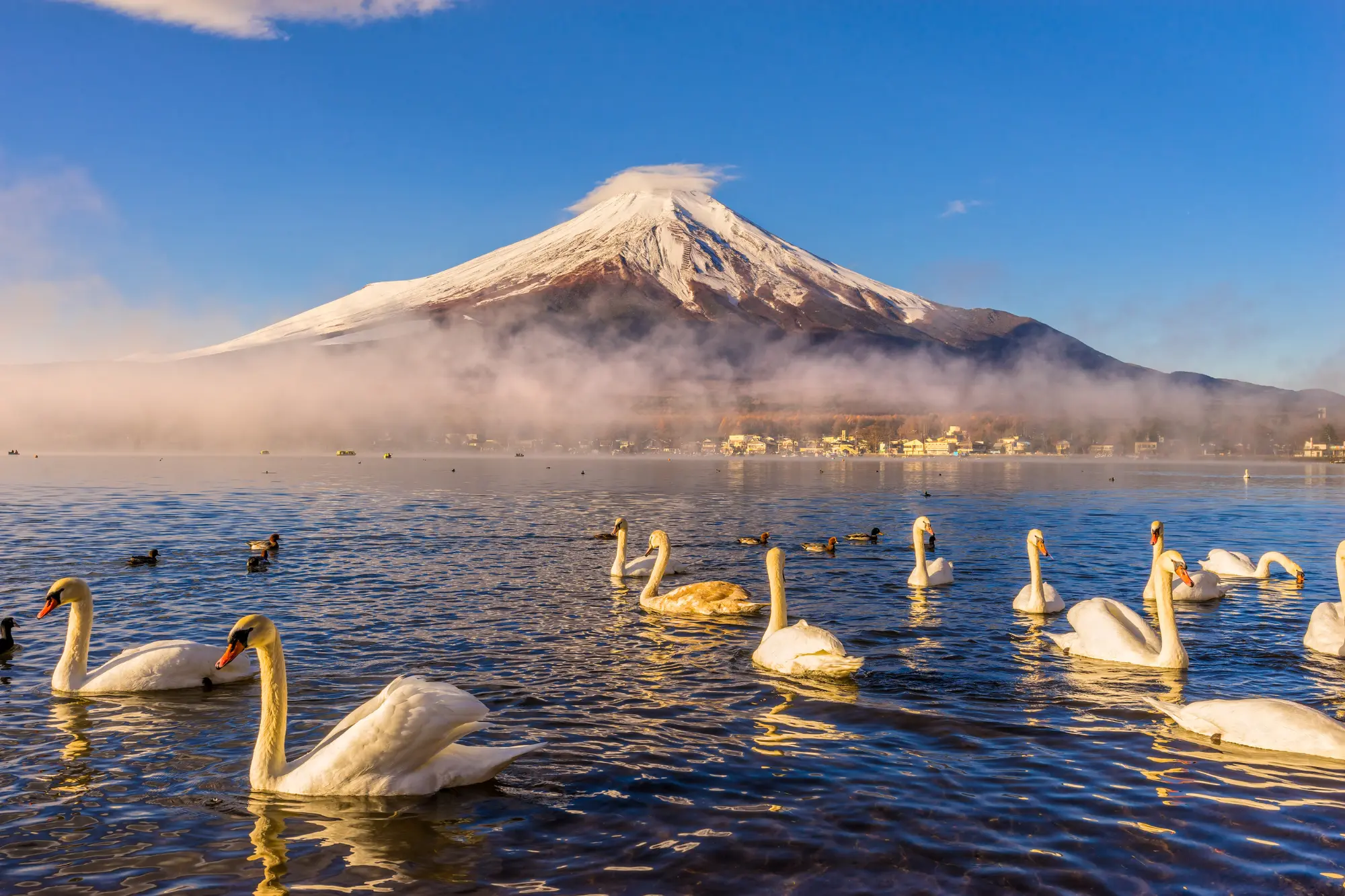
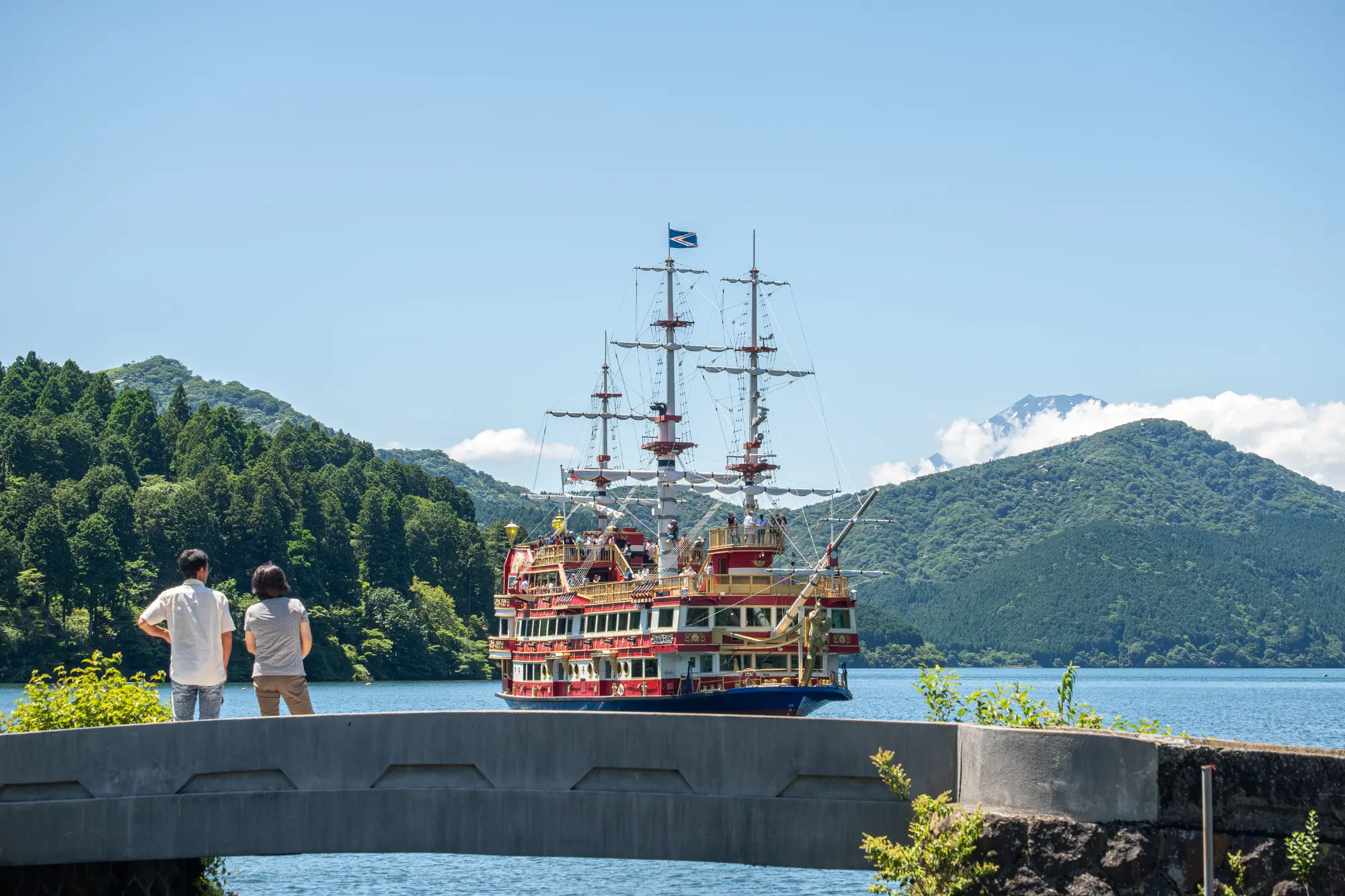
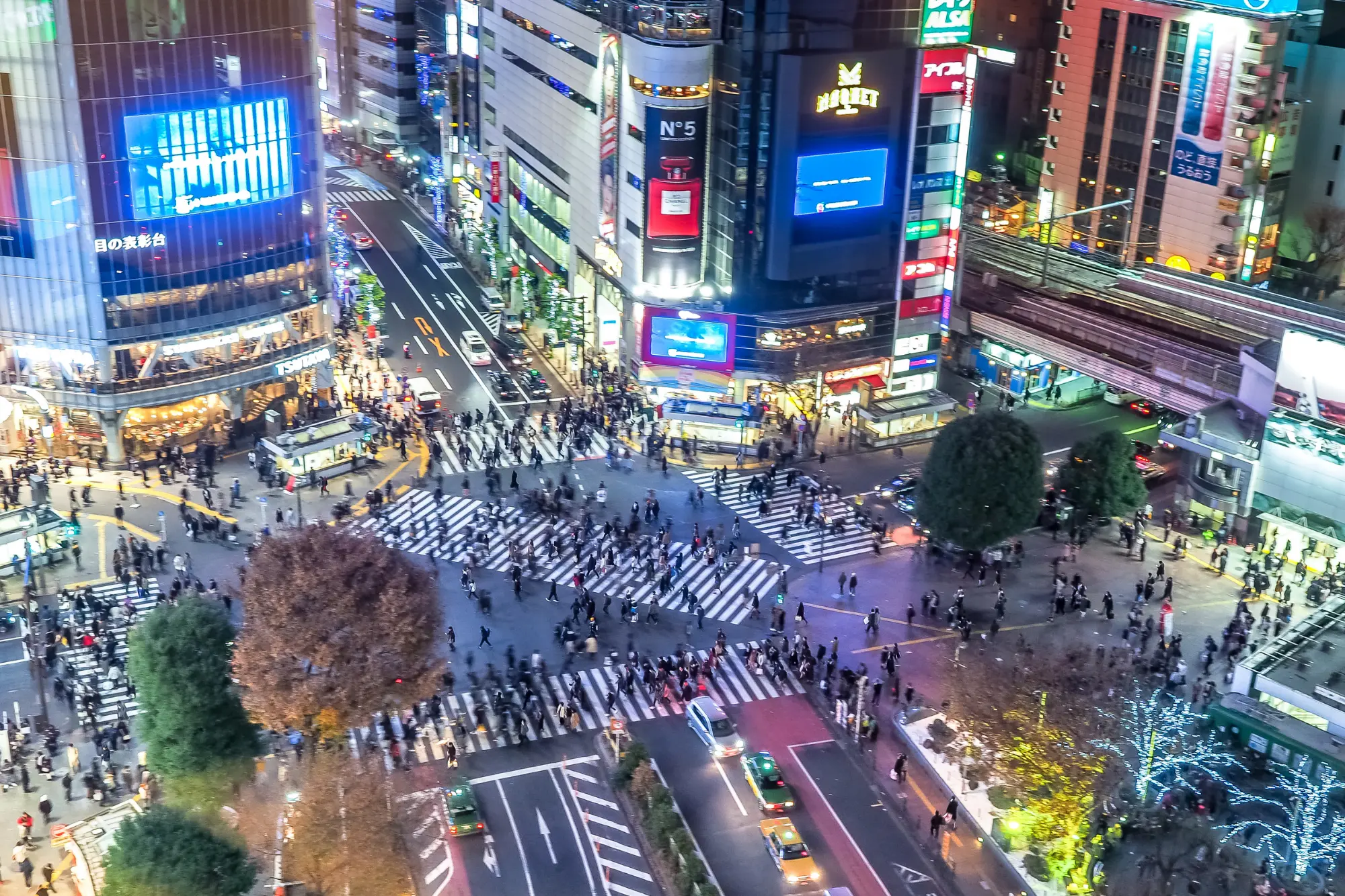
Hakone, Japan, is a mountain destination in Kanagawa Prefecture known for its hot springs, volcanic landscapes, Lake Ashi, traditional ryokan, and views of Mount Fuji. Just a short journey from Tokyo, it can be visited as a day trip or explored at a slower pace over one or two nights. This Hakone Travel Guide covers the best things to do, the Hakone Loop, transportation, food, where to stay, and practical tips for planning your trip with ease.
Where Is Hakone from Tokyo?
This geography is important to understand before planning your trip, and it is one of the key details covered in this Hakone travel guide.
Hakone sits inside the Fuji-Hakone-Izu National Park in Kanagawa Prefecture, about 60 miles (100 km) southwest of Tokyo. Unlike destinations with one obvious downtown area, Hakone is spread across several mountain districts connected by trains, buses, cable cars, ropeways, and boats.
That geography matters when planning a trip, and it is one of the first things a good Hakone travel guide should explain. and it is one of the first things a good Hakone travel guide should explain. Hakone-Yumoto is the main gateway from Tokyo, while Gora, Owakudani, Togendai, Lake Ashi, and Sengokuhara each offer a different experience.
Hakone Travel Guide: Things to Do in Hakone
The best things to do in Hakone combine nature, transportation, hot springs, Japanese culture, food, and traditional craftsmanship. The range of things to do in Hakone also makes it easy to shape the day around your interests rather than trying to see every attraction. You do not need to complete every attraction to experience the destination well.
The main experiences include:
Hakone-Yumoto
Hakone-Yumoto is the region’s main gateway and one of its oldest hot-spring areas. It has the largest concentration of shops and restaurants around the station and is the most straightforward base for travelers arriving by train from Tokyo.
It is particularly convenient for first-time visitors who want:
- Easy access to the Hakone Tozan Railway
- Restaurants and shops close to the station
- A large selection of hotels and ryokan
- Simple rail connections toward Odawara and Tokyo
- Less luggage handling than staying farther into the mountains
Gora
Gora sits higher in the mountains and is one of the key transportation points on the Hakone Loop. The Hakone Tozan Railway arrives here from Hakone-Yumoto, while the cable car continues upward toward Sounzan.
Gora is also close to several major cultural attractions, including the Hakone Open-Air Museum, making it a practical base for travelers who want to combine transportation sightseeing with art and hot springs.
Owakudani
Owakudani is an active volcanic area formed by past volcanic activity and is one of Hakone’s most distinctive landscapes. Sulfurous steam rises from the mountainside, and the area is reached by the Hakone Ropeway.
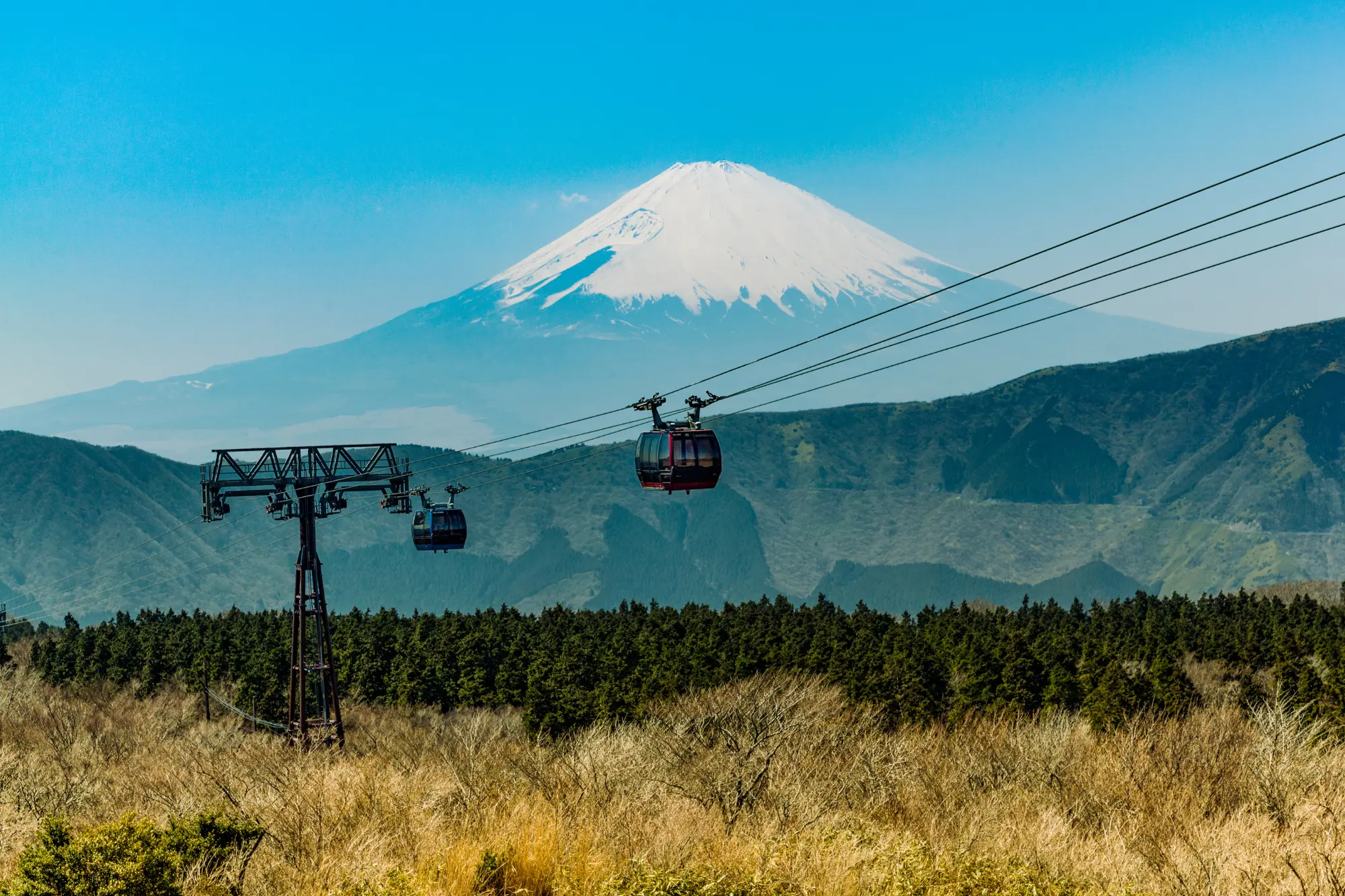
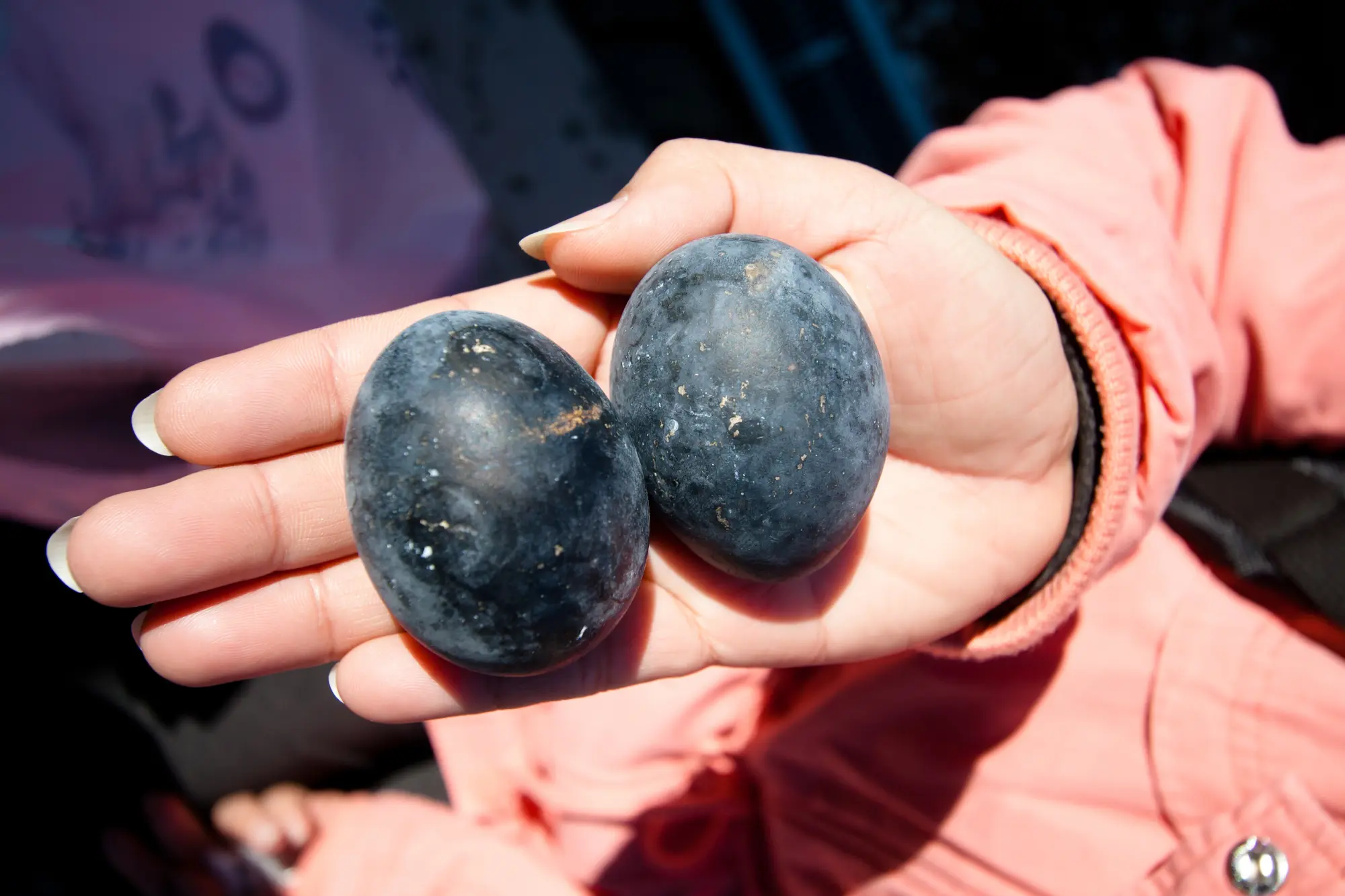
It is also where visitors find the famous kuro-tamago, or black eggs, whose shells turn dark when boiled in the area’s sulfur-rich hot-spring water.
Lake Ashi
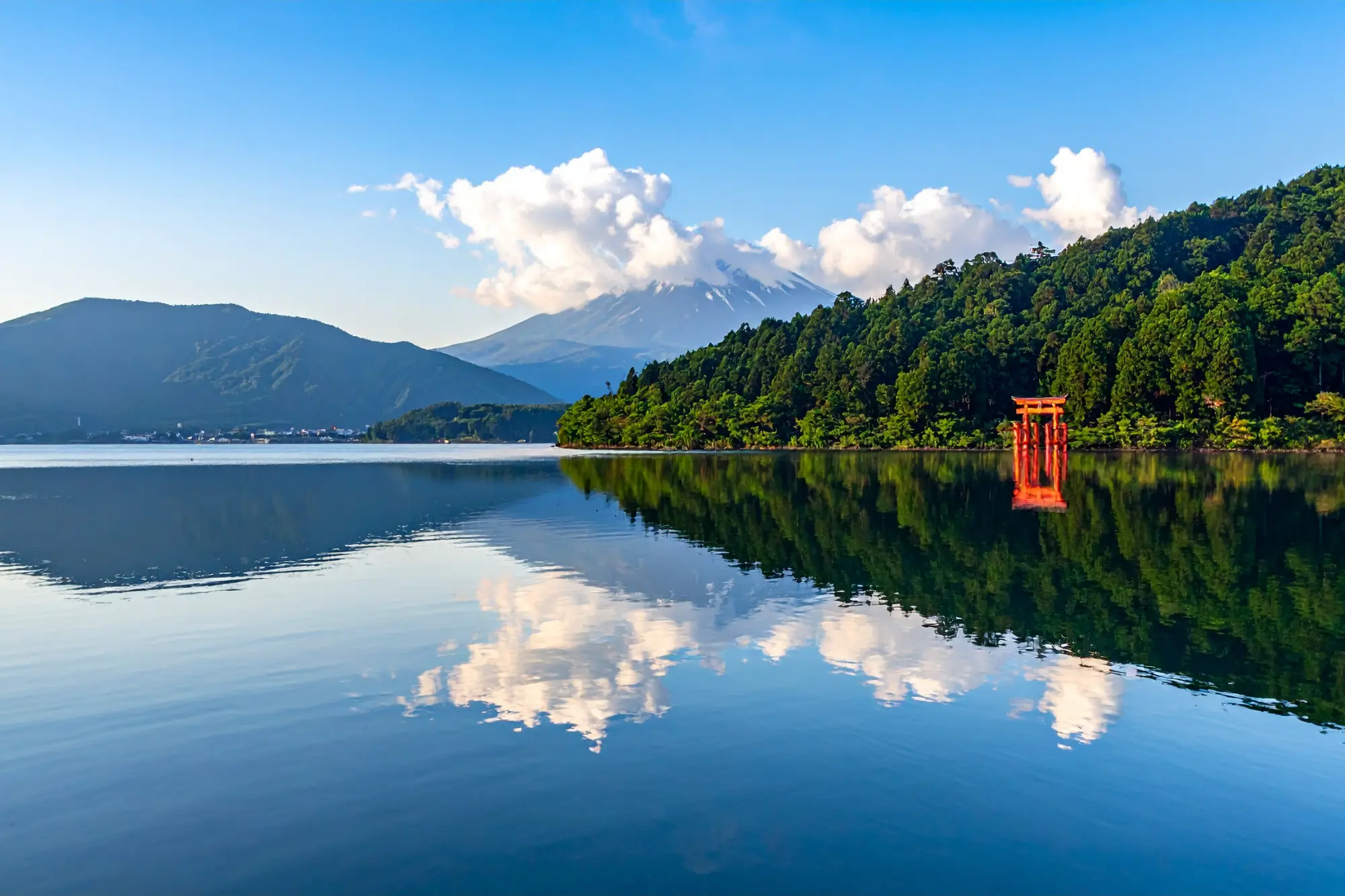
Lake Ashi, or Ashinoko, is the scenic centerpiece of the southern part of the Hakone Loop. The lake formed within a volcanic caldera and is surrounded by mountains.
The main sightseeing ports are Togendai, Motohakone, and Hakone-machi. From the lake area, visitors can reach Hakone Shrine, the Old Tokaido, Hakone Checkpoint, and several bus connections back toward Hakone-Yumoto.
Sengokuhara
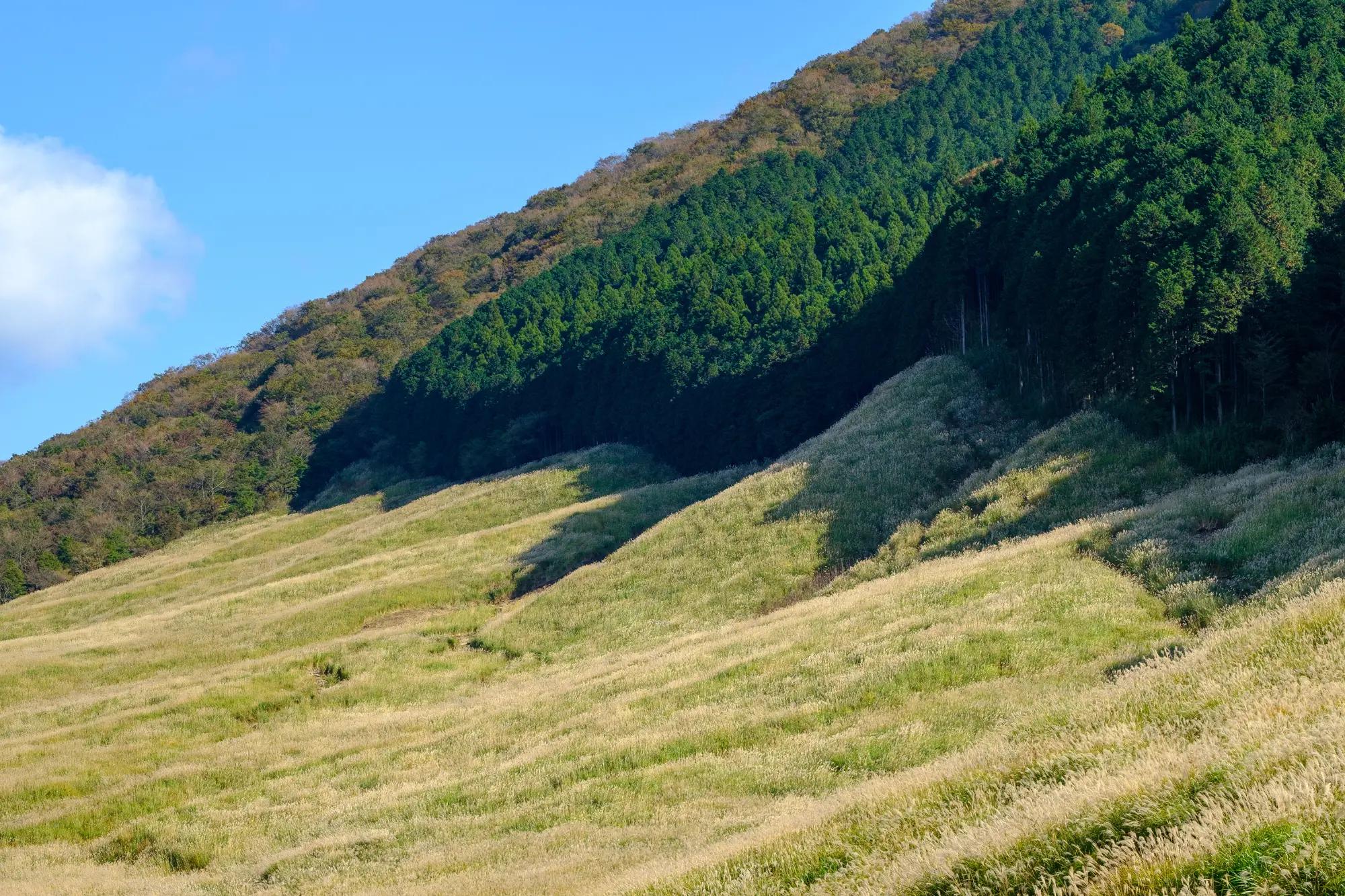
Sengokuhara is a quieter highland area known for its open scenery, museums, and seasonal pampas grass fields. It is less convenient than Hakone-Yumoto for travelers who want to rely entirely on trains, but it can work well for visitors looking for a quieter base or planning to spend more time around the museums.
The important point is that these experiences do not all fit comfortably into a rushed day. The Hakone Loop alone can occupy most of a day once you account for transfers, waiting times, sightseeing stops, and weather-related delays.
Is 1 day enough in Hakone?
Yes, one day is enough to experience the main Hakone Loop, particularly if you start early and keep the itinerary focused. However, two days and one night is a better balance for most first-time visitors who want time for an onsen, ryokan, or additional cultural experiences.
One Day in Hakone
A one-day Hakone trip works best if you treat it as a focused sightseeing day rather than trying to see everything.
A typical priority list is:
- Travel from Tokyo to Hakone-Yumoto.
- Take the Hakone Tozan Railway to Gora.
- Continue by cable car and Hakone Ropeway.
- Stop at Owakudani.
- Continue to Togendai.
- Take the Hakone Sightseeing Cruise across Lake Ashi.
- Visit Motohakone or Hakone-machi.
- Return toward Hakone-Yumoto and Tokyo.
Adding a long museum visit, a full historical walk, and an extended onsen session to the same itinerary can make the day unnecessarily tight.
Two Days in Hakone
A two-day Hakone itinerary allows the destination to feel less like a transportation challenge and more like a mountain getaway.
A practical approach is to use the first day for the Loop and the second for slower experiences such as:
- A ryokan breakfast
- A longer onsen session
- Hakone Shrine
- The Old Tokaido
- Hatajuku
- A museum
- Additional time around Lake Ashi
This is also the most practical length for travelers who want to combine a ryokan stay with a proper Hakone onsen experience rather than simply checking Hakone off a Japan itinerary.
Three Days in Hakone
A three-day Hakone itinerary gives you enough time to explore the main sights without making every day revolve around transportation.
You can add Sengokuhara, additional museums, traditional crafts, longer walks, or a second onsen experience without having to compress the main sightseeing route.
For most travelers, however, three days is a choice based on preference rather than a requirement.
The Hakone Loop: Route, Stops and What to Expect
The Hakone Loop is the classic sightseeing circuit through the region. It combines several different forms of transportation rather than functioning as one continuous train route.
The usual sequence is:
Hakone-Yumoto → Gora → Sounzan → Owakudani → Togendai → Lake Ashi → Motohakone/Hakone-machi → Hakone-Yumoto
Hakone Tozan Railway
The Hakone Tozan Railway connects Hakone-Yumoto with Gora through a steep mountain route. Rather than taking a direct line straight up the mountain, the train uses switchbacks to manage the elevation.
The journey takes roughly 40 minutes and is itself part of the sightseeing experience.
For first-time visitors, Gora is important because it connects the railway with the Hakone Tozan Cable Car.
Gora & Cable Car
From Gora, the Hakone Tozan Cable Car climbs toward Sounzan.
This section is relatively short, but it is an important connection because Sounzan is where travelers transfer to the Hakone Ropeway.
Hakone Ropeway
The Hakone Ropeway runs from Sounzan through Owakudani toward Togendai. It provides some of the most dramatic views on the route, including the volcanic landscape around Owakudani and, under favorable conditions, views toward Mount Fuji and Lake Ashi.
The ropeway normally operates frequently, but service can be suspended because of adverse weather, maintenance, or other operational conditions. Current operating information should be checked before relying on the complete Loop.
Owakudani
Owakudani is the main sightseeing stop along the ropeway.
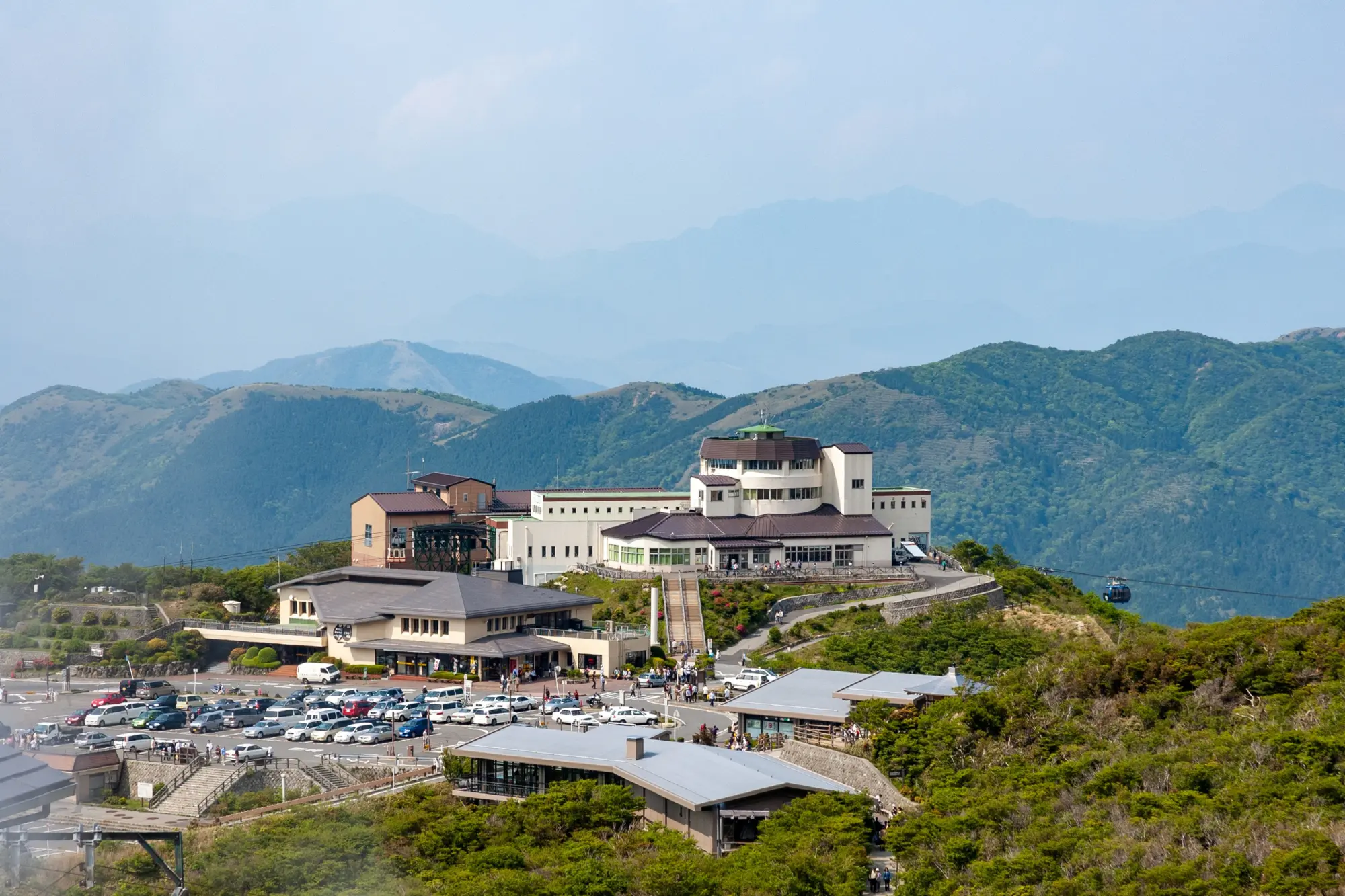
The landscape is defined by volcanic vents, sulfurous steam, and exposed mountain terrain. The area’s signature food is the kuro-tamago, or black egg.
Allow enough time to leave the station area, visit the viewing areas, and have a snack rather than treating Owakudani as a simple transfer point.
Because Owakudani is within an active volcanic environment, transportation conditions can change. The official ropeway system monitors volcanic gas concentrations and can suspend service when conditions require it.
Togendai
Togendai sits at the northern end of Lake Ashi and is one of the most important transfer points in Hakone.
Here, travelers can connect between the Hakone Ropeway, Hakone Sightseeing Cruise, and bus services.
Togendai is also where travelers should pay close attention to which boat service they are boarding.
Hakone Pirate Ship
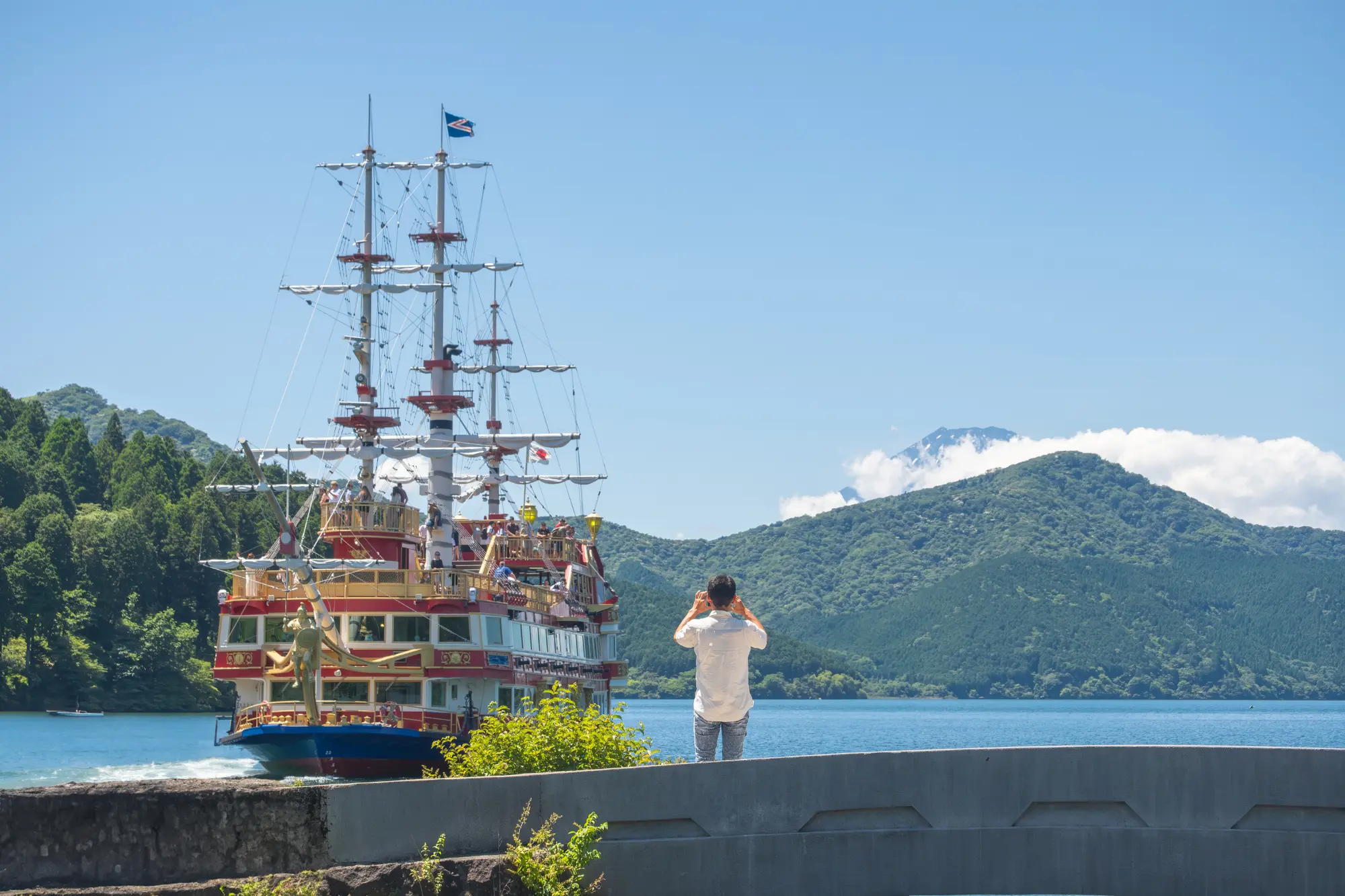
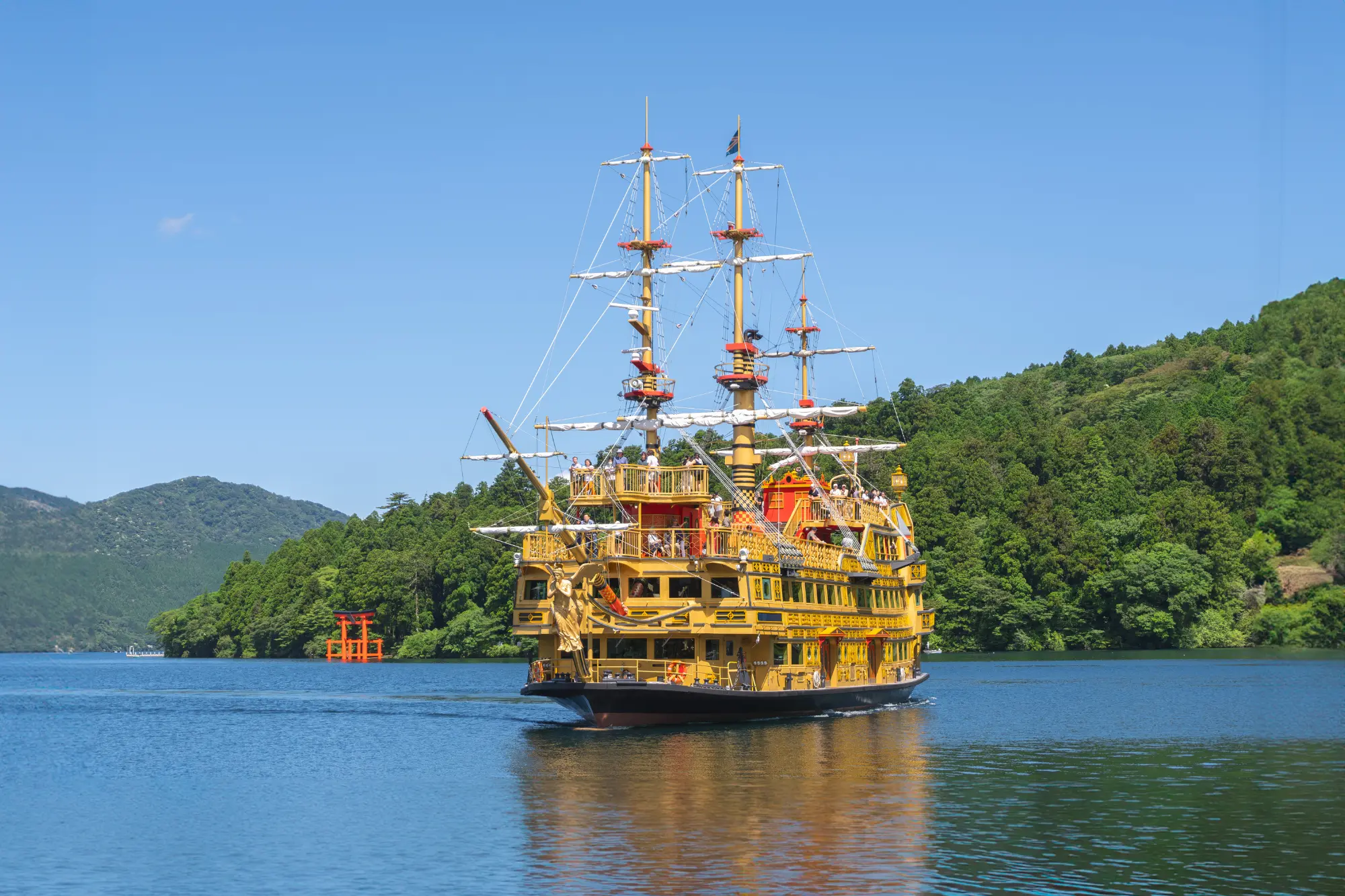
The Hakone Sightseeing Cruise is the pirate-ship-style boat used as part of the classic Hakone Loop. It connects Togendai with the southern Lake Ashi ports.
The boats are designed as sightseeing vessels rather than simply transportation, so the lake crossing is part of the attraction.
If you are using the Hakone Freepass, check the branding before boarding. The Free Pass covers the Hakone Sightseeing Cruise, not every boat operating on Lake Ashi.
Lake Ashi & Motohakone
Motohakone is one of the main stops on the southern side of Lake Ashi and is particularly useful for visiting Hakone Shrine.
The area also connects to buses returning toward Hakone-Yumoto and Odawara. Official station information lists multiple Hakone Tozan Bus routes from Motohakone toward Hakone-Yumoto and Odawara.
On clear days, Mount Fuji can appear across the lake. Visibility is weather-dependent, so it is better to treat a Fuji view as an added benefit rather than the reason to build the entire itinerary around one viewpoint.
Should You Complete the Entire Loop?
You can complete the Loop in one day, but you do not have to.
The better choice depends on your priorities. If this is your first visit and you want the classic Hakone experience, the Loop is the most efficient way to combine the region’s major scenic transportation.
If you are staying overnight, however, there is little benefit in racing from one connection to another simply to say you completed the circuit.
A slower itinerary with an onsen, ryokan meal, shrine visit, or museum can provide more value than adding another rushed stop.
Getting Around Hakone
Hakone is easy to navigate once you understand how the transport network fits together, but it is not a destination where you should assume every train, bus, and boat is interchangeable.
The main services include the Hakone Tozan Railway, Hakone Tozan Cable Car, Hakone Ropeway, Hakone Sightseeing Cruise, Hakone Tozan Bus, and selected Odakyu and Tokai bus services.
For first-time visitors, the Hakone Loop is generally the easiest way to connect the area’s major attractions.A practical Hakone travel guide should also explain how these different transport options connect, especially if you are visiting for only one day.
Hakone Freepass
The Hakone Freepass is designed around the region’s main transportation network.
It covers eligible rides on:
- Hakone Tozan Railway
- Hakone Tozan Cable Car
- Hakone Ropeway
- Hakone Sightseeing Cruise
- Designated Hakone Tozan Bus services
- Other designated bus services within the applicable area
The current pass structure changed in October 2025. The adult fare is currently ¥7,100 for two days or ¥7,500 for three days when starting from Shinjuku, while the local version from Odawara is ¥5,000 for two days or ¥5,400 for three days. Prices and conditions can change, so check the official fare information before budgeting.
The pass is most useful when you plan to use several forms of transportation. If you are visiting one or two attractions and returning the same way, compare the individual fares first.
Romancecar
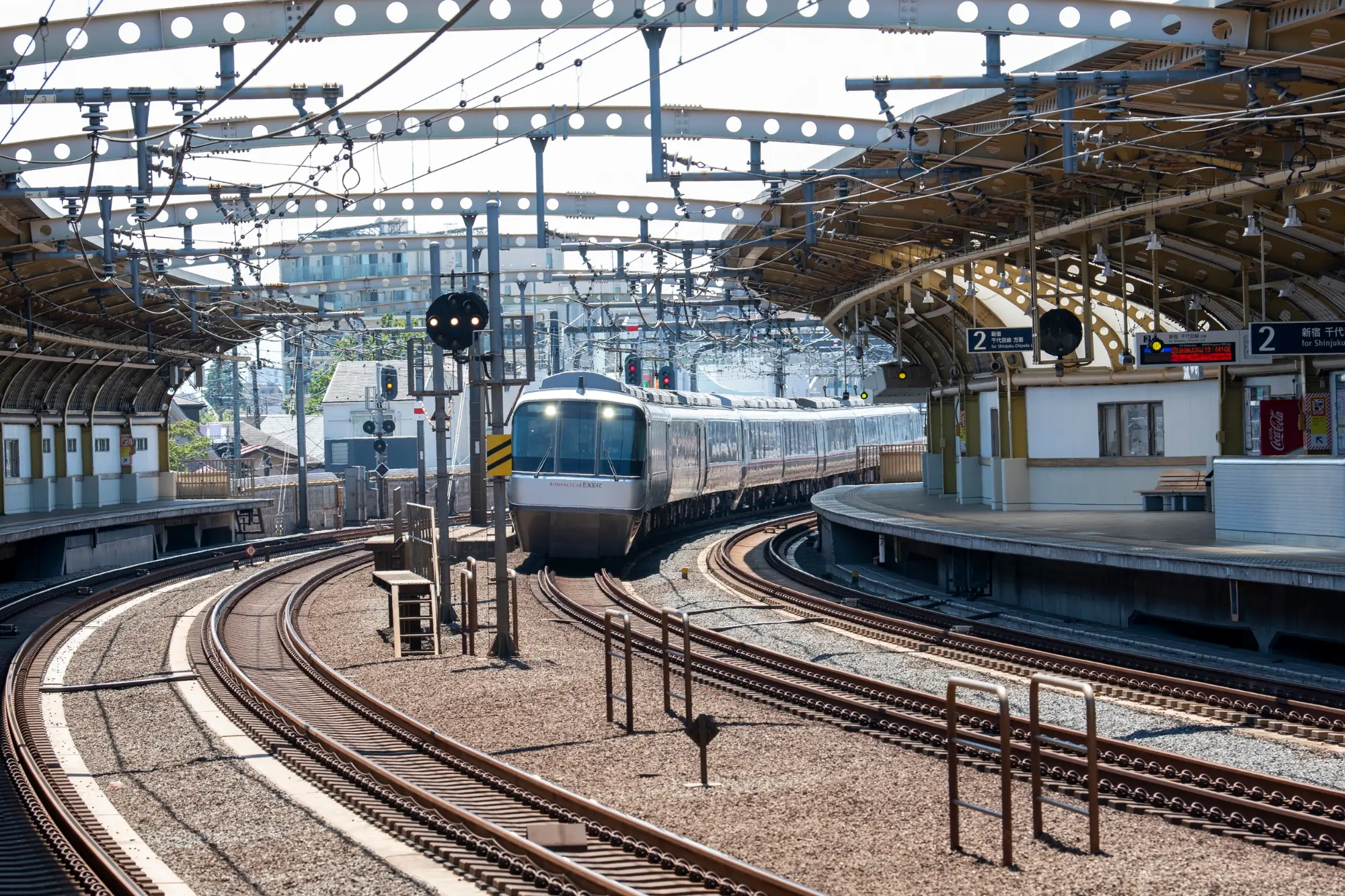
The Odakyu Romancecar is the reserved-seat limited express connecting Shinjuku with Hakone-Yumoto.
The Romancecar is not simply included in the Hakone Freepass without an additional limited-express charge. If you want to use it, budget for the required limited-express ticket or surcharge in addition to the applicable pass or base fare.
Reserved seating makes the Romancecar particularly useful for travelers who prefer a predictable journey between Tokyo and Hakone.
Buses, Trains, Cable Cars & Ropeway
The key thing to understand is that Hakone transportation works as a network, not as one mode of transit.
For example:
- Train: Hakone-Yumoto → Gora
- Cable car: Gora → Sounzan
- Ropeway: Sounzan → Owakudani → Togendai
- Cruise: Togendai → Lake Ashi ports
- Bus: Lake Ashi → Hakone-Yumoto/Odawara
Hakone Tozan Bus also connects major sightseeing areas and museums, including Sengokuhara and the Lake Ashi area. Suica and PASMO can be used on Hakone Tozan Bus routes, although exceptions apply to certain sightseeing bus services.
What Happens When Transportation Is Suspended?
This is one of the most important things to understand before attempting the full Loop.
The Hakone Ropeway and Hakone Sightseeing Cruise can be suspended because of weather or other operational conditions. The official Hakone transportation page provides current operating information for the railway, cable car, ropeway, cruise, and bus network.
If a section is unavailable, buses may provide an alternative connection, but the replacement route can change your timing and may involve waiting.
Do not build a tight onward train connection around the assumption that every part of the Loop will operate exactly as planned.
Peak-Season Traffic
The roads around Lake Ashi and Hakone-Yumoto can become congested during busy periods, particularly during cherry blossom and autumn foliage seasons.
A bus journey that looks short on a map can therefore take considerably longer than expected.
If you have a fixed Romancecar, Shinkansen, or flight connection, leave a substantial buffer rather than scheduling the final bus based on its normal travel time.
Do You Need a Guide or Private Transport?
You do not need a guide to experience the standard Hakone Loop independently.
A private vehicle or guide becomes more useful when the itinerary involves:
- Heavy luggage
- Multiple stops outside the standard Loop
- A tight onward connection
- Travelers who prefer not to navigate transfers
- A customized route involving several less-connected areas
The value of private transportation in Hakone is therefore less about replacing the standard sightseeing system and more about reducing transfer friction when the itinerary becomes complicated. Nicetrips also provides private car transportation in Hakone for travelers who prefer a more comfortable and flexible way to explore the area.
Hakone Onsen and Ryokan
Hakone Onsen is not one single bath or resort. The region has a long history of hot-spring development and is traditionally associated with Hakone Jyu-nana-yu, the seventeen hot-spring areas of Hakone.
For many visitors, a Hakone onsen experience is one of the main reasons to stay overnight rather than visit only as a day trip from Tokyo.
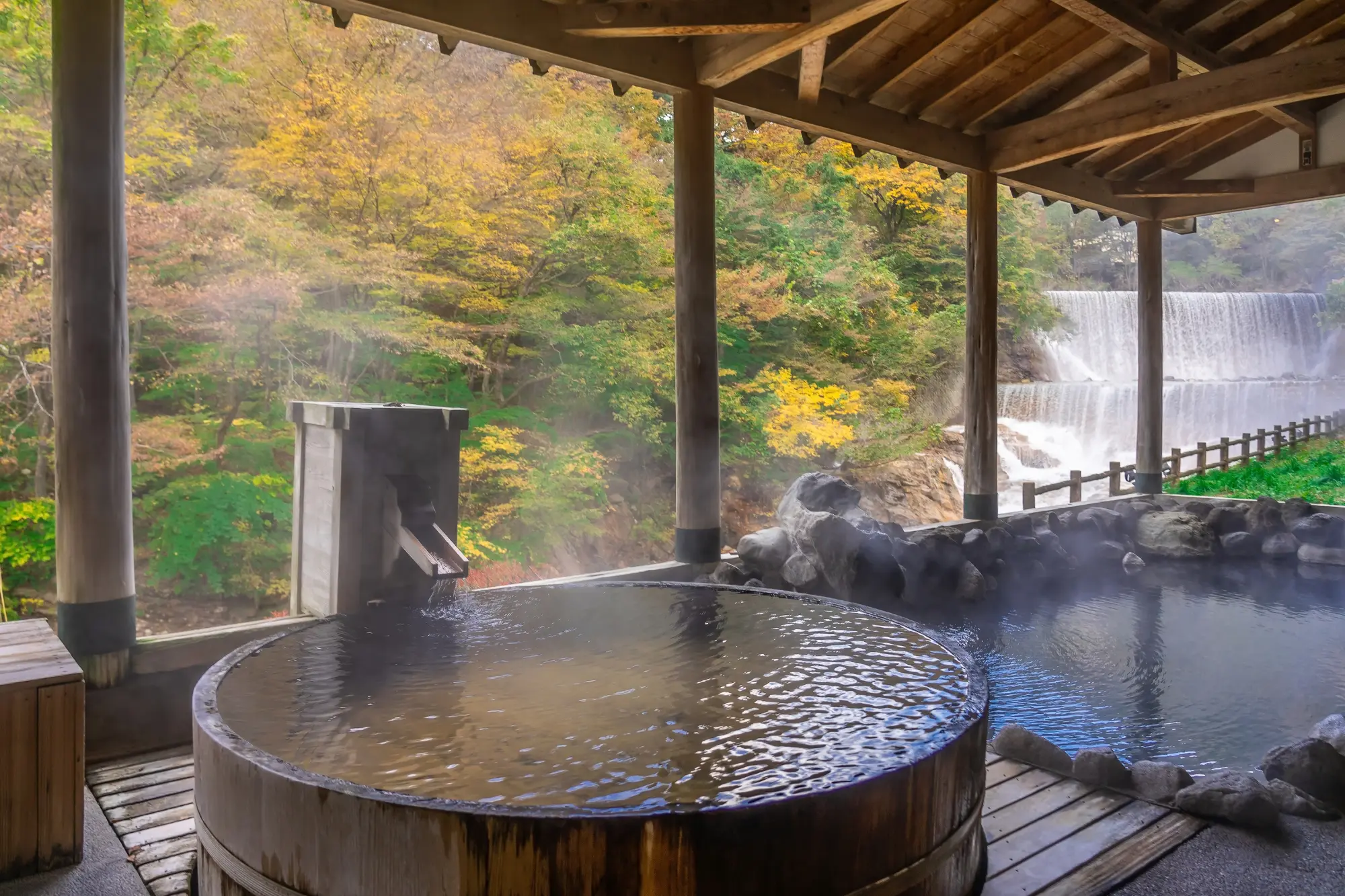
Hakone Jyu-nana-yu: The 17 Hot Spring Areas of Hakone
Hot-spring bathing in Hakone dates back many centuries. The historic Hakone hot-spring districts expanded over time as new sources were developed, eventually forming the modern group of seventeen areas.
This helps explain why staying in Hakone Onsen can feel very different depending on where you stay.
Hakone-Yumoto is convenient and lively. Miyanoshita has a long resort history. Other areas offer a quieter mountain setting.
Choosing a ryokan is therefore partly a choice about which side of Hakone you want to experience.
Related Article: Onsen in Japan: 13 Amazing Things Every First-Time Visitor Should Know
Why Stay in a Ryokan?
A ryokan changes the pace of a Hakone trip.
Instead of using the accommodation only as a place to sleep, the stay itself becomes part of the itinerary. Depending on the property, the experience may include:
- Japanese-style rooms
- Tatami flooring
- Futon bedding or Western-style beds
- Communal or private baths
- Seasonal kaiseki meals
- Traditional Japanese interiors
- Mountain or garden views
Many modern ryokan offer Western-style beds, so travelers who do not want to sleep on a futon should check the room description before booking.
Related Article: Ryokan vs Hotel in Japan: Which Stay Is Right for Your First Trip? (2026 Guide)
What to Expect From a Ryokan Stay
A ryokan is usually less flexible than a standard hotel when it comes to evening timing.
The dinner service often requires advance preparation, particularly when the meal is a multi-course kaiseki dinner. That means your arrival time matters.
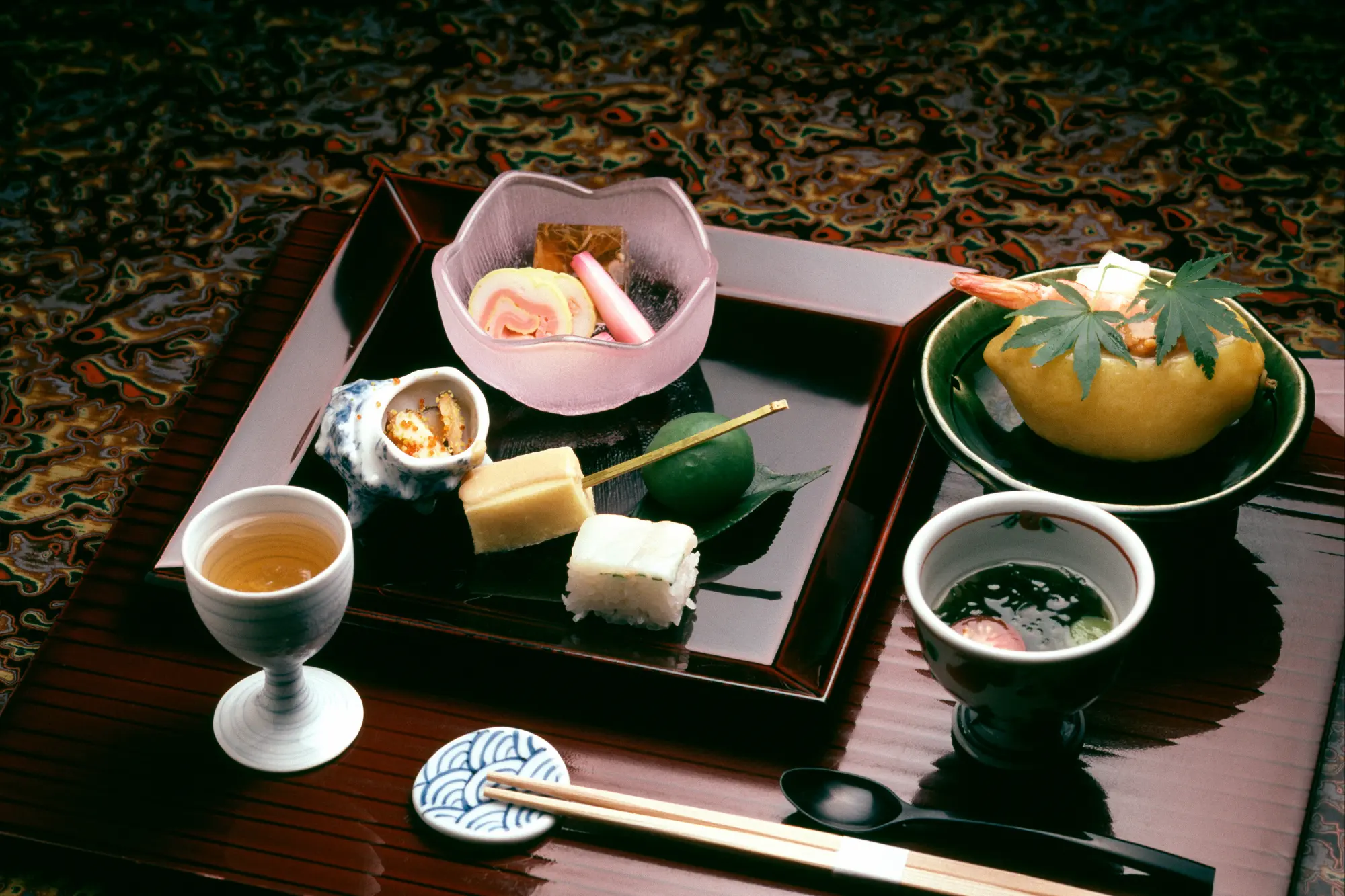
If you are completing the Hakone Loop on the same day as your ryokan check-in, do not assume you can arrive whenever you want.
Before booking, confirm:
- Check-in deadline
- Dinner serving time
- Whether dinner is included
- Whether a late arrival is accepted
- Whether the property has a private bath
- Whether Western-style beds are available
Onsen and Bath Taxes
Hakone levies a local hot-spring bathing tax (nyutozei).
For overnight visitors, the current tax is ¥150 per person per night. Day visitors are charged ¥50 per person. The tax is collected by the hot-spring facility or accommodation rather than being a national tourism fee.
This is a small expense, but it is worth knowing about when comparing accommodation prices.
What to Eat in Hakone
Hakone food reflects the area’s mountain environment, hot springs, neighboring Odawara, and traditional ryokan culture.
Some specialties are easy to find along the main sightseeing route, while others are more closely connected to specific neighborhoods.
Black Eggs
Kuro-tamago, or black eggs, are the signature snack of Owakudani. Their shells become black during the boiling process in the area’s sulfur-rich hot-spring environment.
They are sold around the Owakudani area and are usually treated as a snack rather than a full meal.
Soba
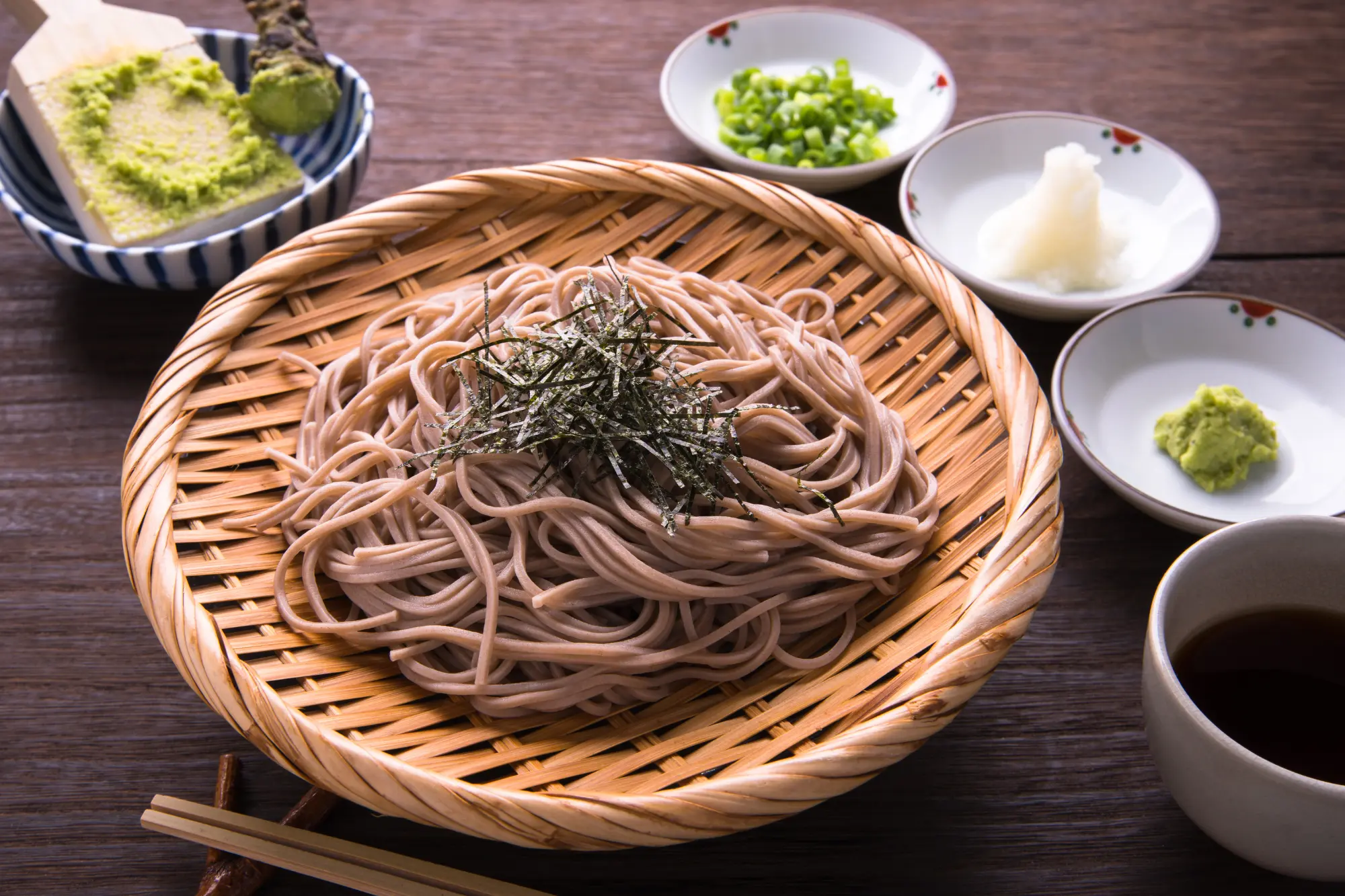
Soba is one of the easiest local meals to work into a Hakone itinerary. Buckwheat noodles are commonly served in a warm broth and are particularly convenient around Hakone-Yumoto and other major sightseeing areas.
Travelers with dietary restrictions should check the broth ingredients rather than assuming a noodle dish is vegetarian. Traditional Japanese noodle broths often contain fish-based dashi.
Amazake and Amazake-chaya
Amazake-chaya is a historic teahouse on the Old Tokaido Road in Hatajuku. It is known for warm amazake and chikara-mochi rice cakes served in a traditional setting.
Amazake is a naturally sweet, non-alcoholic rice drink, although visitors should still confirm ingredients if they have specific dietary requirements.
Other Local Specialties
Depending on where you travel in Hakone, you may also encounter:
- Kamaboko, a steamed fish cake associated with nearby Odawara
- Wakasagi, a small fish from Lake Ashi, often served fried
- Tofu and yuba, made using local water
- Onsen manju, steamed buns filled with sweet bean paste

Hakone Culture and History
Hakone’s cultural significance comes partly from its location on the historic Tokaido Road, the major route that once connected Edo and Kyoto.
Hakone Shrine
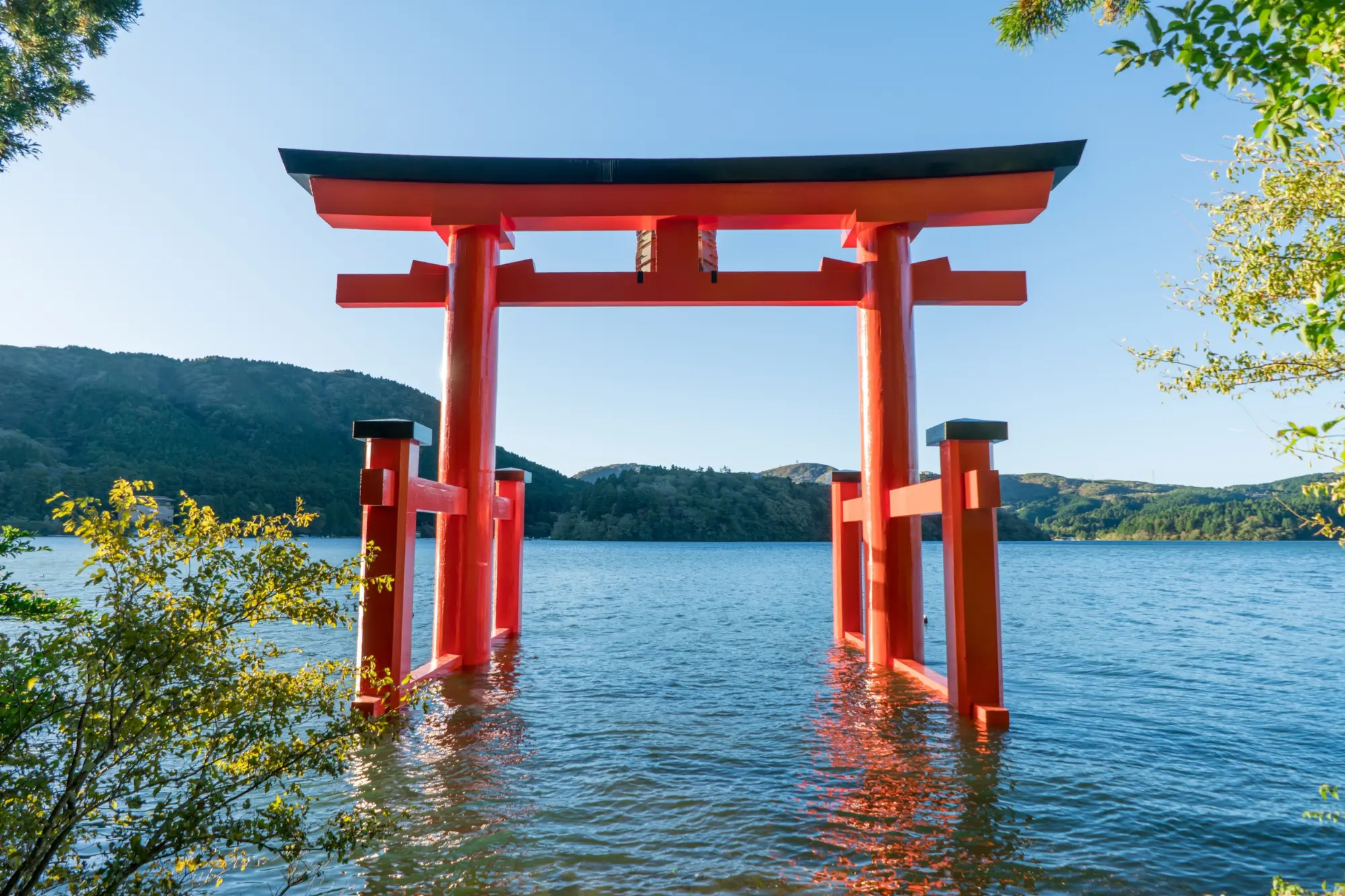
Hakone Shrine is one of the region’s best-known cultural landmarks. It sits near Lake Ashi and is famous for the red torii standing near the water.
The shrine is particularly easy to combine with a visit to Motohakone after crossing Lake Ashi.
Hakone Checkpoint
The Hakone Checkpoint was part of the historic Tokaido route and controlled travelers moving between Edo and western Japan during the Edo period.
Today, the reconstructed checkpoint provides context for why Hakone was strategically important long before it became a leisure destination.
The Old Tokaido
Parts of the Old Tokaido can still be explored on foot.
The route gives travelers a different experience of Hakone from the modern transportation loop. Instead of moving quickly between stations, you encounter historic stone paving, forests, and traditional roadside sites.
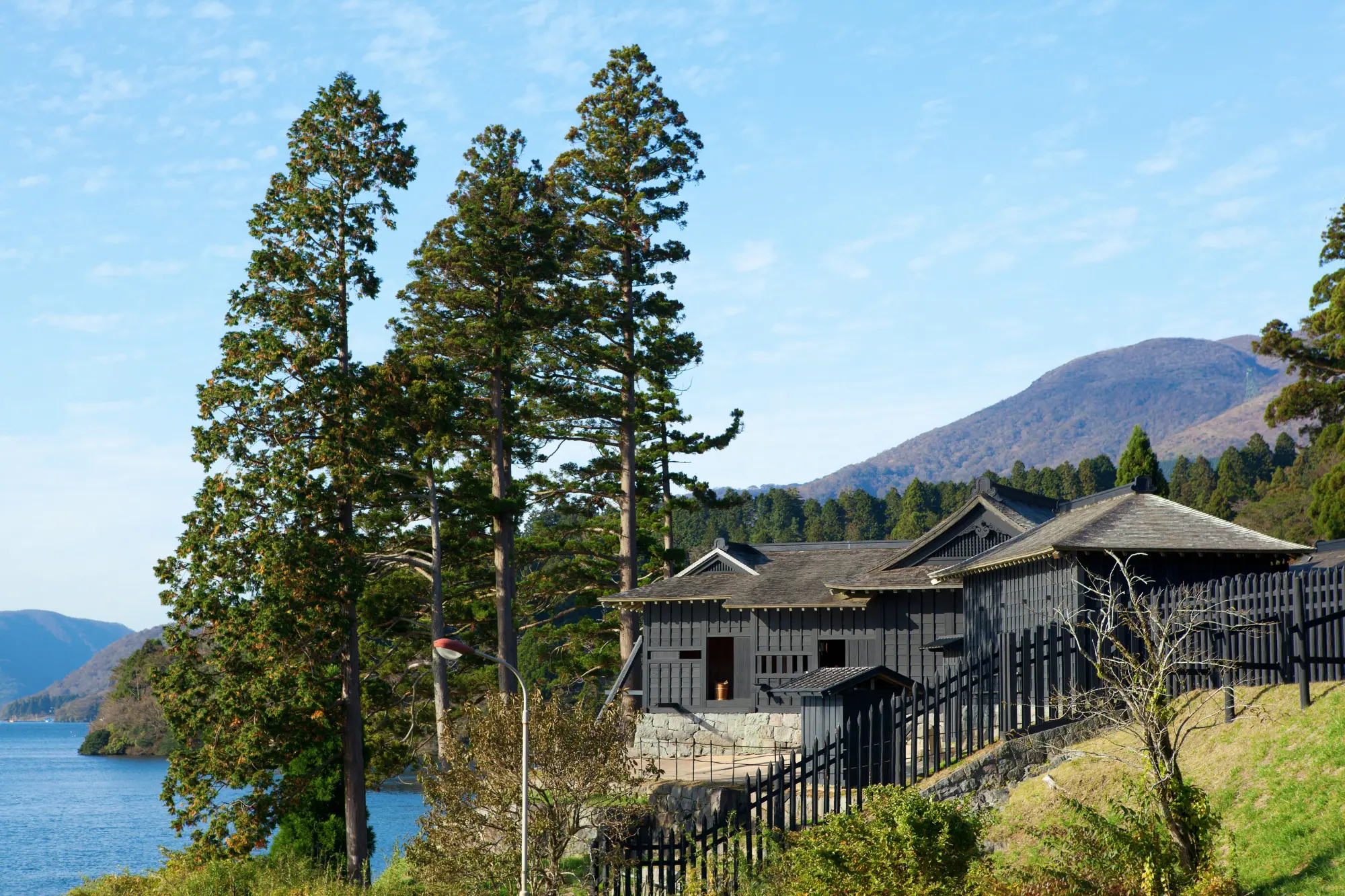
Historic Roads and Mountain Routes
The contrast between the old road and the modern Loop is part of what makes Hakone interesting.
The same mountainous terrain that once made the Tokaido difficult to travel now shapes the region’s trains, roads, cable cars, and ropeway.
Hakone Traditional Crafts
One of Hakone’s most distinctive cultural traditions is Yosegi-Zaiku, a form of Japanese wood marquetry.
What Is Yosegi-Zaiku?
Yosegi-Zaiku involves combining naturally colored woods into geometric patterns. Craftspeople assemble different pieces into blocks and then shave extremely thin layers from the surface to create decorative sheets.
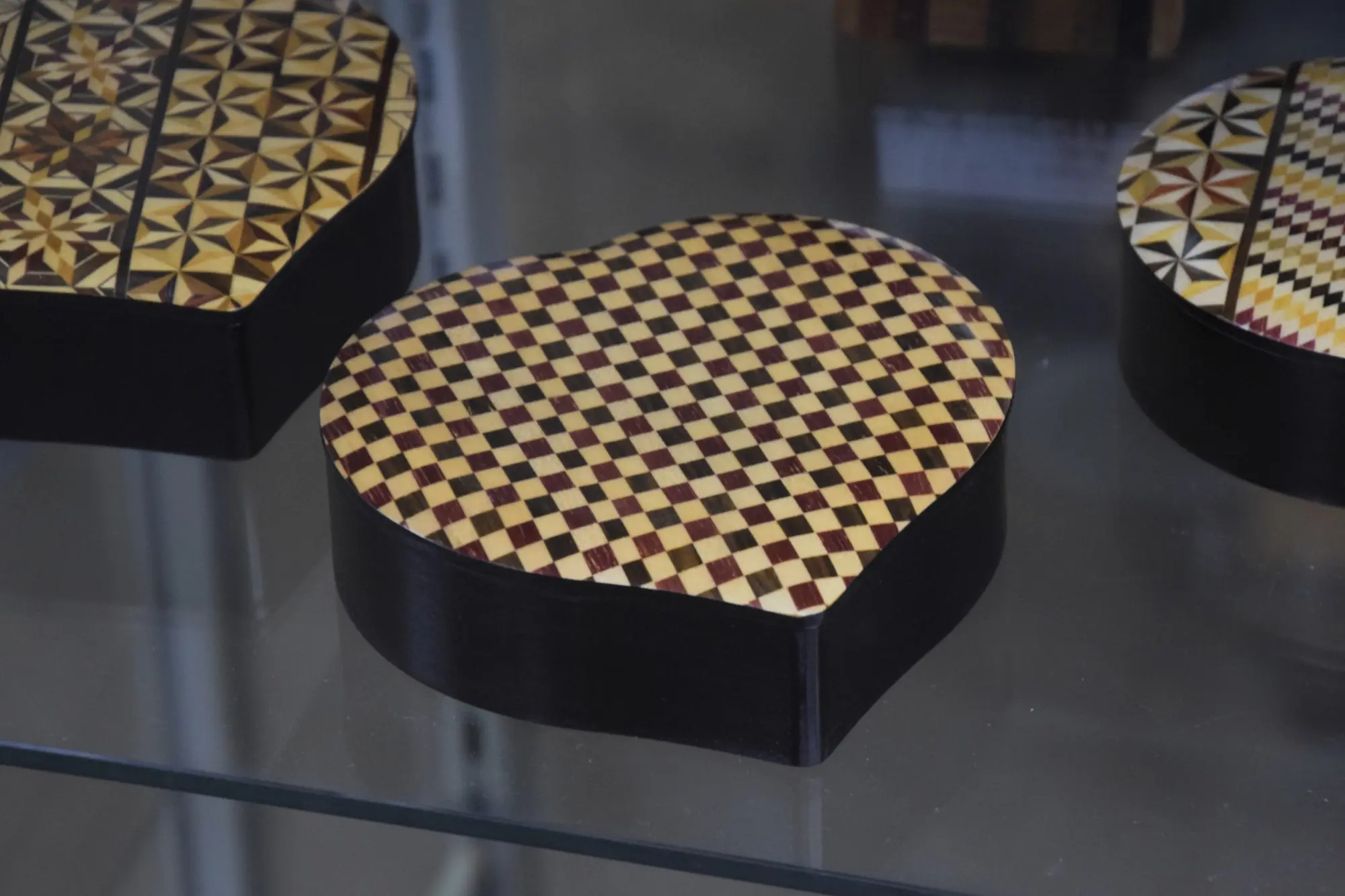
These sheets are used for boxes, trays, furniture, and the famous himitsu-bako, or Japanese puzzle boxes.
Unlike painted decorative woodwork, traditional yosegi relies heavily on the natural colors and grain of different woods.
Hatajuku and Hakone’s Woodcraft Tradition
Hatajuku is closely associated with Hakone’s woodcraft tradition and lies along the historic Tokaido route.
Small workshops in the area provide opportunities to see traditional craftsmanship and, at some locations, participate in demonstrations or hands-on activities.
Nearby Amazake-chaya adds another historical layer to the experience, combining the old highway, traditional food, and long-running family craftsmanship.
Hakone Museums and Art
Hakone is also an important art destination, with museums spread across the mountain districts. Museums can be particularly useful when weather makes outdoor sightseeing less comfortable.
Hakone Open-Air Museum
The Hakone Open-Air Museum combines sculpture with the surrounding mountain landscape.
It is one of the easiest museums to add to a Hakone itinerary, particularly for travelers staying around Gora or Kowakidani.
Pola Museum of Art
The Pola Museum of Art sits in a forested setting in Sengokuhara and houses works by artists including Monet, Picasso, and Foujita, alongside contemporary art.
Its setting makes the museum part of the experience rather than simply an indoor attraction.
Okada Museum of Art
The Okada Museum of Art focuses on Japanese and East Asian art and is another option around the Gora and Kowakidani area.
It works well for visitors who want to combine cultural sightseeing with the area’s hot springs.
Hakone Venetian Glass Museum
The Hakone Venetian Glass Museum focuses on Venetian-style glass art and provides another alternative to the standard natural and historical attractions.
For travelers spending two or three days in Hakone, these museums can help create a more varied itinerary rather than concentrating entirely on the Loop.
What Is the Best Month to Visit Hakone?
The best month to visit Hakone depends on whether you prioritize foliage, cherry blossoms, clear mountain views, hot springs, or lower crowd levels. There is no single month that is ideal for every traveler.
Hakone in Spring
Spring brings cherry blossoms and is one of the busiest periods for travel.
If you plan to visit during late March or early April, book popular accommodation and reserved transportation in advance.
Hakone in Summer
Summer is warmer and more humid, while haze can reduce visibility toward Mount Fuji.
The mountain setting can still provide a pleasant escape from central Tokyo, but travelers should not assume that higher elevation means consistently cool weather.
Hakone in Autumn
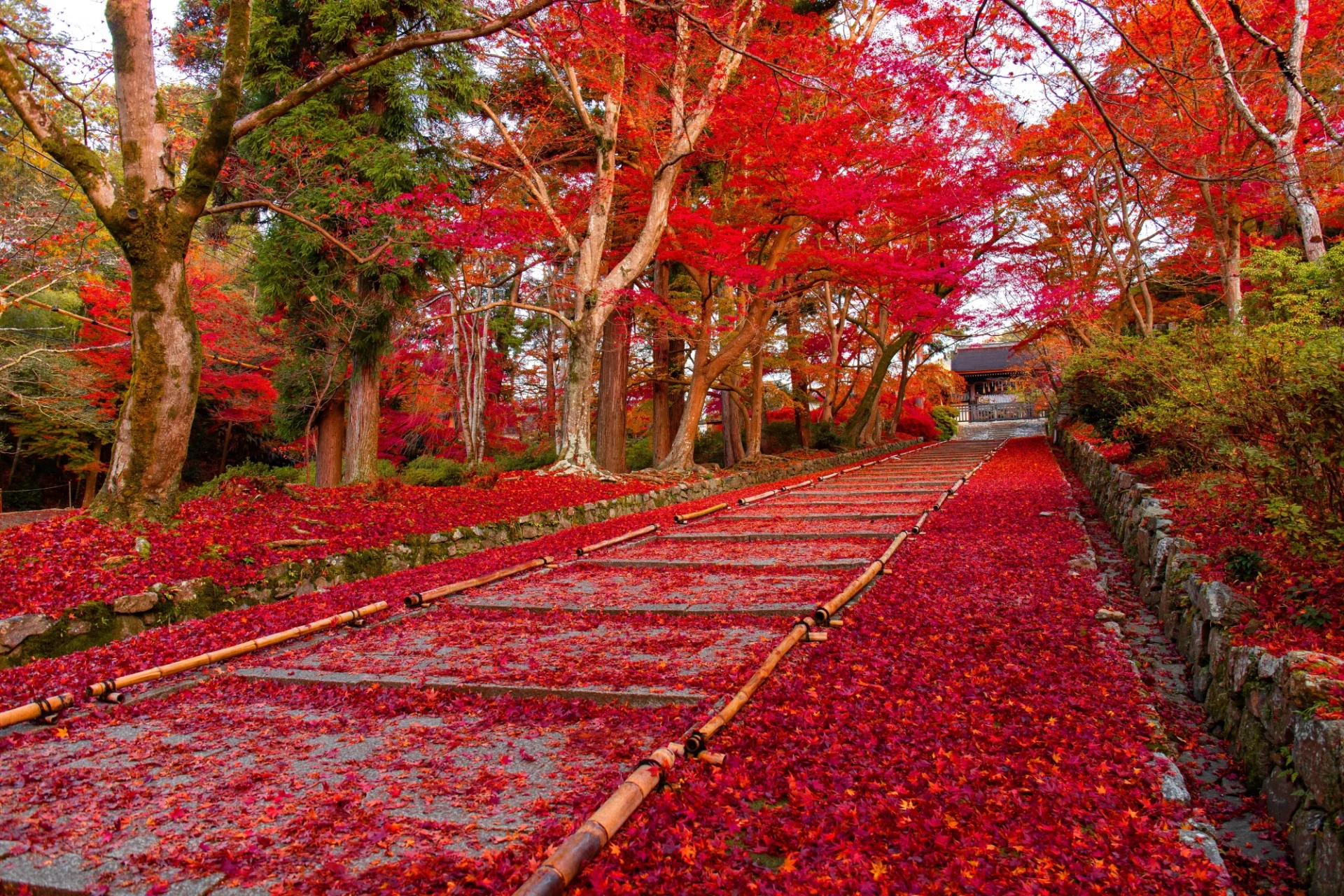
Autumn is one of Hakone’s most popular seasons, particularly from late October into November as foliage changes at different elevations.
Because the region is mountainous, foliage timing varies by location rather than arriving everywhere at the same time.
Hakone in Winter
Winter can bring colder conditions but often offers clearer air and better chances of seeing Mount Fuji.
Higher-elevation areas can experience snow or icy conditions, which may affect road and bus travel.
When Can You See Mount Fuji?
There is no guaranteed Mount Fuji viewing season or viewpoint.
Visibility depends heavily on weather and atmospheric conditions. Winter often provides better visibility, while summer haze can make the mountain difficult to see.
Plan the trip around Hakone itself rather than treating a Fuji sighting as the main objective.
Related Article: Mt. Fuji Day Trip from Tokyo for the Best Views and Experiences
Where to Stay in Hakone
Where you stay in Hakone changes the experience because the region does not have one central downtown.
| Area | What It’s Known For | Best For |
| Hakone-Yumoto | Main gateway, shops, restaurants, easy rail access | First-time visitors and convenience |
| Gora | Mountain setting, cable car, museums | Travelers interested in art, transport and onsen |
| Miyanoshita | Historic resort atmosphere | Travelers looking for traditional character |
| Sengokuhara | Highland scenery and museums | Quieter stays and cultural sightseeing |
| Lake Ashi | Lake and mountain views | Travelers prioritizing scenery and a more secluded ryokan experience |
Practical Hakone Travel Tips
If your Hakone itinerary includes several different areas, group nearby attractions together instead of crossing the region multiple times in one day.
Cash, Cards and IC Cards
Major stations, convenience stores, and larger attractions increasingly accept cards and electronic payments, but smaller traditional businesses may still prefer cash.
Carry some Japanese yen, particularly if your itinerary includes:
- Traditional teahouses
- Small craft workshops
- Roadside food stalls
- Smaller restaurants
- Rural transportation stops
Suica and PASMO are useful on Hakone Tozan Bus routes, although not every sightseeing service accepts them.
Weather and Transportation Disruptions
A good Hakone travel guide should also account for changing weather and transportation conditions. Check Hakone’s official transportation status shortly before leaving your accommodation.
The official system provides updates for the Hakone Tozan Railway, Cable Car, Ropeway, Hakone Sightseeing Cruise, and buses, making it possible to adjust the itinerary before you reach a closed connection.
Planning Around Onward Connections
Do not schedule your final Hakone bus or cruise based on the minimum theoretical journey time if you have a fixed Shinkansen or flight afterward.
Mountain roads can become congested, and weather can affect transportation.
A safer approach is to return toward your departure station earlier than you think you need to, particularly during peak foliage and cherry blossom periods.
Booking and Timing Considerations
Reserve ahead when your itinerary depends on something with limited capacity or fixed timing.
This is particularly important for:
- Romancecar reserved seats
- Popular ryokan
- Ryokan dinner services
- Private baths
- Peak-season accommodation
The more fixed elements you add to a Hakone day, the less flexibility you have when weather or traffic changes.
Common Mistakes to Avoid in Hakone
The most common Hakone planning mistakes are logistical rather than cultural.
- Assuming Hakone is compact. Distances between attractions can be misleading because the roads are mountainous.
- Trying to rush the entire Loop. Transfers and waiting times add up.
- Booking a ryokan without checking dinner time. A late arrival can create a genuine problem.
- Carrying large luggage through the Loop. Use luggage storage or forwarding where possible.
- Assuming every Lake Ashi boat is included in the Free Pass. The pass covers the Hakone Sightseeing Cruise, not every operator.
- Planning around a guaranteed Mount Fuji view. Visibility changes with weather.
- Ignoring weather-related suspensions. Ropeway and cruise operations can change.
- Leaving no buffer before an onward train. Mountain-road traffic can turn a short bus ride into a much longer one.
Is Hakone in Japan worth visiting?
Yes, Hakone is worth visiting if you want more than a conventional sightseeing stop. The variety of things to do in Hakone includes hot springs, ryokan stays, volcanic scenery, Lake Ashi, traditional culture, scenic transportation, and mountain landscapes.
Hakone is particularly worthwhile when you have enough time to slow down and experience the destination rather than treating the Hakone Loop as a checklist.
It is a strong choice for travelers who want to:
- Experience a traditional ryokan
- Soak in a Japanese onsen
- See volcanic landscapes at Owakudani
- Cruise Lake Ashi
- Visit Hakone Shrine
- Explore the historic Old Tokaido
- Discover Yosegi-Zaiku
- Visit art museums in a mountain setting
- Combine sightseeing with relaxation
The main trade-off is convenience. Hakone is spread across mountainous terrain, so transportation involves transfers and journey times can change with weather and traffic.
For travelers who are comfortable with that, the transport network is part of what makes Hakone distinctive. For travelers who want a compact destination where everything is within walking distance, Hakone may require more planning than expected.
Who Is Hakone Best For?
The variety of things to do in Hakone makes the destination suitable for travelers with very different interests and travel styles. Hakone is best for travelers who want a combination of nature, Japanese culture, hot springs, scenic transportation, and a slower mountain stay.
It works particularly well for:
- Travelers adding a mountain escape to a Tokyo itinerary
- Couples looking for an onsen and ryokan experience
- Travelers interested in Japanese craftsmanship and history
- Visitors who enjoy scenic train, ropeway, and boat journeys
- Travelers with enough time for an overnight stay
- People who want a destination that combines sightseeing with relaxation
Who Might Find Hakone Less Convenient?
Hakone can be less suitable for travelers who:
- Dislike multiple transportation changes
- Need extremely predictable travel times
- Want every attraction within walking distance
- Are uncomfortable with mountain roads or uneven surfaces
- Have a tightly scheduled onward train or flight
That does not make Hakone a poor destination for these travelers. It simply means the itinerary should be designed around those constraints rather than assuming the standard Loop will fit everyone equally well.
Final Thoughts: How to Experience Hakone Properly
The best way to experience Hakone is not necessarily to see the largest number of attractions. The region works better when you combine a few experiences that complement each other.
For a first visit, a strong combination is:
- One scenic route: the Hakone Loop
- One natural experience: Owakudani or Lake Ashi
- One cultural experience: Hakone Shrine, the Old Tokaido, or Yosegi-Zaiku
- One memorable meal: local soba or a ryokan kaiseki dinner
- One slower experience: an onsen or ryokan stay
The key is to leave enough room for the things that make Hakone different from Tokyo: mountain scenery, hot springs, traditional accommodation, and transportation that follows the landscape rather than cutting straight through it.
If you have only one day, focus on the Loop. If you have two days, add the ryokan and onsen experience. If you have three, slow down and explore beyond the standard route.
Frequently Asked Questions About Hakone
Is One Day Enough for Hakone?
Yes. One day is enough to experience the main Hakone Loop, particularly if you start early and keep the itinerary focused. However, an overnight stay is better if you want time for an onsen, ryokan dinner, or additional cultural experiences.
What Is the Hakone Loop?
The Hakone Loop is a sightseeing circuit combining the Hakone Tozan Railway, cable car, Hakone Ropeway, Lake Ashi sightseeing cruise, and bus connections. The classic route runs from Hakone-Yumoto through Gora, Sounzan, Owakudani, Togendai, and Lake Ashi before returning toward Hakone-Yumoto.
Is the Hakone Pirate Ship Included in the Hakone Freepass?
Yes, if you mean the Hakone Sightseeing Cruise, which operates the pirate-ship-style boats on Lake Ashi. The Free Pass does not cover the separate Izu-Hakone Sightseeing Boat service.
Is Staying Overnight in Hakone Worth It?
For many first-time visitors, yes. An overnight stay gives you time to experience a ryokan, enjoy an onsen without rushing, and explore Hakone at a slower pace instead of fitting everything into a single transport-heavy day.
Can You See Mount Fuji From Hakone?
Yes, Mount Fuji can be seen from Hakone, including from parts of the Hakone Ropeway and Lake Ashi area, but visibility depends on weather and atmospheric conditions. A Fuji view should be treated as a bonus rather than a guarantee.
What Is Hakone Famous For?
Hakone is famous for its hot springs, ryokan, Owakudani’s volcanic landscape, Lake Ashi, Mount Fuji views, the Hakone Loop, Hakone Shrine, and traditional crafts such as Yosegi-Zaiku.
What Should You Do If the Hakone Ropeway or Pirate Ship Is Suspended?
Check the official Hakone transportation status first and look for alternative bus routes. The Hakone network is designed with multiple connections, although a suspension can change the timing and sequence of your itinerary.
Do You Need a Guide in Hakone?
No. The standard Hakone Loop is straightforward to complete independently for travelers comfortable with transfers and bilingual signage. A private guide or vehicle becomes more valuable when you have heavy luggage, complex routing, multiple destinations outside the Loop, or a tight onward connection.
What Food Should You Try in Hakone?
Start with kuro-tamago at Owakudani, soba, tofu and yuba, kamaboko from nearby Odawara, onsen manju, and kaiseki at a ryokan if you stay overnight. For a more historic experience, try amazake and chikara-mochi at Amazake-chaya on the Old Tokaido.