Vietnamese food soup is best understood as a broad group of Vietnamese dishes built around broth, noodles, meat or seafood, and fresh herbs. Vietnamese noodle soup is especially important because it appears across the country, from northern pho to spicy bun bo Hue and southern hu tieu. Each bowl reflects local ingredients, regional tastes, and everyday eating habits.
This guide explores seven must-try noodle dishes, explains what makes their broths and noodles different, introduces common Vietnamese pho spices, and shows how locals enjoy these dishes as breakfast, street food, and everyday meals.
What Is Vietnamese Food Soup?
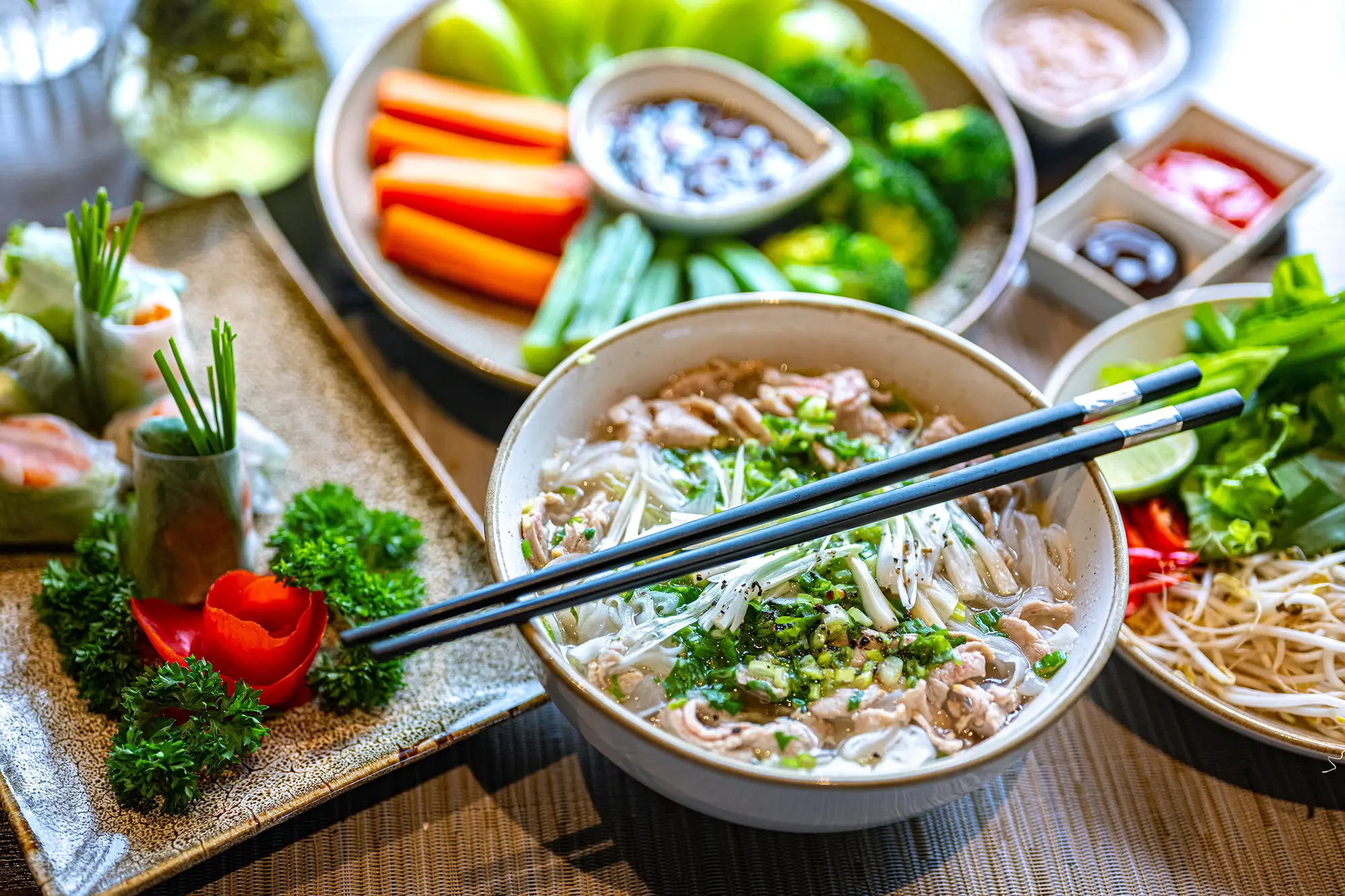
Vietnamese food soup generally refers to the country’s beloved noodle soups. These traditional dishes combine a rich, slow-simmered broth, rice or egg noodles, fresh herbs, and high-quality proteins like beef, chicken, or seafood. They serve as staple meals enjoyed for breakfast, lunch, or dinner across all regions of Vietnam.
Each region of Vietnam has its own unique way of combining ingredients. The North favors clear, delicate broths that highlight the natural flavor of the meat. Meanwhile, the Central region loves bold, spicy, and complex flavors. The South often incorporates a touch of sweetness and serves dishes with a massive abundance of fresh vegetables.
7 Vietnamese Noodle Soups You Should Try
Vietnam’s noodle culture extends far beyond pho. These seven dishes offer a useful introduction to the different noodles, broths, ingredients, and regional flavors you can encounter during a trip.
1. Pho – Vietnam’s Most Famous Noodle Soup
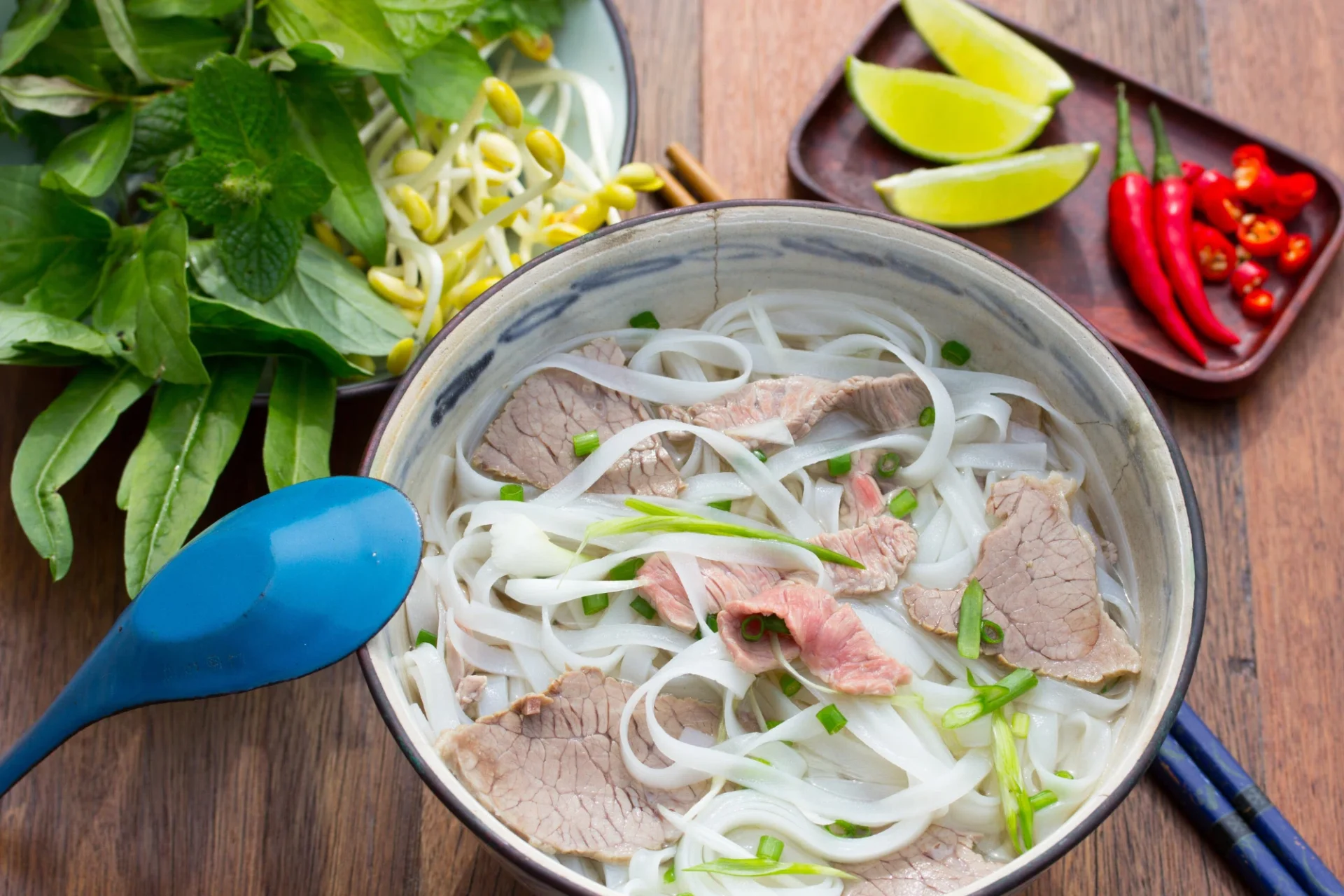
Pho is Vietnam’s best-known noodle soup and one of the country’s most recognizable culinary exports. Pho typically combines flat rice noodles with a clear broth and sliced beef or chicken, then finishes the bowl with herbs and fresh seasonings.
Pho has strong connections with northern Vietnam, particularly Hanoi and Nam Dinh. Nam Dinh as an important historical home of pho, while Hanoi became one of its most influential culinary centers. Pho also developed differently after spreading south, with southern versions generally offering a sweeter broth and a broader range of herbs and condiments.
For travelers, this regional difference is worth noticing. A bowl of pho in Hanoi may feel relatively restrained and broth-focused, while a southern bowl can arrive with a larger plate of herbs and additional sauces.
2. Bun Bo Hue – A Spicy Noodle Soup from Central Vietnam
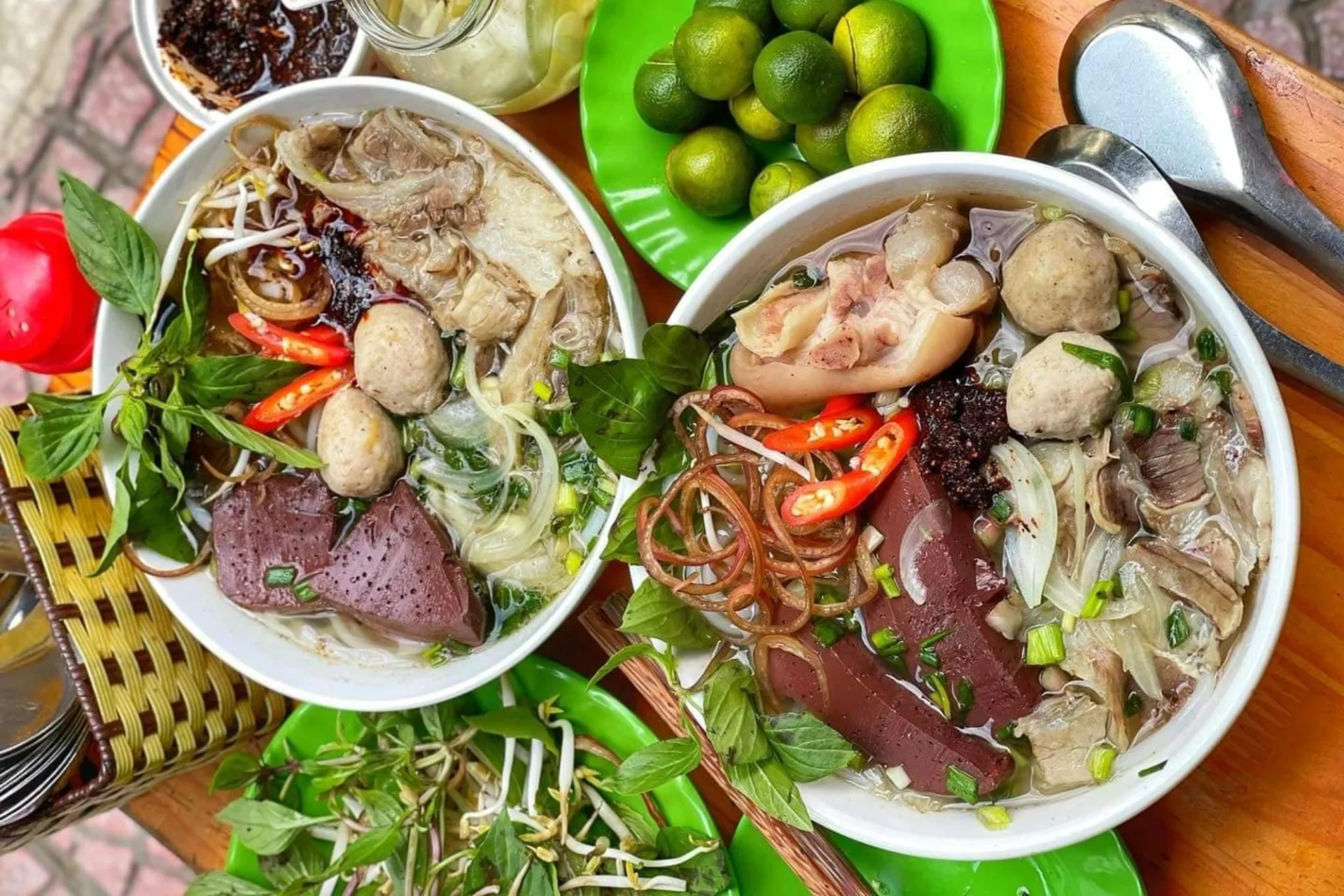
Bun bo Hue comes from Hue in Central Vietnam, a city known for its distinctive culinary traditions and former imperial heritage. Unlike the delicate profile associated with northern pho, bun bo Hue is known for a richer, spicier, and more aromatic broth.
The dish uses round rice vermicelli and commonly includes beef, pork-based ingredients, lemongrass, fermented shrimp paste, chili, and fresh herbs.Its flavor as rich and complex, with variations in toppings depending on the restaurant and location.
For visitors who want to understand Central Vietnamese cuisine, bun bo Hue is an important contrast to pho. It demonstrates how the same basic idea-a bowl of noodles and broth-can become much more intense through different ingredients and seasonings.
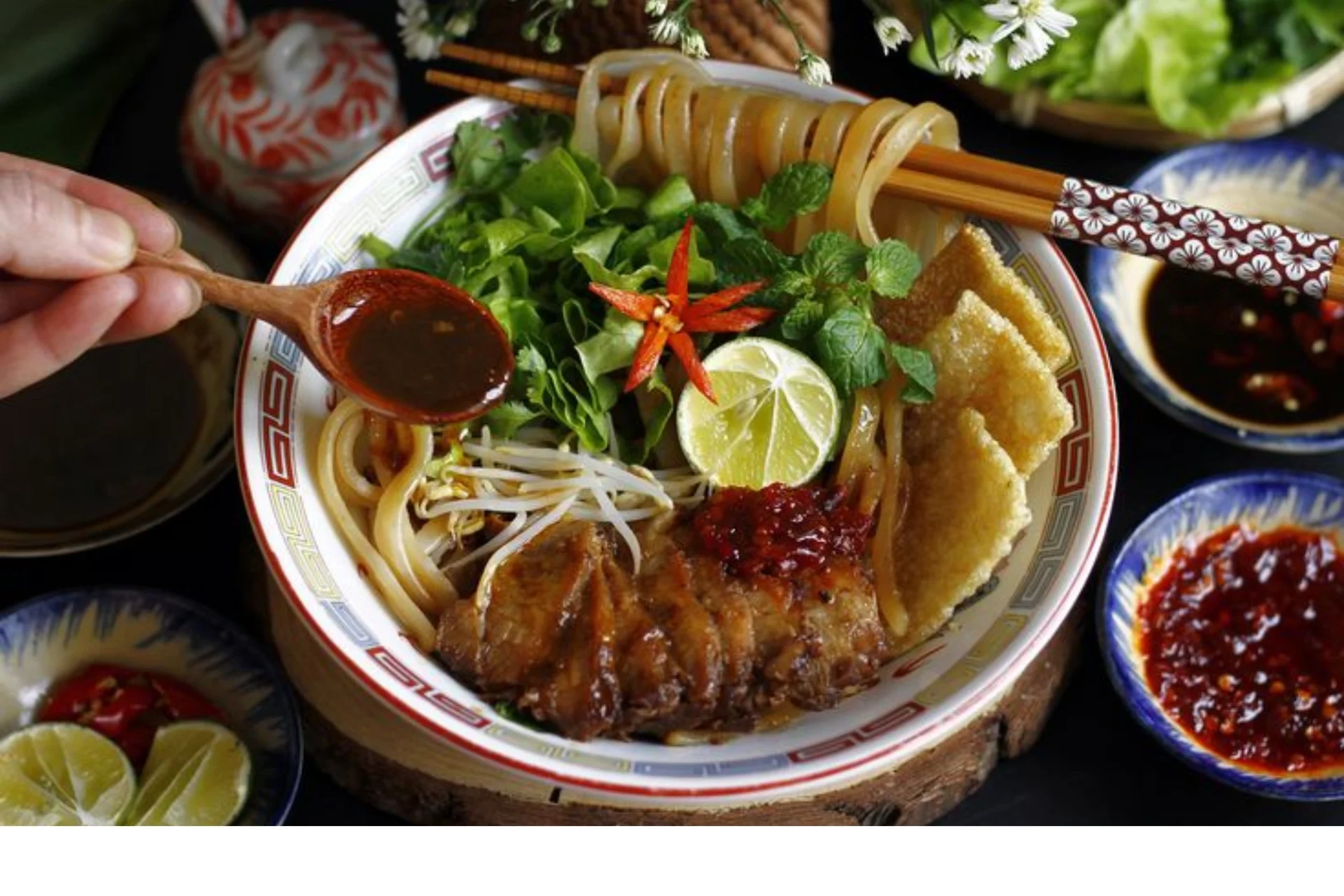
3. Cao Lau – Hoi An’s Distinctive Noodle Dish
Cao lau is closely associated with Hoi An and is different from the more broth-heavy dishes on this list. It contains relatively little liquid, so it is better understood as a distinctive noodle dish rather than a conventional noodle soup.
The dish combines firm noodles with sliced pork, bean sprouts, fresh herbs, and crispy elements, finished with a small amount of broth or sauce. Hoi An’s local water and traditional preparation methods are often highlighted as part of what gives cao lau its characteristic noodle texture.
Its connection with Hoi An’s history is also significant. As a former trading port, Hoi An developed culinary influences through contact between Vietnamese and other Asian communities. Cao lau is therefore a useful example of how a local dish can reflect the history of the place where it developed.
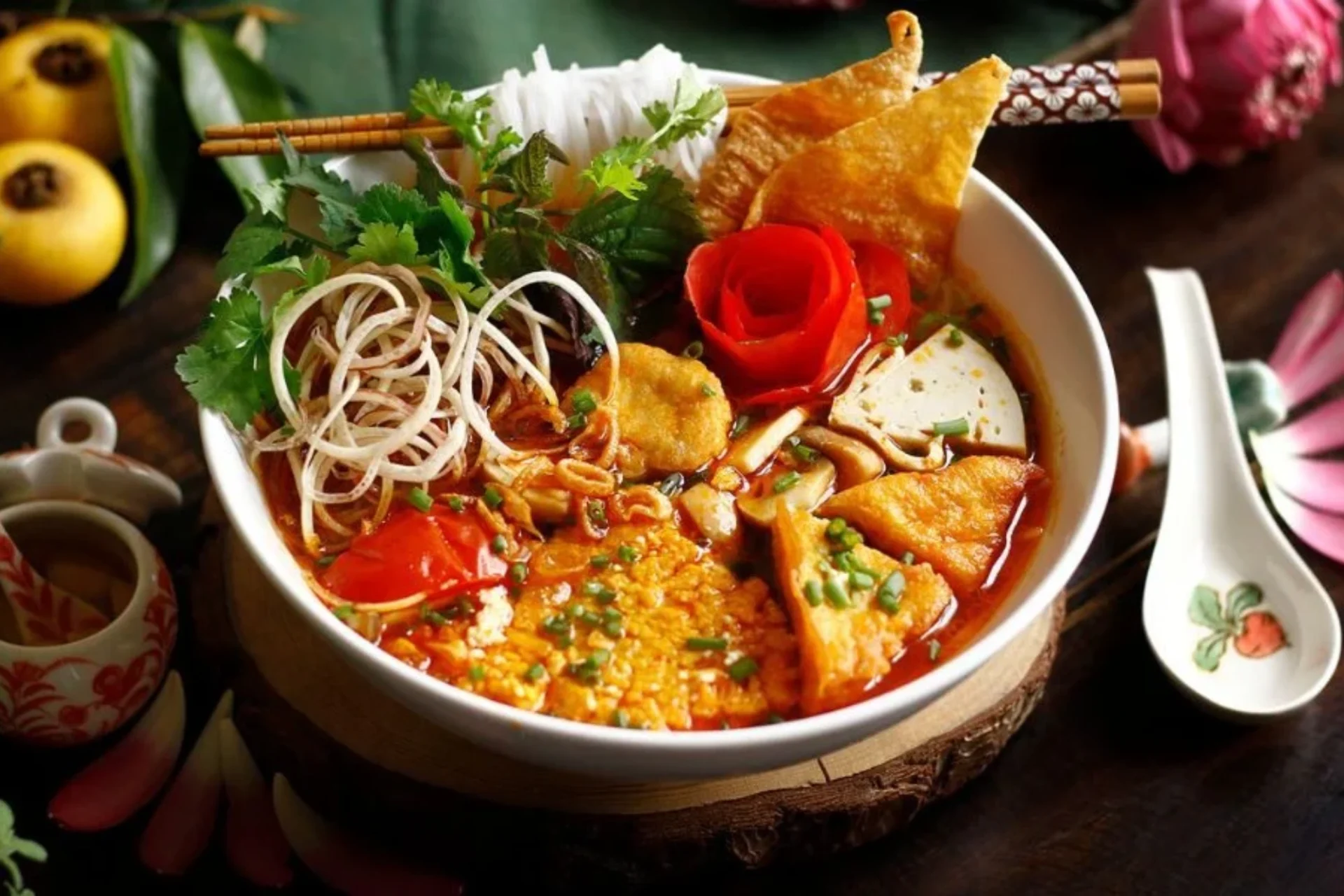
4. Bun Rieu – Vietnamese Crab Noodle Soup
Bun rieu is a Vietnamese crab noodle soup recognized for its tomato-based broth and freshwater crab. The combination gives the dish a noticeably tangy profile that differs from the clear broth associated with pho.
A typical bowl can include thin rice vermicelli, crab-based riêu, tomatoes, tofu, herbs, and other regional toppings. Some versions also incorporate pork and additional ingredients, so the exact bowl can vary between restaurants and regions.
Among Vietnamese soup dishes, bun rieu is particularly useful for understanding how acidity can shape a broth. Instead of relying primarily on the deep, aromatic profile of a long-simmered meat broth, it builds its identity around the interaction of tomato, crab, herbs, and fermented seasonings.
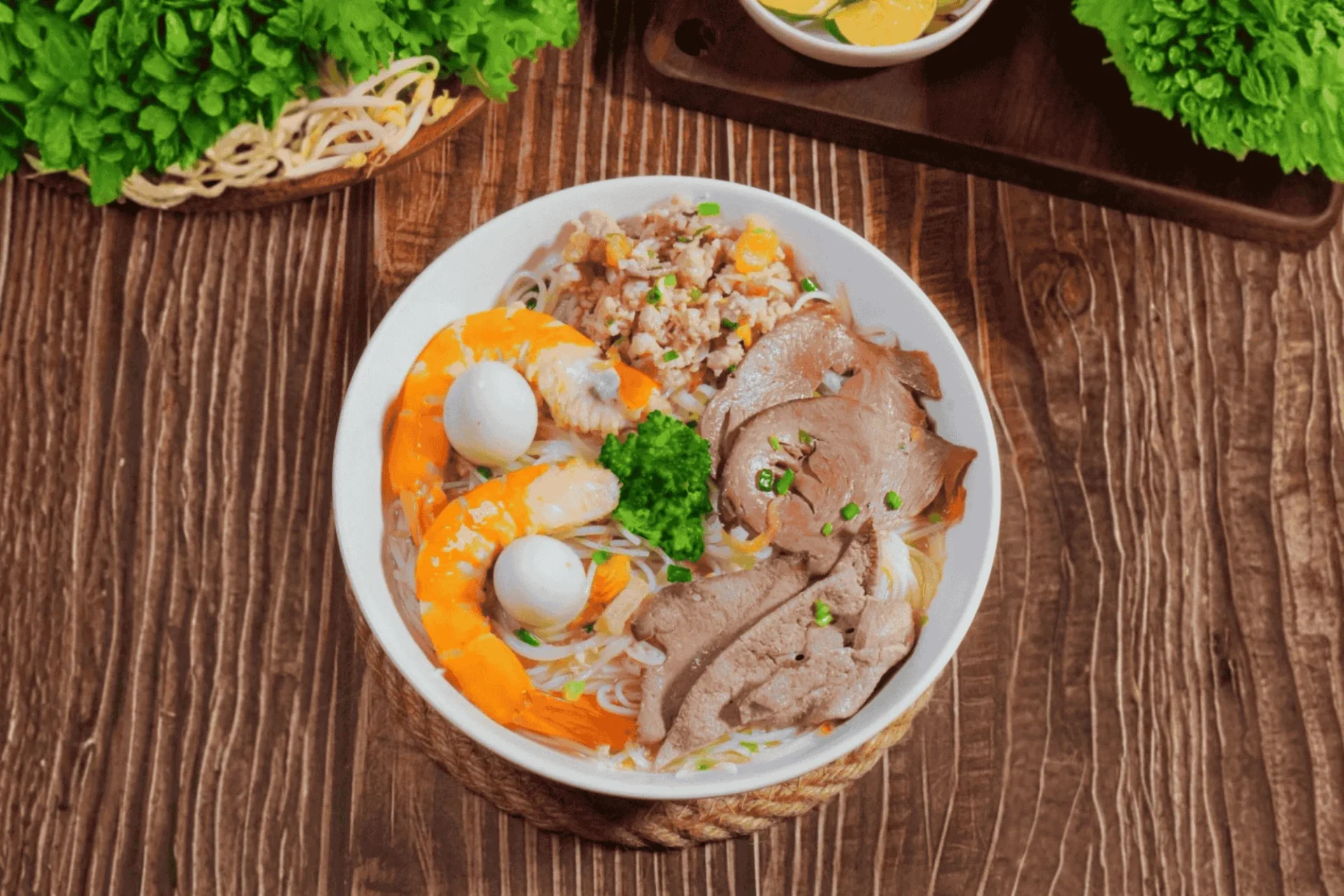
5. Hu Tieu – A Southern Vietnamese Noodle Soup
Hu tieu is strongly associated with Southern Vietnam, especially Ho Chi Minh City and the Mekong Delta. The dish can be served as a soup or in a dry version with the broth provided separately, making it one of the more flexible Vietnamese noodle dishes.
The broth is commonly prepared with pork bones and may include dried seafood such as squid and shrimp. Typical toppings can include shrimp, pork, eggs, and other ingredients depending on the local version.
The result is generally a lighter, slightly sweet and savory bowl. For travelers exploring southern cuisine, hu tieu demonstrates how seafood, pork, noodles, and vegetables can be combined without producing the heavier flavor profile associated with some Central Vietnamese dishes.
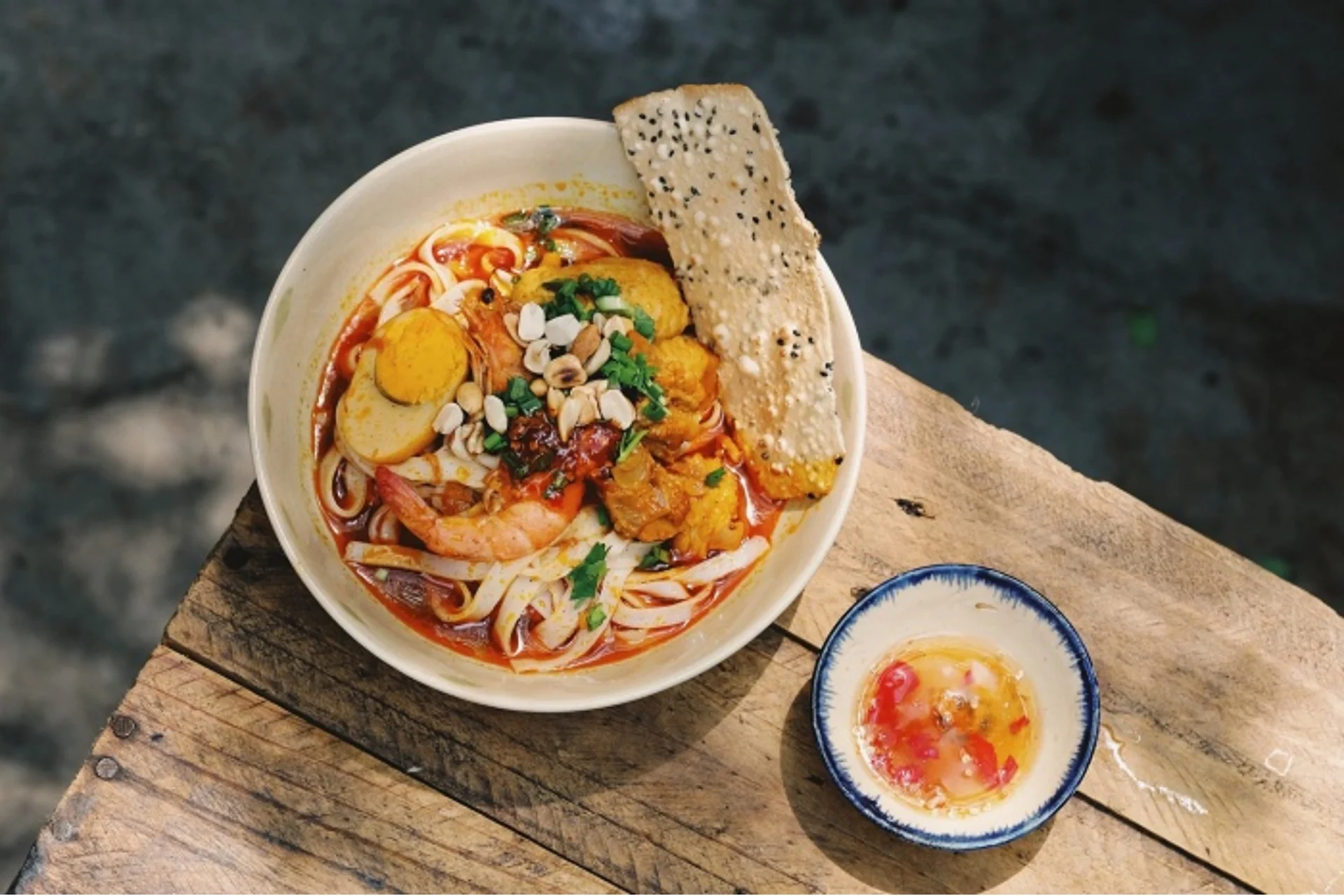
6. Mi Quang – A Turmeric-Tinted Noodle Dish from Quang Nam
Mi Quang comes from Quang Nam in Central Vietnam and is another dish that should not be confused with a conventional soup. It uses a small amount of concentrated broth rather than filling the bowl with liquid, allowing the noodles and toppings to remain central.
The noodles are typically flat and can have a distinctive yellow color. Common toppings include pork, shrimp, chicken, herbs, peanuts, and other regional ingredients. The dish as being served with a small amount of rich broth alongside fresh vegetables and herbs.
Mi Quang is particularly interesting for travelers because it shows that Vietnamese noodle culture is not defined by soup alone. The relationship between noodles, broth, herbs, toppings, and texture changes from one region to another.
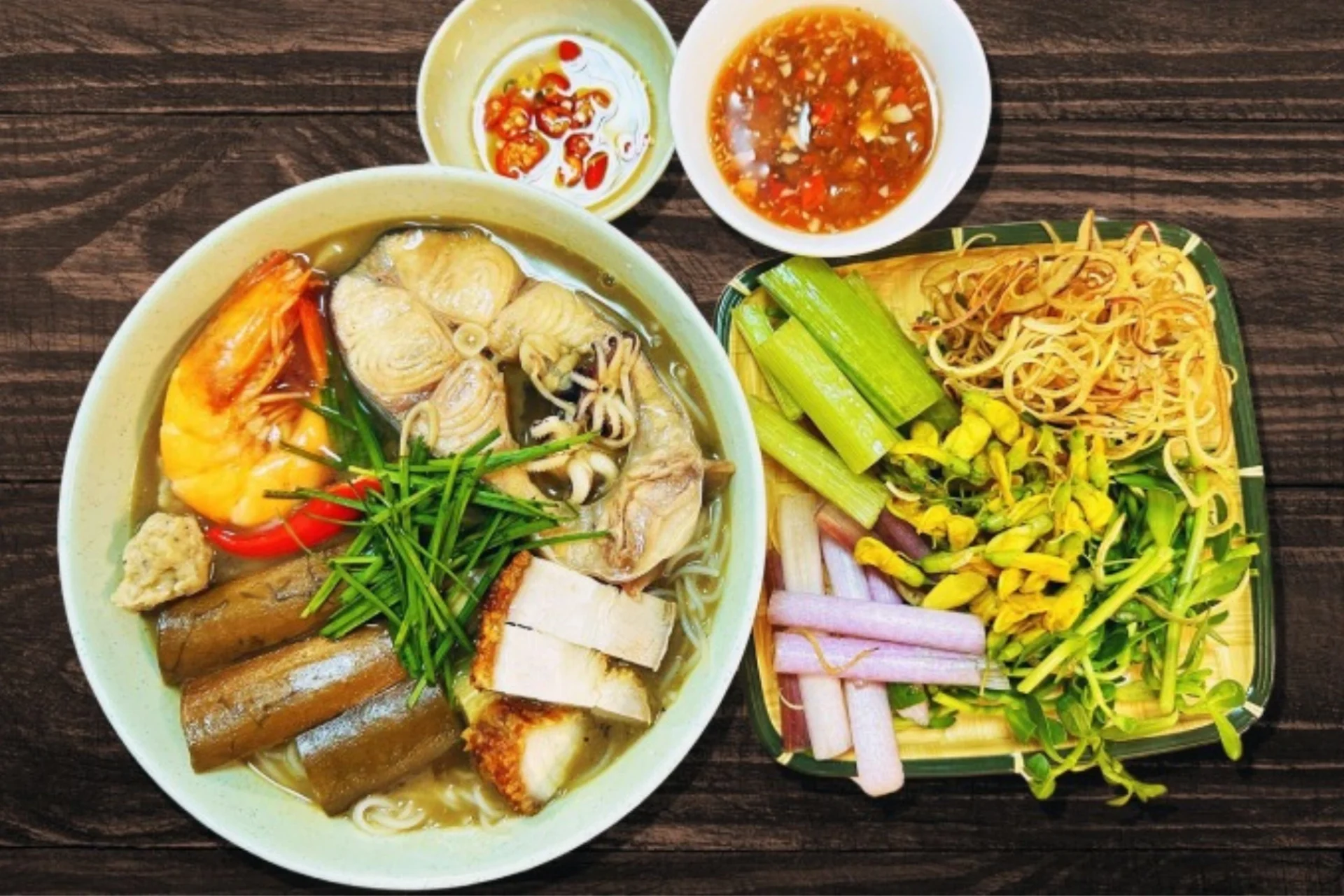
7. Bun Mam – A Bold Southern Vietnamese Noodle Soup
Bun mam is a Southern Vietnamese noodle soup known for its strong fermented-fish flavor. The use of fermented ingredients gives the broth an intensity that can be very different from the cleaner profile of pho.
The dish is commonly served with rice vermicelli, seafood or meat, and an assortment of fresh vegetables and herbs. Its bold seasoning makes it a good choice for travelers who want to explore flavors beyond the more internationally familiar Vietnamese dishes.
Bun mam also highlights an important characteristic of Southern cuisine: the use of fermented ingredients, fresh produce, seafood, and herbs to create complex bowls with contrasting flavors and textures.
What Makes Vietnamese Noodle Soups Different?
The variety of Vietnamese noodle soups comes from more than the type of noodle used. Four elements repeatedly shape the character of each dish.
The Broth
Broth is the foundation of many Vietnamese noodle soups, but there is no single formula. Depending on the dish, it can be built from beef or pork bones, chicken, seafood, crab, vegetables, tomatoes, or fermented ingredients.
Some broths are clear and delicate, while others are spicy, tangy, sweet, or strongly aromatic. This is one reason why trying several regional dishes provides a better understanding of Vietnamese cuisine than trying pho alone.
Fresh Herbs and Vegetables
Fresh ingredients are an important part of the eating experience. Depending on the dish, diners may receive herbs, bean sprouts, lettuce, banana flower, lime, chili, or other vegetables.
These ingredients are not simply decoration. Fresh herbs and vegetables add texture, aroma, acidity, and freshness, helping balance the richness or saltiness of the broth.
Noodles and Regional Ingredients
Vietnam uses several different noodle styles, including:
- Pho noodles: flat rice noodles used in pho.
- Bun: thin round rice vermicelli used in dishes such as bun bo Hue and bun rieu.
- Hu tieu noodles: thin noodles commonly used in Southern Vietnamese dishes.
- Mi Quang noodles: wider rice noodles associated with Quang Nam.
- Cao lau noodles: firm noodles with a distinctive texture associated with Hoi An.
The noodle itself can therefore provide important clues about a dish’s regional identity.
Balance of Flavors
Vietnamese noodle soups often combine several taste dimensions rather than relying on a single dominant flavor. A bowl may balance salty, sweet, sour, spicy, and aromatic elements.
Seasonings such as lime, chili, herbs, fish sauce, and fermented ingredients allow diners to adjust the final flavor at the table. Vietnam Tourism specifically notes that many Vietnamese noodle soups are seasoned to taste with lime, chili, and aromatic herbs.
Vietnamese Pho Spices: What Gives Pho Its Signature Flavor?
Pho’s distinctive aroma comes partly from its combination of broth ingredients and warm spices. The exact mixture is not universal, and recipes can vary by household, restaurant, and region.
Common Spices Used in Pho
Common Vietnamese pho spices and aromatics include:
- Star anise
- Cinnamon
- Cloves
- Coriander seeds
- Cardamom
- Ginger
- Onion
Not every recipe uses exactly the same combination. The proportions and preparation methods can change depending on whether the cook is preparing northern-style, southern-style, beef, or chicken pho.
How Pho Spices Shape the Broth
These spices contribute fragrance and depth rather than simply making the broth taste spicy. Their warm, aromatic notes complement the meat and bones used to create the broth.
The result is one of pho’s defining characteristics: a broth that is aromatic without depending on a heavy sauce or thick consistency. This also helps distinguish pho from other Vietnamese noodle soups that use chili, fermented seafood, tomato, or stronger seasoning as their main flavor drivers.
When Do Vietnamese People Eat Noodle Soup?
Noodle dishes are part of everyday eating in Vietnam, not just foods reserved for special occasions. Their role changes depending on the region, dish, restaurant, and individual eating habits.
Vietnamese Breakfast
Breakfast in Vietnam can be a substantial meal, and noodle soup is one common choice. Pho is particularly associated with breakfast in Hanoi, while bun bo Hue and hu tieu can also be eaten in the morning in their respective regions.
This means visitors should not assume that breakfast has to be a light meal. A hot bowl of noodles, broth, meat, herbs, and vegetables can be a normal way to start the day.
Street Food and Everyday Meals
Many noodle dishes are available at casual restaurants, local markets, and street-side eateries. The setting can be as important as the dish itself, because eating noodle soup often means watching the bowl being assembled and seeing how local diners season it. For travelers, this makes noodle soup an accessible way to experience everyday food culture rather than only formal dining.
Vietnamese Soup Dishes by Region
Vietnamese soup dishes are not one uniform category. The ingredients, noodle shapes, broth styles, and seasoning habits change as you travel through the country. Here is a quick overview of popular dishes:
| Region | Soup / Noodle Dish | Key Characteristic |
| Northern Vietnam | Pho | Clear, aromatic broth |
| Central Vietnam | Bun Bo Hue | Spicy, rich flavor |
| Central Vietnam | Mi Quang | Turmeric-tinted noodles, little broth |
| Central Vietnam | Cao Lau | Firm noodles, very little broth |
| Southern Vietnam | Hu Tieu | Light, sweet-savory broth |
| Southern Vietnam | Bun Mam | Strong fermented flavor |
How to Order and Eat Vietnamese Noodle Soup
For first-time visitors, ordering a bowl is usually straightforward. The exact process varies by restaurant, but this basic approach works in many casual noodle shops:
- Choose the noodle soup. Start with a familiar dish such as pho, or choose a regional specialty based on where you are traveling.
- Choose your protein or toppings. Some restaurants offer several options, while others serve a fixed combination.
- Check the accompanying herbs and vegetables. These may arrive separately so you can add them according to your preference.
- Taste the broth first. This lets you understand the intended flavor before adding additional seasonings.
- Add lime or chili if desired. Many Vietnamese noodle soups are designed to be adjusted at the table.
- A useful rule for first-time visitors is to taste the broth before adding anything. You can then decide whether you want more acidity, heat, or freshness from the accompanying seasonings.
Frequently Asked Questions About Vietnamese Food Soup
1. What Is the Traditional Food of Vietnam?
Pho is one of the country’s most internationally recognized dishes, but Vietnamese cuisine includes a much wider range of regional noodle dishes, rice dishes, street foods, seafood, and vegetables. Pho, bun bo Hue, bun rieu, hu tieu, and other specialties each reflect different local ingredients and culinary traditions. Exploring several regions gives travelers a more accurate picture of Vietnamese food than focusing on one national dish alone.
2. What Is a Typical Breakfast in Vietnam?
A typical Vietnamese breakfast can vary by region and personal preference. Noodle soups such as pho, bun bo Hue, and hu tieu are common breakfast choices, while other options include rice dishes, steamed rice rolls, and other local specialties.
In Hanoi, pho has a particularly strong association with the morning meal. Breakfast is therefore often more substantial than visitors might expect.
3. How to Avoid Stomach Issues in Vietnam?
Choose restaurants and food stalls that appear clean and busy, as high customer turnover generally means food is being prepared regularly. Prefer food that is thoroughly cooked and served hot, especially when you are unfamiliar with local ingredients. Drink treated or bottled water when you are uncertain about the local water supply, and wash your hands before eating. If you have dietary restrictions or food allergies, communicate them clearly before ordering.
Final Thoughts
Vietnamese noodle soup is more than a collection of popular dishes. Each bowl offers a practical introduction to the region where it was created, from the clear and aromatic character of northern pho to the spicy profile of bun bo Hue and the bold flavors of Southern specialties. Pho may be the best-known starting point, but it represents only one part of Vietnam’s diverse noodle culture.
Trying different noodle dishes also gives travelers a way to understand how local ingredients, breakfast habits, street food, and regional tastes shape everyday life. If food is an important part of your trip, exploring Vietnam through its regional noodle soups can make the journey more meaningful.
Planning a Vietnam trip? Explore Nicetrips Vietnam tours to discover local food, culture, and destinations with a carefully prepared itinerary and on-ground support.