Japanese kimono is more than a traditional garment it is a reflection of the country’s history, aesthetics, and cultural values. With its distinctive shape, elegant fabrics, and symbolic patterns, the kimono has remained one of the most recognizable symbols of Japan. Over centuries, its design and role have evolved alongside Japanese society, from everyday clothing to formal wear and cultural attire. Today, understanding the kimono history offers travelers a deeper appreciation of Japanese traditional clothing and the traditions surrounding it, every detail can reveal something about Japanese culture and life in kimono in Japan.
What Is a Japanese Kimono?
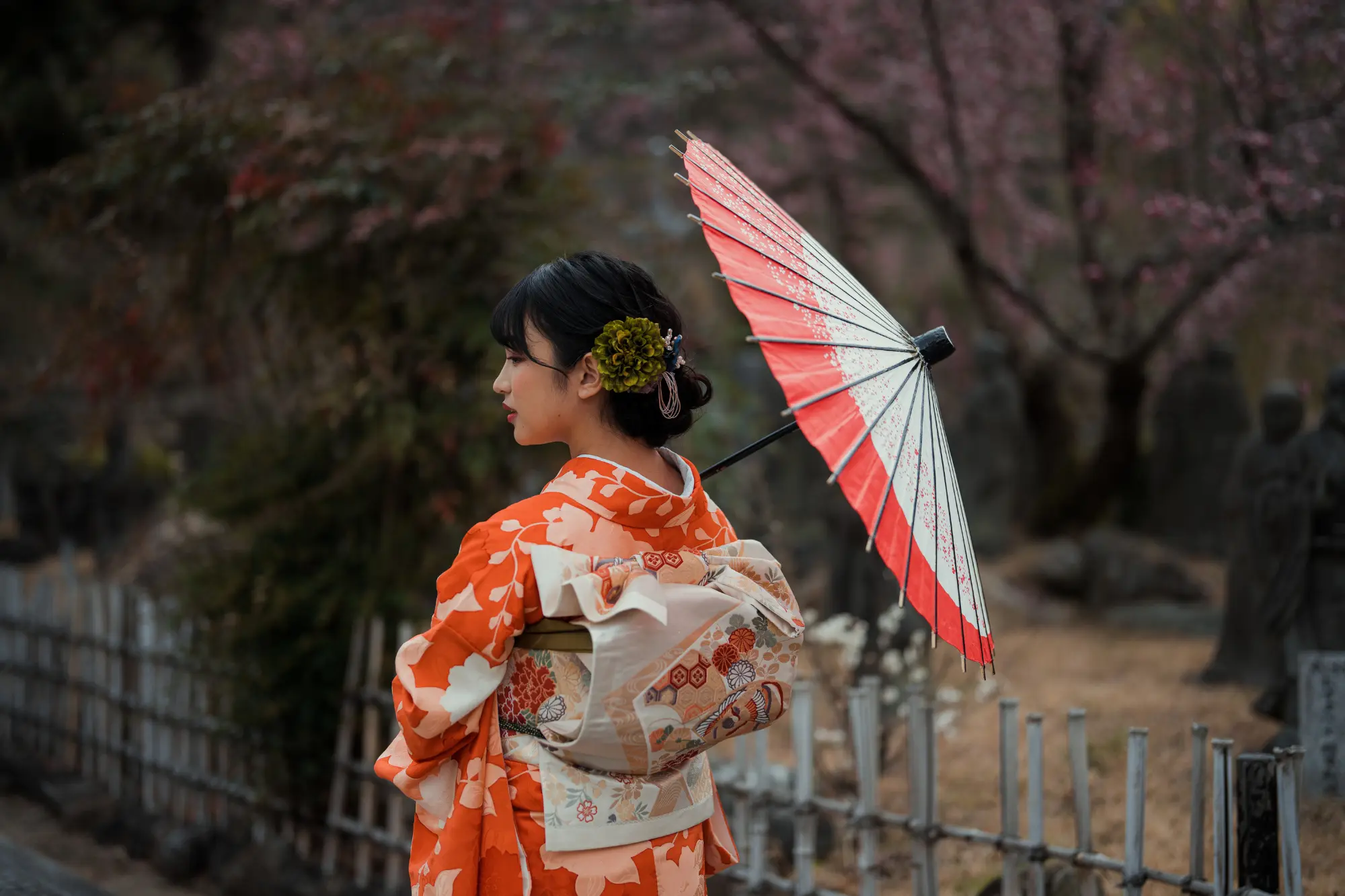
The word kimono (着物) literally means “a thing to wear” or “something worn”. Today, it refers specifically to Japan’s traditional T-shaped garment, recognized for its straight seams, overlapping front panels, and wide sleeves. Unlike modern clothing designed to fit the contours of the body, a kimono uses a relatively simple rectangular construction that can be adjusted and wrapped around the wearer.
A traditional kimono is typically worn with the left side overlapping the right side, secured with an obi, a wide decorative sash wrapped around the waist. Different types of obi, fabrics, colors, and patterns are chosen according to the wearer’s age, status, season, and occasion.
The kimono’s distinctive design is also part of what makes it an important symbol of Japanese culture. Its craftsmanship reflects Japan’s long traditions of textile production, dyeing, embroidery, and artistic design. Motifs inspired by nature such as cherry blossoms, maple leaves, cranes, and chrysanthemums connect the garment with Japan’s appreciation of the changing seasons.
The History of the Japanese Kimono
The history of the Japanese kimono reflects the evolution of Japanese society, fashion, craftsmanship, and cultural values. Although the modern kimono developed from earlier garments, its distinctive form was shaped over centuries.
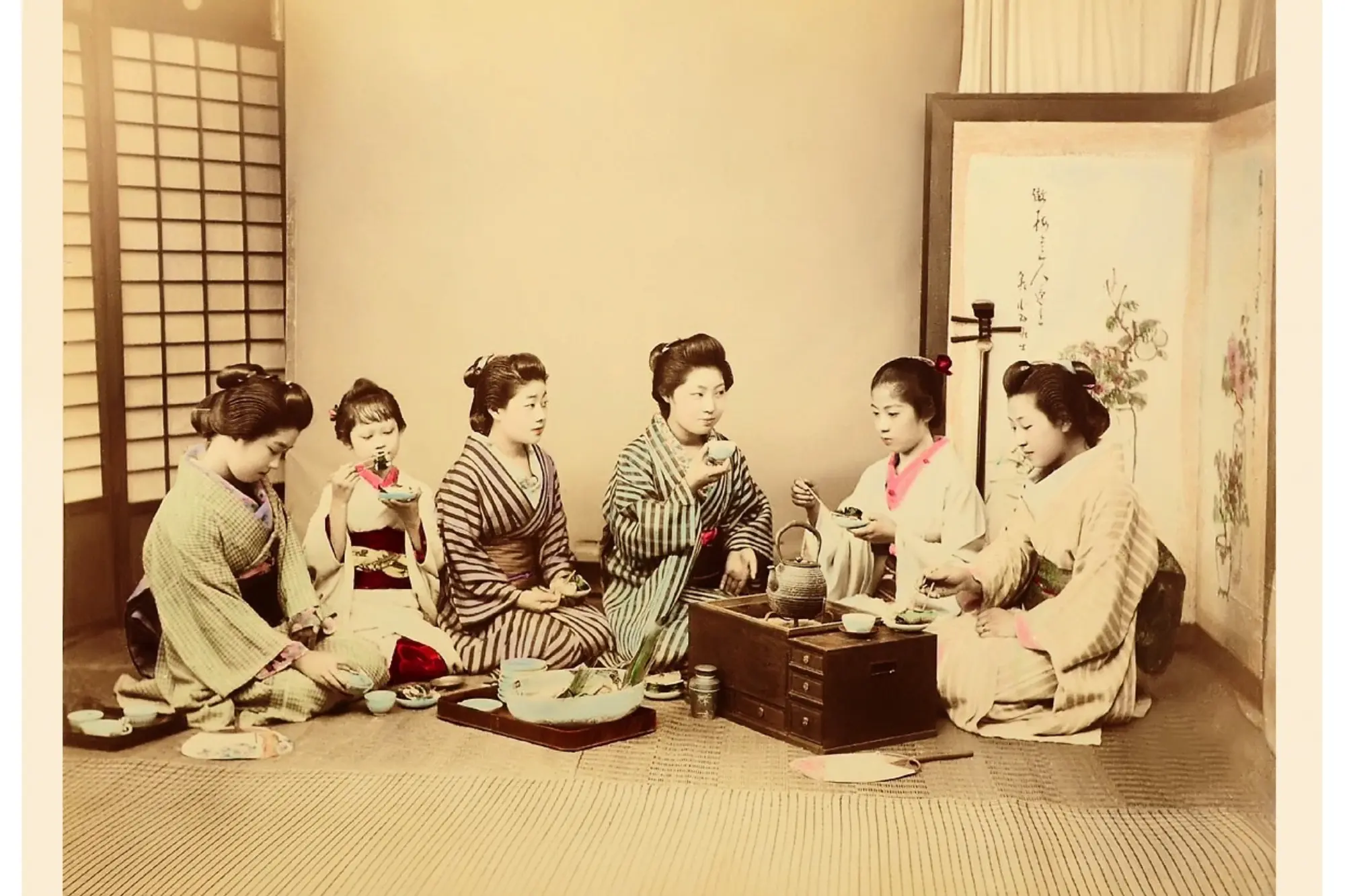
1. Heian Period: The Birth of Layered Japanese Dress
During the Heian period (794-1185), aristocratic fashion became increasingly elaborate. Court women wore jūnihitoe, a formal ensemble made up of multiple colorful layers of silk robes. The combination of colors visible at the collar, sleeves, and hem could reflect the season, occasion, and social status of the wearer.
The kosode, meaning “small sleeves”, was also worn as an undergarment during this period. Although it was not yet the modern kimono, this simple garment would become an important foundation for later Japanese clothing.
2. Edo Period: Kimono Becomes a Cultural Art
During the Edo period (1603-1868), kimono fashion flourished and gradually developed into the form more recognizable today. The kosode became outerwear, while improvements in weaving, dyeing, and embroidery allowed increasingly sophisticated designs to appear on garments.
Techniques such as yūzen dyeing made it possible to create detailed scenes, flowers, landscapes, and other intricate motifs. Printed kimono pattern books, known as hinagata-bon (雛形本), also became popular and functioned much like fashion catalogues, helping people choose and customize designs.
As Edo society became more prosperous and culturally vibrant, kimono became an important form of personal expression and craftsmanship. Their patterns could reflect nature, literature, seasonal themes, and the wearer’s social context.
3. Meiji Period: Western Fashion Changes Japan
The Meiji period (1868-1912) brought rapid modernization and increasing Western influence. Western-style clothing gradually became more common, particularly in urban life, while opportunities to wear kimono in everyday settings decreased.
Rather than disappearing completely, kimono increasingly became associated with formal occasions and important cultural traditions. At the same time, Japanese textiles and kimono attracted attention overseas and influenced the Japonism movement in Europe during the late 19th and early 20th centuries.
4. Kimono Today
Today, kimono are no longer everyday clothing for most people in Japan, but they remain an important part of Japanese culture. They are commonly seen at weddings, coming-of-age ceremonies, tea ceremonies, festivals, traditional performances, and other special occasions.
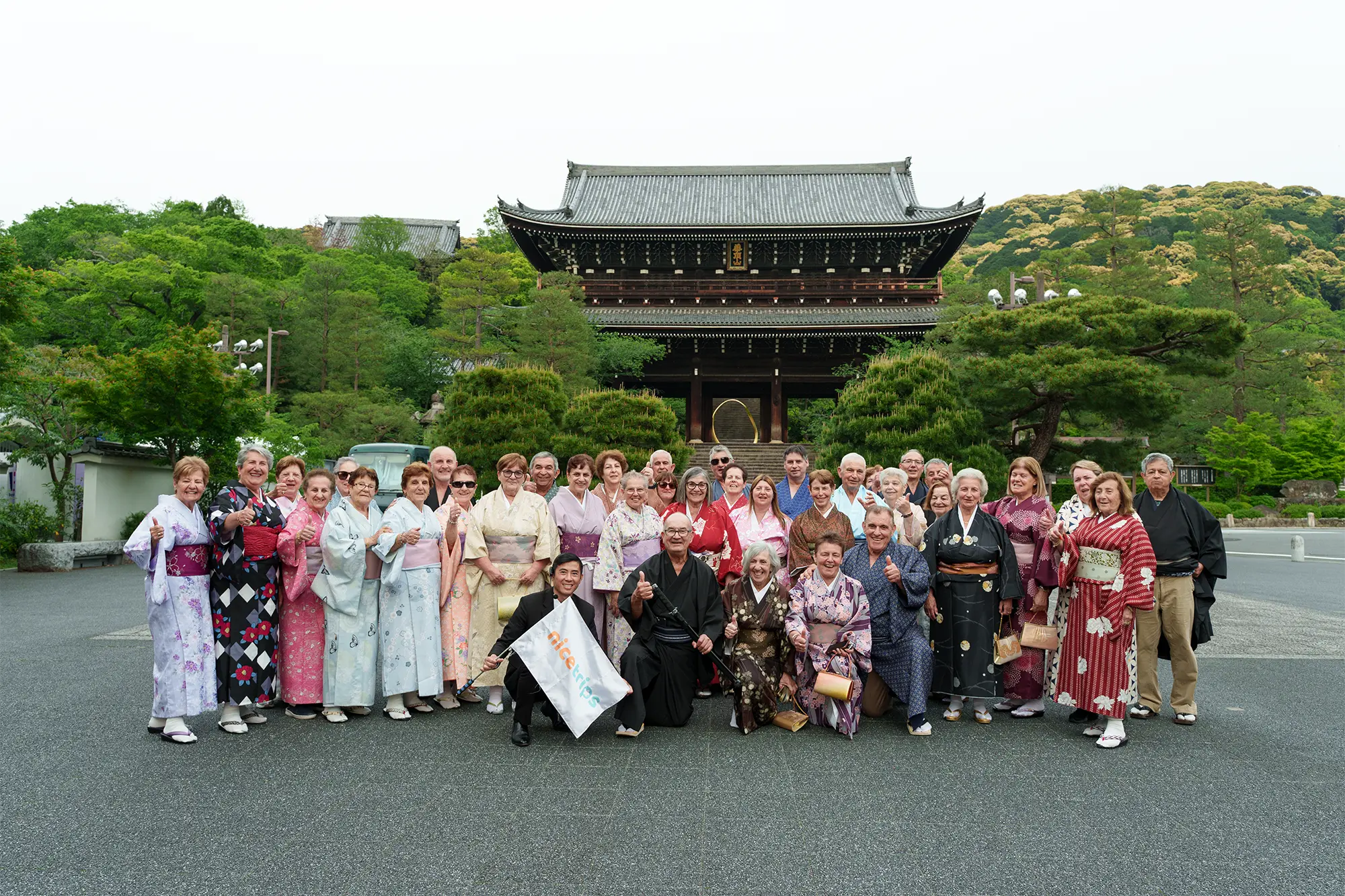
For travelers, kimono rental experiences have also become a popular way to experience traditional Japanese clothing, particularly in historic destinations such as Kyoto. This allows visitors to appreciate the craftsmanship, patterns, and cultural traditions of kimono while exploring historic neighborhoods.
The Secret Meanings Behind Kimono Colors
The beauty of a Japanese kimono lies not only in its shape and craftsmanship but also in the colors and patterns covering its fabric. Traditionally, these visual elements could communicate ideas about the season, occasion, age, social context, and personal taste of the wearer. Kimono designs often draw inspiration from nature, literature, poetry, and auspicious symbols, turning the garment into a kind of visual storytelling.

However, there is no universal rule that gives every color or pattern just one meaning. Their symbolism can change depending on the combination of motifs, the type of kimono, and the occasion.
| Color | Common Associations |
| Red | Youth, vitality, celebration |
| White | Purity, simplicity |
| Black | Formality, elegance |
| Purple | Nobility, sophistication |
| Blue | Calmness, nature |
| Gold | Celebration, prosperity |
Rather than being simple decorative choices, colors work together with patterns to create a particular mood and cultural message.
Kimono Patterns and Their Hidden Meanings
Nature is one of the most important sources of inspiration for Japanese traditional clothing.
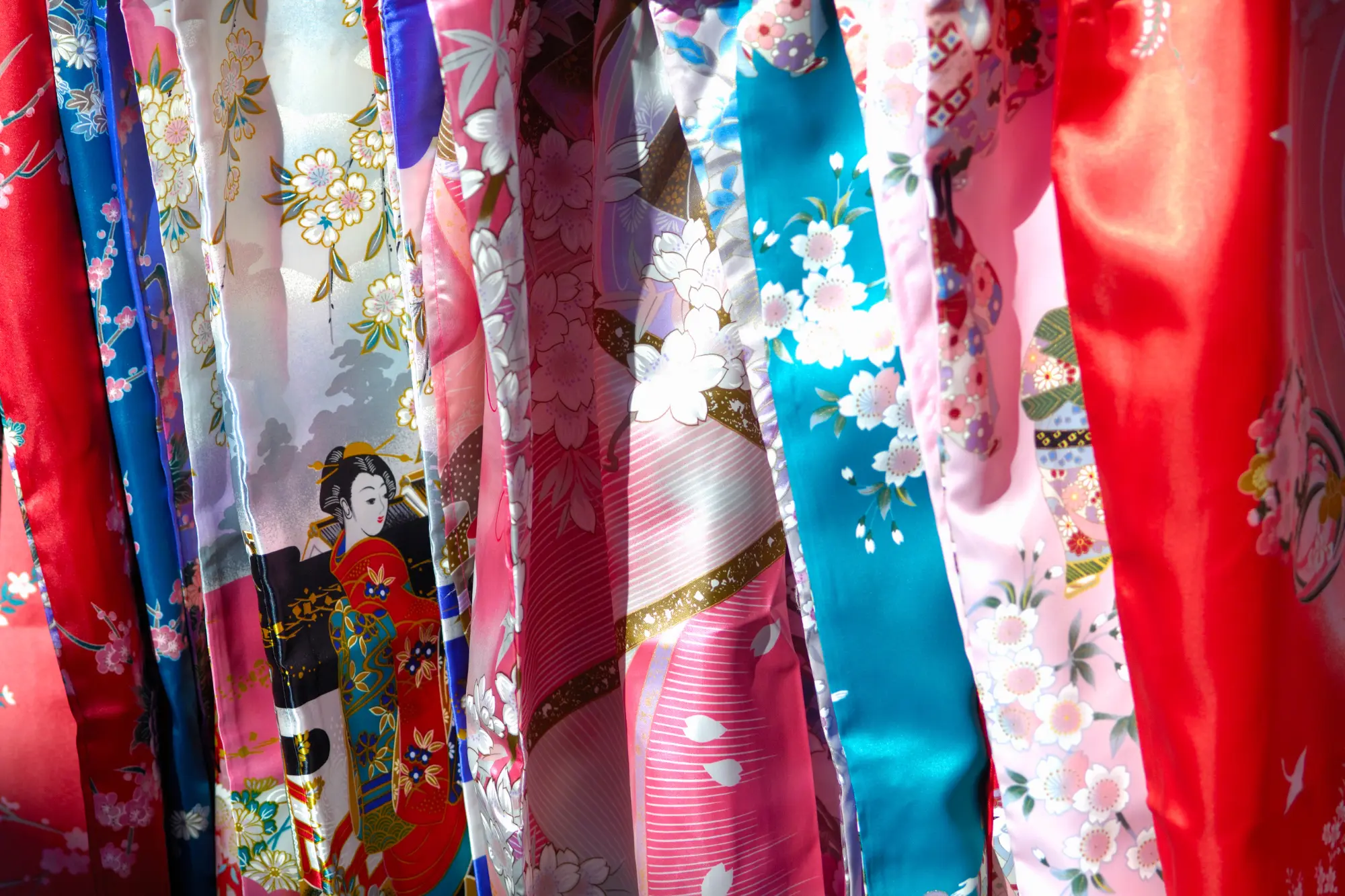
Cherry Blossoms – Sakura (桜)
Symbolism: Beauty, renewal, and the fleeting nature of life.
Sakura is one of Japan’s most recognizable symbols. Because cherry blossoms appear briefly each spring, they are often associated with the beauty and impermanence of life. On kimono, cherry blossoms can also create a distinctly springtime feeling.
Maple Leaves – Momiji (紅葉)
Symbolism: Autumn, seasonal change, and natural beauty.
Maple leaves are strongly associated with autumn in Japan. Their appearance on kimono can evoke the changing seasons and the beauty of autumn landscapes. Historical garments have combined maple leaves with other seasonal motifs to create elaborate natural scenes.
Cranes – Tsuru (鶴)
Symbolism: Longevity, happiness, and good fortune.
The crane is one of the most recognizable auspicious motifs in Japanese art and clothing. It is particularly associated with longevity and appears on formal garments, including wedding kimono.
Butterflies – Chō (蝶)
Symbolism: Transformation, beauty, and the natural world.
Because butterflies undergo a dramatic transformation during their life cycle, they can represent change and transformation. They are also used as elegant decorative motifs, often appearing alongside flowers and seasonal plants.
Chrysanthemums – Kiku (菊)
Symbolism: Longevity, elegance, and auspiciousness.
Chrysanthemums are deeply rooted in Japanese cultural symbolism and frequently appear in kimono designs. Their association with longevity can be seen in historical garments featuring chrysanthemums alongside other auspicious motifs.
Bamboo – Take (竹)
Symbolism: Strength, resilience, and endurance.
Bamboo is admired for its ability to remain upright and continue growing despite difficult conditions. In kimono designs, it can appear as part of auspicious combinations with pine and plum.
Pine – Matsu (松)
Symbolism: Longevity, endurance, and steadfastness.
Pine is another traditional auspicious motif. Its evergreen nature has made it a long-standing symbol of endurance and longevity. Historical kimono and wedding garments frequently combine pine with cranes, chrysanthemums, bamboo, and other fortunate motifs.
Waves – Seigaiha (青海波)
Symbolism: Peace, continuity, and an enduring future.
The repeating wave pattern known as seigaiha resembles endless waves extending across the fabric. Its continuous design is commonly associated with a peaceful and prosperous life that continues into the future.
Travel tip: When admiring a kimono in Japan, look beyond the overall color. The combination of color, pattern, season, and occasion often tells a much richer story about the garment.
Types of Japanese Kimono and When They Are Worn
Not all kimono are designed for the same occasion. Their sleeve length, colors, patterns, and level of formality can indicate when and by whom they are traditionally worn.
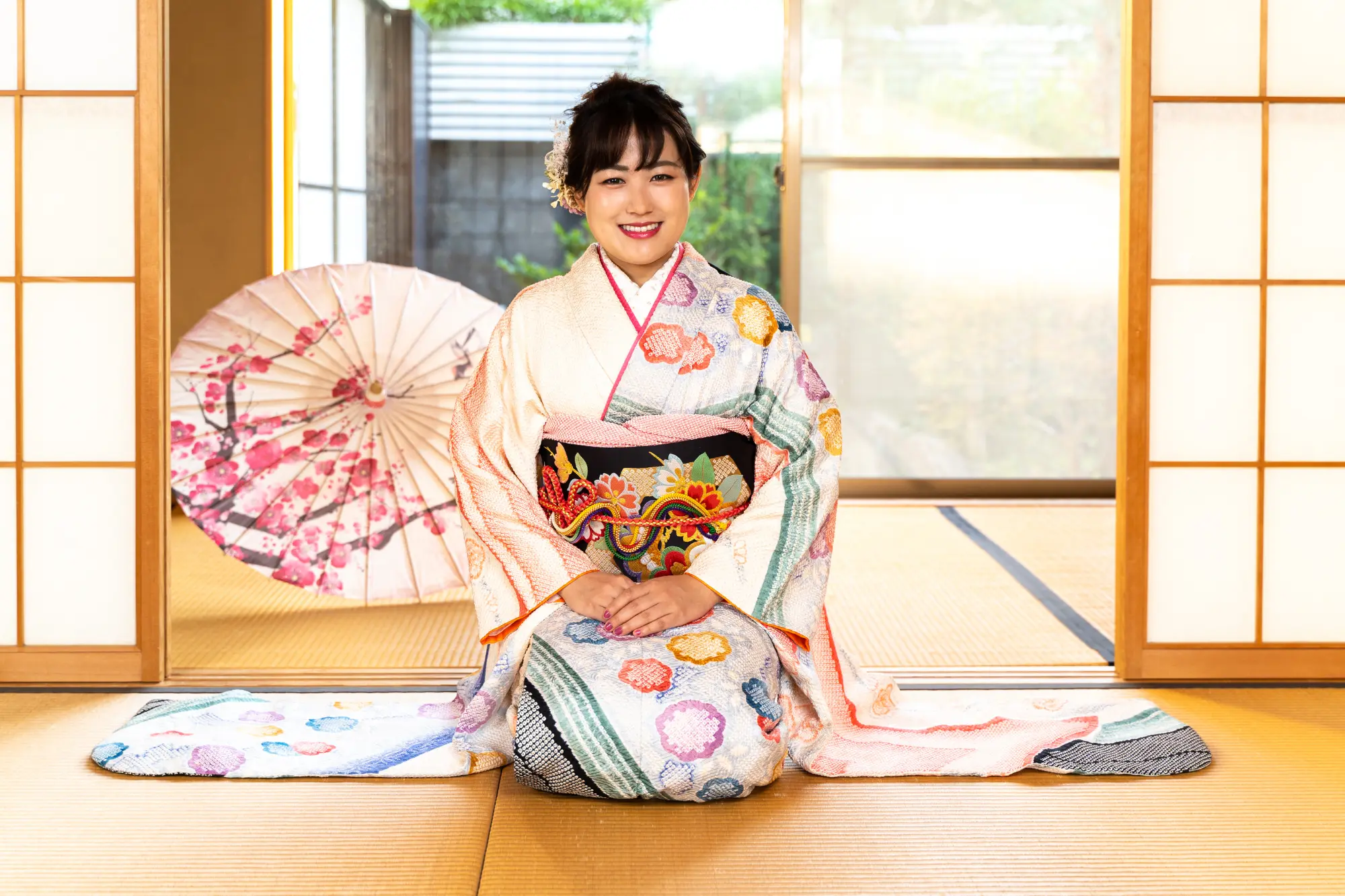
Furisode (振袖)
- Who wears it: Traditionally young unmarried women
- Key feature: Long, flowing sleeves
- Common occasion: Coming-of-age ceremonies and other formal events
- What makes it distinctive: Its dramatic sleeves make it one of the most recognizable formal kimono styles.
Tomesode (留袖)
- Formality: Highly formal
- Traditional association: Married women
- Common occasions: Weddings and other formal ceremonies
- Key feature: Typically features decorative patterns concentrated toward the lower part of the garment.
Iromuji (色無地)
- Design: A single-color kimono without elaborate all-over patterns
- Common use: Tea ceremonies and other semi-formal to formal occasions
- Style: Simple and understated, allowing accessories and obi to play a stronger role.
Yukata (浴衣)
- Fabric: Usually lightweight cotton
- Best known for: Summer festivals and warm-weather events
- Also worn at: Some ryokan and onsen
- Formality: More casual than a traditional formal kimono
Hōmongi (訪問着)
- Formality: Semi-formal
- Meaning: Often translated as “visiting wear”
- Common occasions: Social gatherings, ceremonies, and visits
- Design: Patterns can extend across the seams, creating a continuous decorative composition.
How Kimono Changes with the Seasons
Seasonality is an important element of Japanese culture, and kimono designs often reflect the natural world throughout the year. Historical examples can even combine motifs from different seasons within a single composition.
Season | Kimono Colors & Motifs | Cultural Associations |
| Spring | Sakura and other spring flowers; soft and fresh colors; floral and nature-inspired patterns | Renewal and new beginnings |
| Summer | Lightweight fabrics such as those used for yukata; water, grasses, and summer flowers; light colors | Freshness and coolness |
| Autumn | Maple leaves and chrysanthemums; warm reds, oranges, golds, and earthy tones | Seasonal change and autumn foliage |
| Winter | Richer, deeper colors; layered clothing; pine, bamboo, and plum blossoms | Resilience, longevity, and good fortune |
Experiencing Kimono Culture as a Traveler
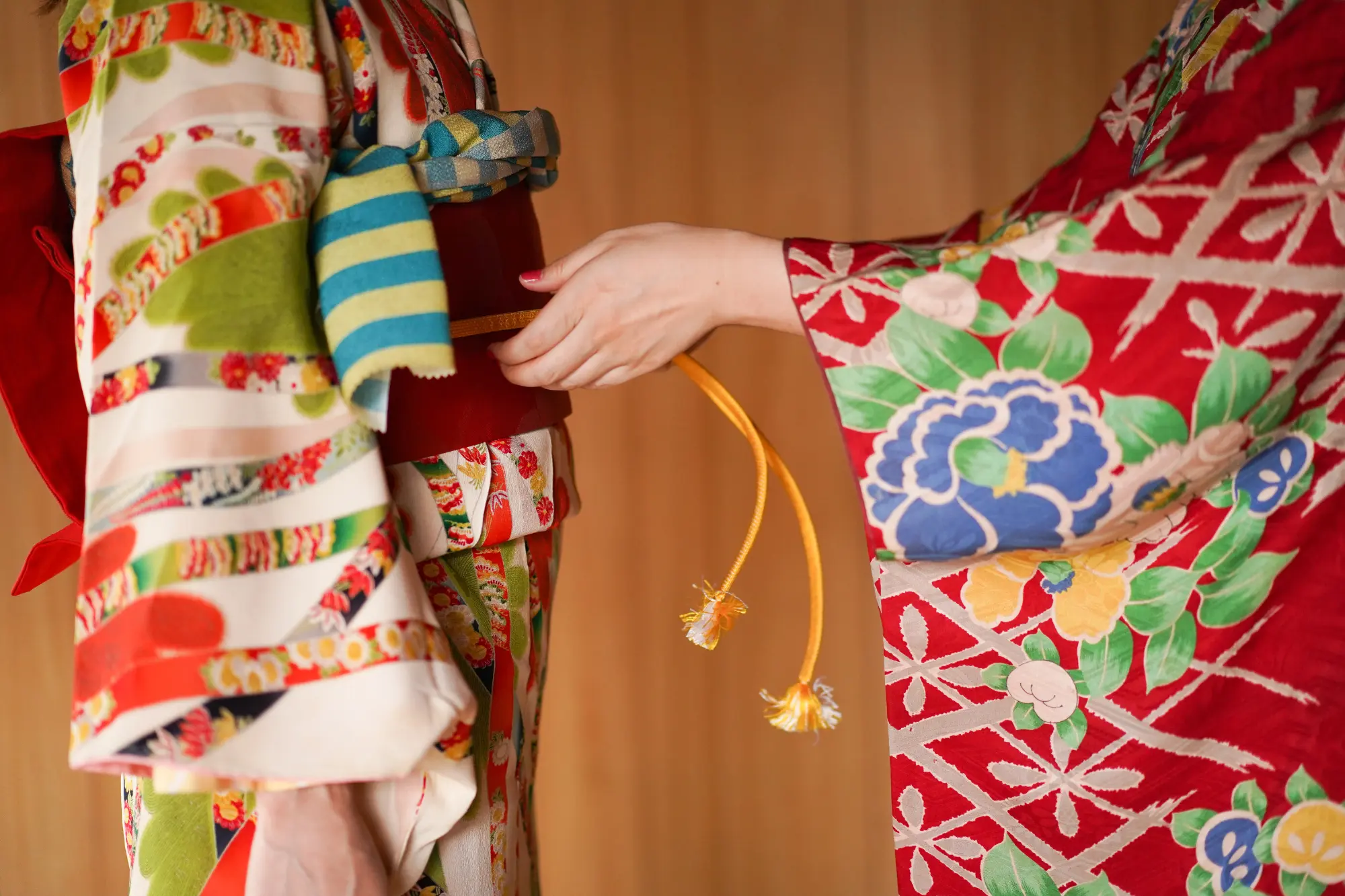
Where to Try a Kimono in Japan
Several historic cities offer opportunities to experience kimono, each with a different atmosphere:
- Kyoto: One of the most popular choices, especially around Gion and Higashiyama, where traditional streets and wooden houses create a natural setting for wearing kimono.
- Tokyo: Asakusa is a popular setting for combining a kimono experience with historic streets and traditional landmarks.
- Kanazawa: A strong choice for travelers interested in traditional crafts and Kaga Yuzen, a renowned kimono dyeing tradition.
- Nara: Traditional surroundings and historic sites make Nara another atmospheric destination for experiencing Japanese culture.
Best Places for Kimono Photos
The best backgrounds are usually places where the traditional clothing complements the surrounding architecture and scenery.
- Gion, Kyoto: Traditional machiya houses, narrow streets, and historic atmosphere.
- Higashiyama, Kyoto: Historic streets, temples, and traditional townscapes provide especially strong photo settings.
- Asakusa, Tokyo: A classic choice for combining a kimono experience with Tokyo’s traditional side.
- Nara Park, Nara: Historic surroundings and natural scenery create a different atmosphere from Kyoto’s urban streets.
Photo tip: Choose a kimono pattern that complements the season for example, floral designs in spring or maple-leaf motifs in autumn.
Kimono Etiquette: What Travelers Should Know
Wearing a kimono is a great way to experience Japanese culture, but a few simple etiquette rules can help you enjoy the experience respectfully and protect the traditional garment.
- Follow the rental shop’s instructions: Let staff help with dressing, adjusting the kimono, and returning it.
- Keep it clean: Be careful when eating, drinking, or walking outdoors to avoid stains or dirt.
- Handle it gently: Avoid pulling, dragging, or stretching the fabric, obi, or accessories.
- Walk carefully: Take smaller steps and be especially careful on stairs when wearing geta.
- Respect others: Do not assume everyone wearing a kimono is there for tourists or available for photos.
- Ask before taking photos: Always get permission before photographing people, especially in traditional or formal settings.
- Respect the surroundings: Avoid blocking streets, entrances, or private spaces when taking photos.
- Appreciate the culture: A kimono is more than an outfit for photos—it is an important part of Japanese traditional clothing and cultural heritage.
Frequently Asked Questions About Japanese Kimono
What is the history of the Japanese kimono?
The kimono history stretches back centuries, evolving from earlier Japanese garments into the distinctive T-shaped clothing recognized today. Its design and role changed significantly during the Heian, Edo, and Meiji periods as Japanese society and fashion evolved.
What do flowers on kimono symbolize?
Kimono flowers often have seasonal or cultural associations. For example, cherry blossoms can evoke spring and the fleeting beauty of life, while chrysanthemums are traditionally associated with longevity and auspiciousness. The meaning can vary depending on the overall pattern and context.
Can tourists wear kimono in Japan?
Yes. Kimono rental experiences are available to visitors, particularly in historic tourist destinations such as Kyoto. Rental services can provide assistance with dressing and accessories, allowing travelers to explore nearby areas in traditional attire.
Where is the best place to experience a kimono in Japan?
Kyoto is one of the strongest choices for a first kimono experience because areas such as Gion and Higashiyama combine rental services with traditional streets, temples, and historic architecture. Kanazawa is another excellent option for travelers particularly interested in kimono craftsmanship and textile traditions.
Conclusion
The Japanese kimono is far more than a traditional garment. Its long history reflects the evolution of Japanese culture, while its colors, patterns, fabrics, and styles reveal connections to nature, seasons, special occasions, and traditional values. For travelers, experiencing a kimono in Japan is a meaningful way to connect with these traditions and gain a deeper appreciation of the country’s cultural heritage.
Explore Nicetrips’ Japan tour packages to discover opportunities to wear a kimono, visit historic destinations, and experience Japan beyond the usual tourist attractions. For more inspiration, visit the Nicetrips travel blog to discover more fascinating stories, cultural insights, and practical guides for your Japan journey.