Sushi is the dish most travelers arrive in Japan wanting to eat, and the one they understand least. The word covers a wide range of experiences: a quick plate grabbed from a conveyor belt for around 100 yen, a relaxed sit-down dinner at a traditional counter, or a slow, chef-led feast that costs as much as a fine-dining tasting menu. Knowing the difference between Kaiten-Zushi, Edomae Sushi and Omakase makes it much easier to choose the right sushi meal for the right moment, instead of assuming they are the same thing at different prices. This guide breaks down each tier, what makes it special, how to behave, and where to try it.
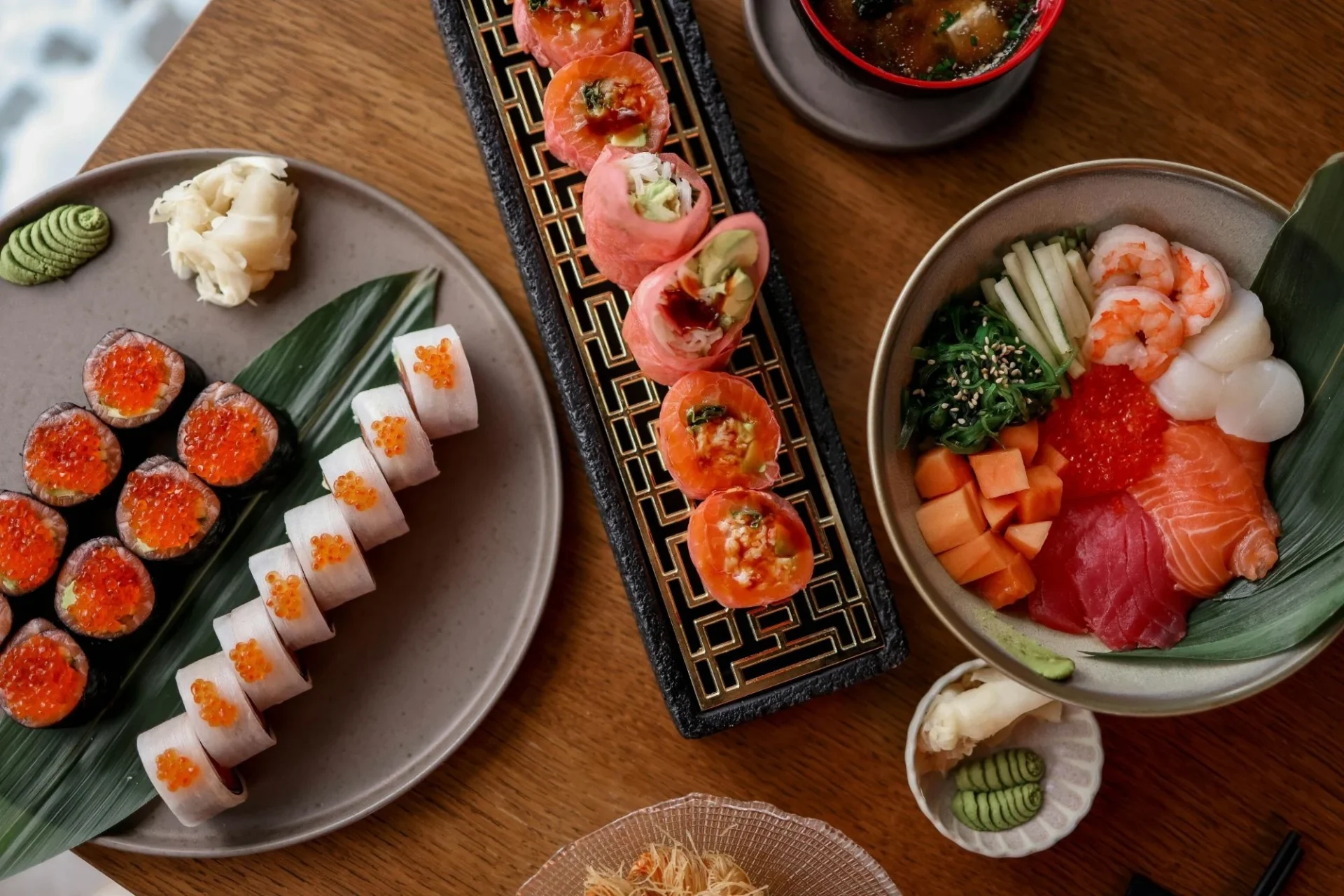
Quick Comparison of 3 Types of Sushi (Kaitenzushi, Edomae Sushi, Omakase)
| Edomae Sushi | |||
| What it is | Conveyor belt sushi | Traditional Tokyo-style sushi served at a counter | Chef-directed, multi-course sushi experience |
| Typical price | Plates from about ¥100–500; roughly ¥1,000–3,000 per person | Mid-range; varies by restaurant | From a ¥6,000 lunch to ¥30,000 or more |
| Format | Pick from the belt or order by touchscreen | Counter seating, pieces made to order, some menu choice | No menu; the chef sets the sequence |
| Time needed | Quick in and out | A relaxed sitdown meal | About 1–2 hours or more |
| Best for | Budget meals, variety, first-timers | Understanding sushi as a craft | Special occasions and seasonal, high-grade fish |
Price, formality and time commitment all rise as you move from left to right. The jump generally reflects real differences in ingredient sourcing and preparation, though not always in a straight line. A good rule of thumb: kaiten-zushi for a fast, cheap lunch, a neighborhood Edomae counter for dinner, and one omakase as the splurge.
Kaiten-Zushi (回転寿司)
What is Kaiten-Zushi?
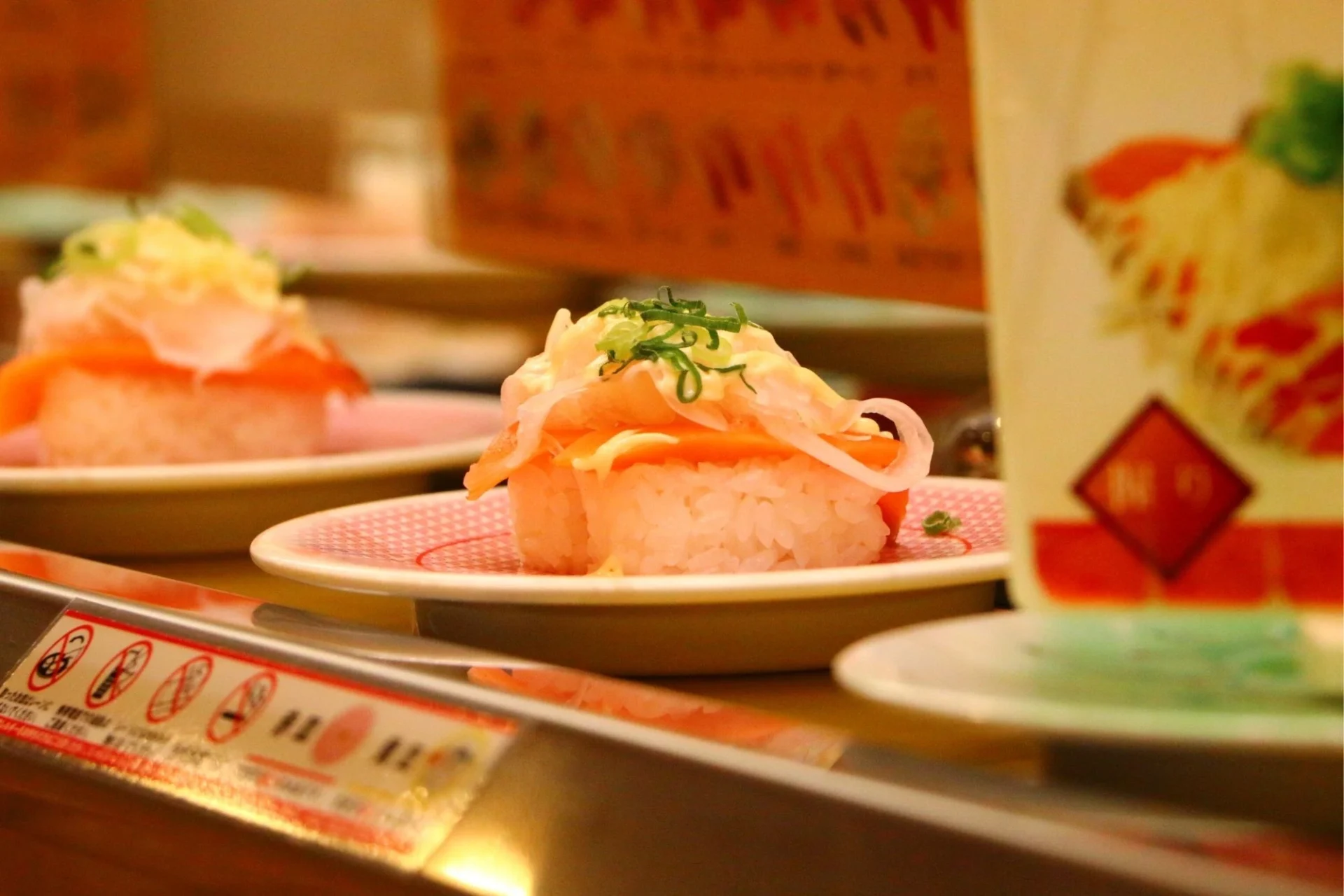
Kaiten-zushi, also called conveyor belt sushi, is the most affordable and most beginner-friendly way to eat sushi in Japan. Plates of sushi circulate on a belt in front of your seat. You can take what looks good as it passes or order dishes that are not on the belt. At the end of the meal, the plates are counted and the bill is calculated.
Highlights
- Budget-friendly pricing: Plates typically cost around ¥100 to ¥500, and the price is usually shown by plate color or design. Some restaurants charge a flat rate instead.
- Modern ordering: Many chains now use touchscreen ordering, often with a choice of languages, and deliver your dishes through a separate express lane.
- Surprising quality: Some chains put real effort into fresh, rotating menus and authentic preparation, and a few even serve Edomae-style sushi right on the belt.
- Huge variety: It is easy to try many different toppings in a single sitting without committing to a full set meal.
Cultural notes
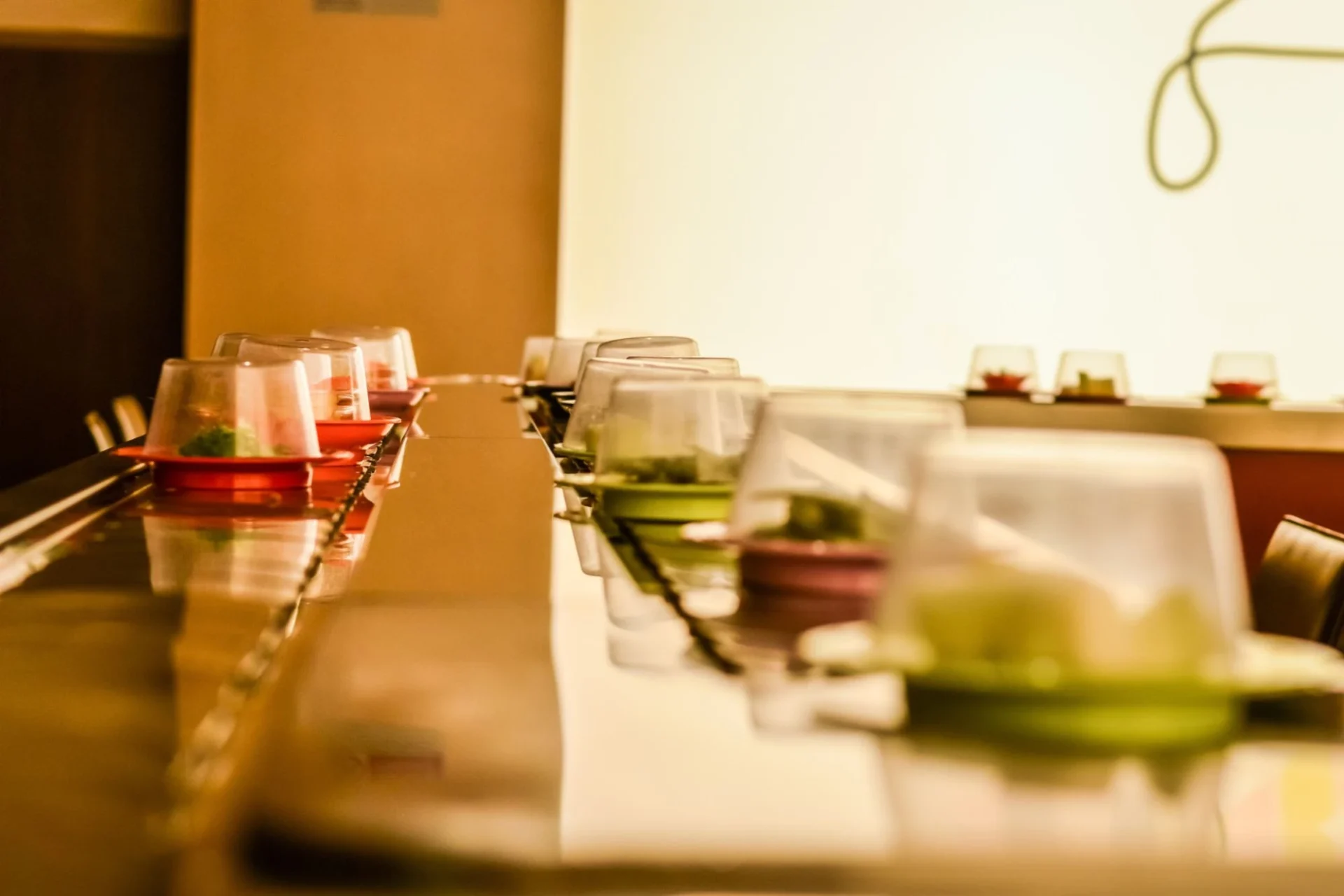
Over the past decade, Kaiten-Zushi has moved from a novelty format to a respected part of Japan’s sushi scene. Locals of all backgrounds eat at a good chain regularly, so you will not be the only one enjoying it as a proper meal rather than a gimmick.
Travel tips
- Major chains are very consistent across the country, which makes conveyor belt sushi a reliable choice in any unfamiliar city.
- You do not need to speak Japanese. Touchscreen menus make it one of the most accessible sushi formats for visitors.
- Stack your plates as you go and keep track of colors if you want to estimate your bill.
Where to try?
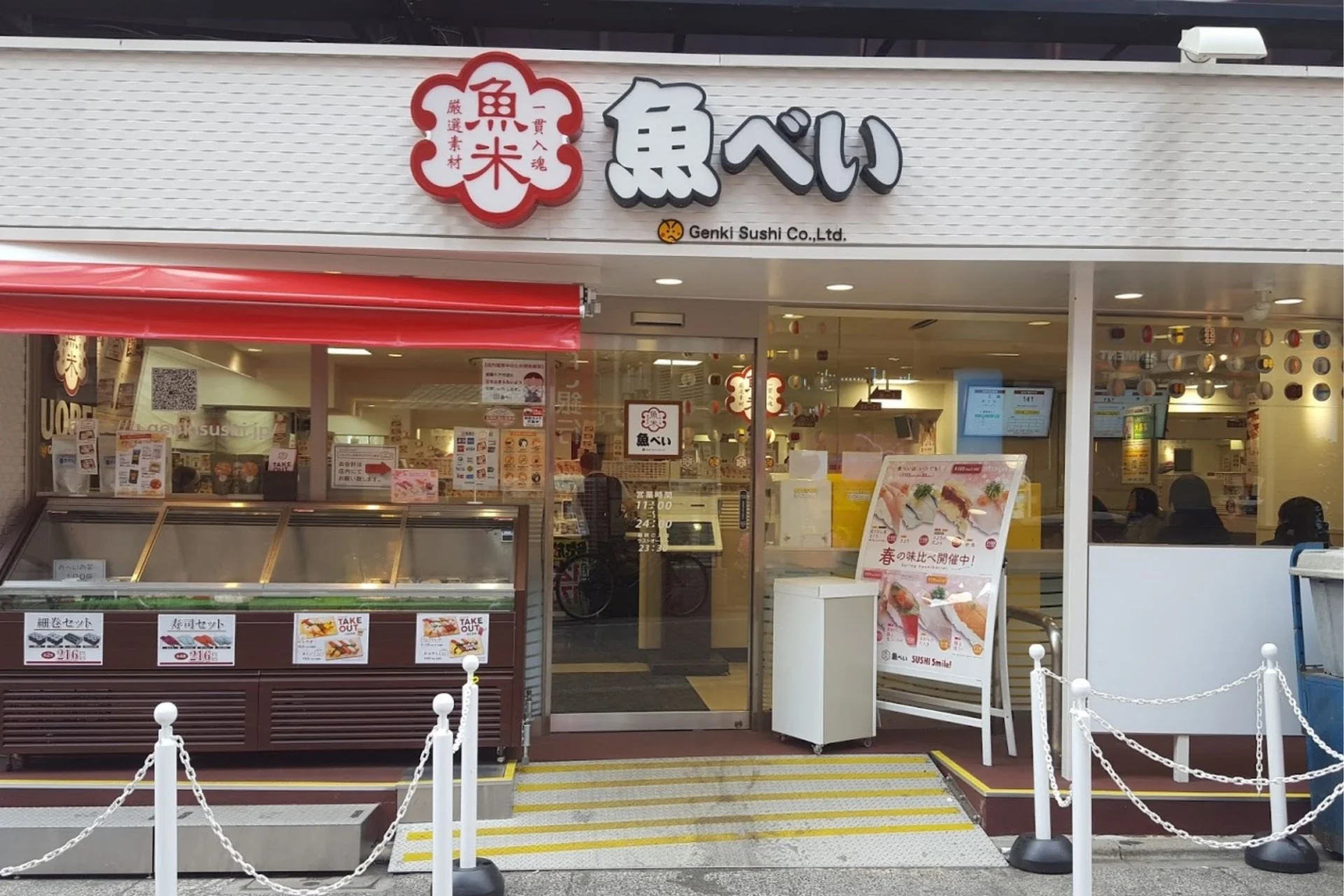
Tokyo is a great place to start. Uobei is known for its tablet-order conveyor belt and rock-bottom prices, while Katsu Midori is another well-known name for casual sushi in the capital. Look for the large national chains in any city if you simply want a quick, dependable meal.
Edomae Sushi (江戸前寿司)
What is Edomae Sushi?
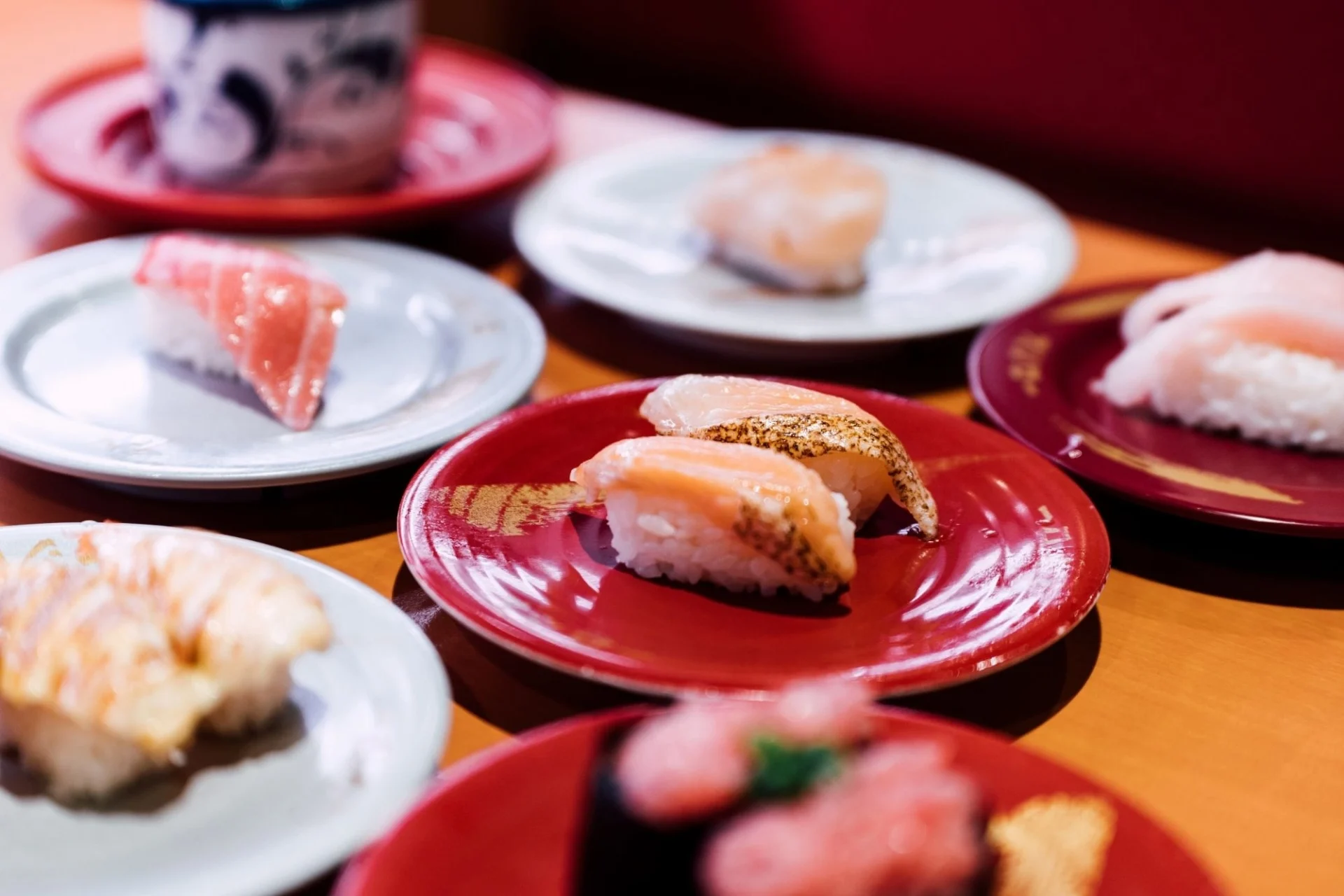
Edomae Sushi is the traditional style most people picture when they think of sushi. It developed in 19th-century Tokyo as a way to prepare and preserve fresh fish from the bay. The word “Edomae” literally refers to the waters in front of old Edo, today’s Tokyo Bay, which shows how firmly the style is rooted in Tokyo before it spread nationwide.
Highlights
- Technique over rawness: Rather than serving everything raw and unadorned, chefs marinate, lightly cure and age the fish to bring out flavor.
- Seasoned rice: The rice is flavored with vinegar, often a red vinegar in the traditional style, and paired with carefully chosen fish.
- Counter service: Pieces are typically prepared to order and served directly from the chef rather than made in advance.
- A balanced price point: An Edomae restaurant sits between a conveyor belt chain and a full omakase in both price and formality.
Cultural notes
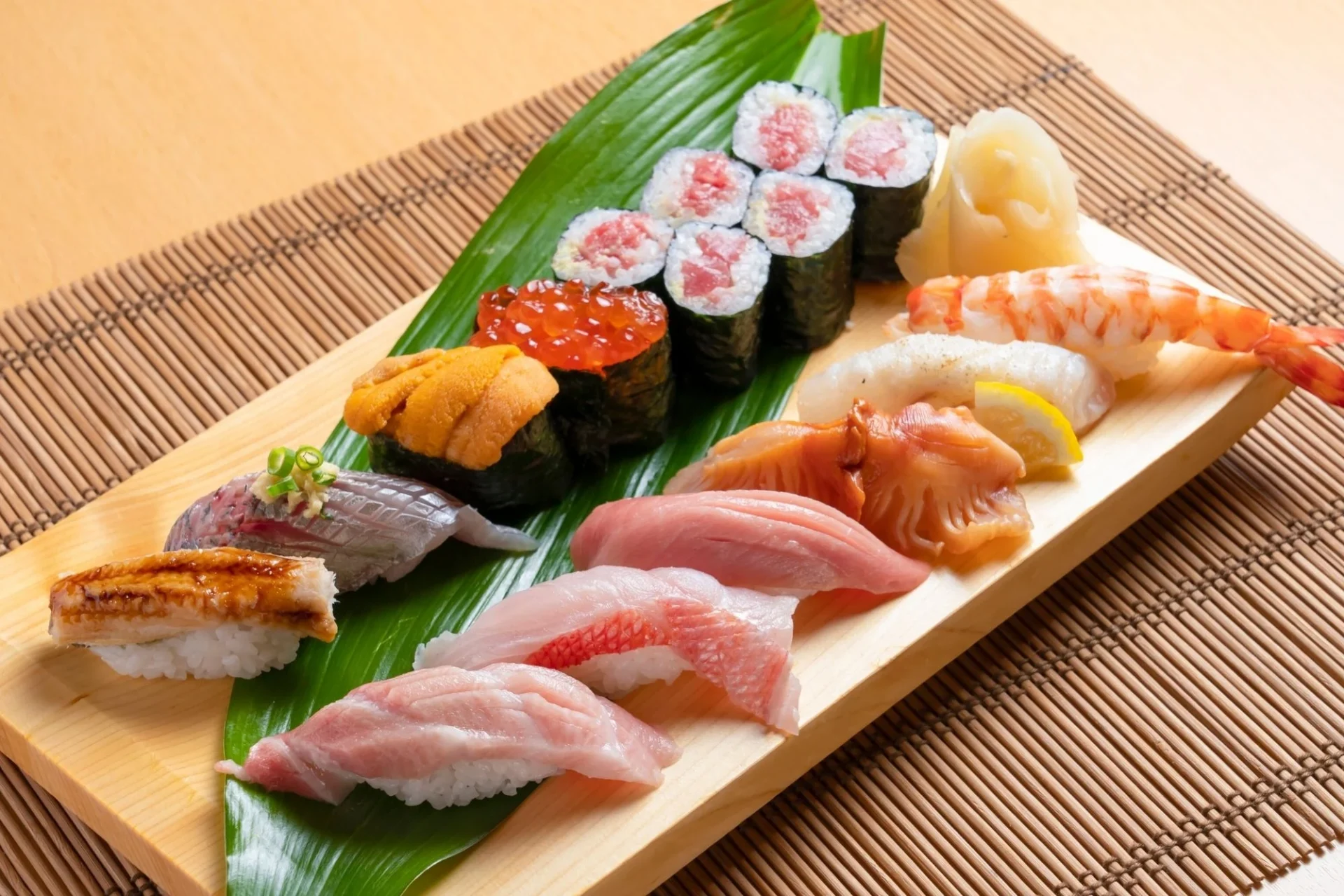
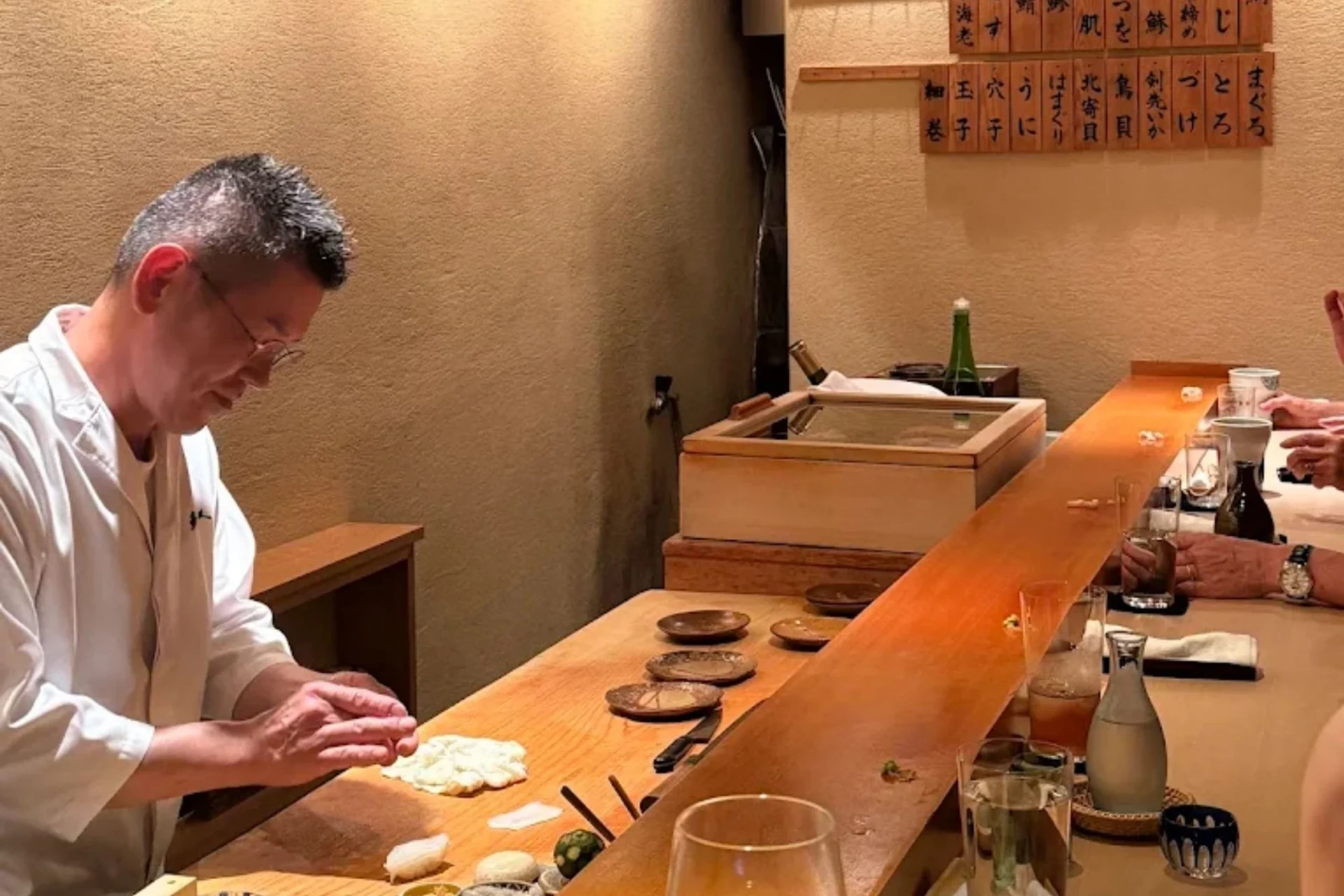
Sitting at the counter is part of the experience. Watching the chef work shows you how much skill goes into a single piece of sushi, which is why Edomae is the best choice if you want to understand sushi as a craft. It is completely normal to eat nigiri with your hands, especially at traditional counters.
Travel tips
- Dip the fish side of the piece, not the rice, into soy sauce so the rice does not soak up too much.
- Treat pickled ginger (gari) as a palate cleanser between pieces, not as a topping.
- If you are unsure what to order, ask the chef for a recommendation. Counters that see international guests are usually happy to help.
- Skip tourist-oriented restaurants right outside major stations and walk a couple of streets further for better value.
Where to try?
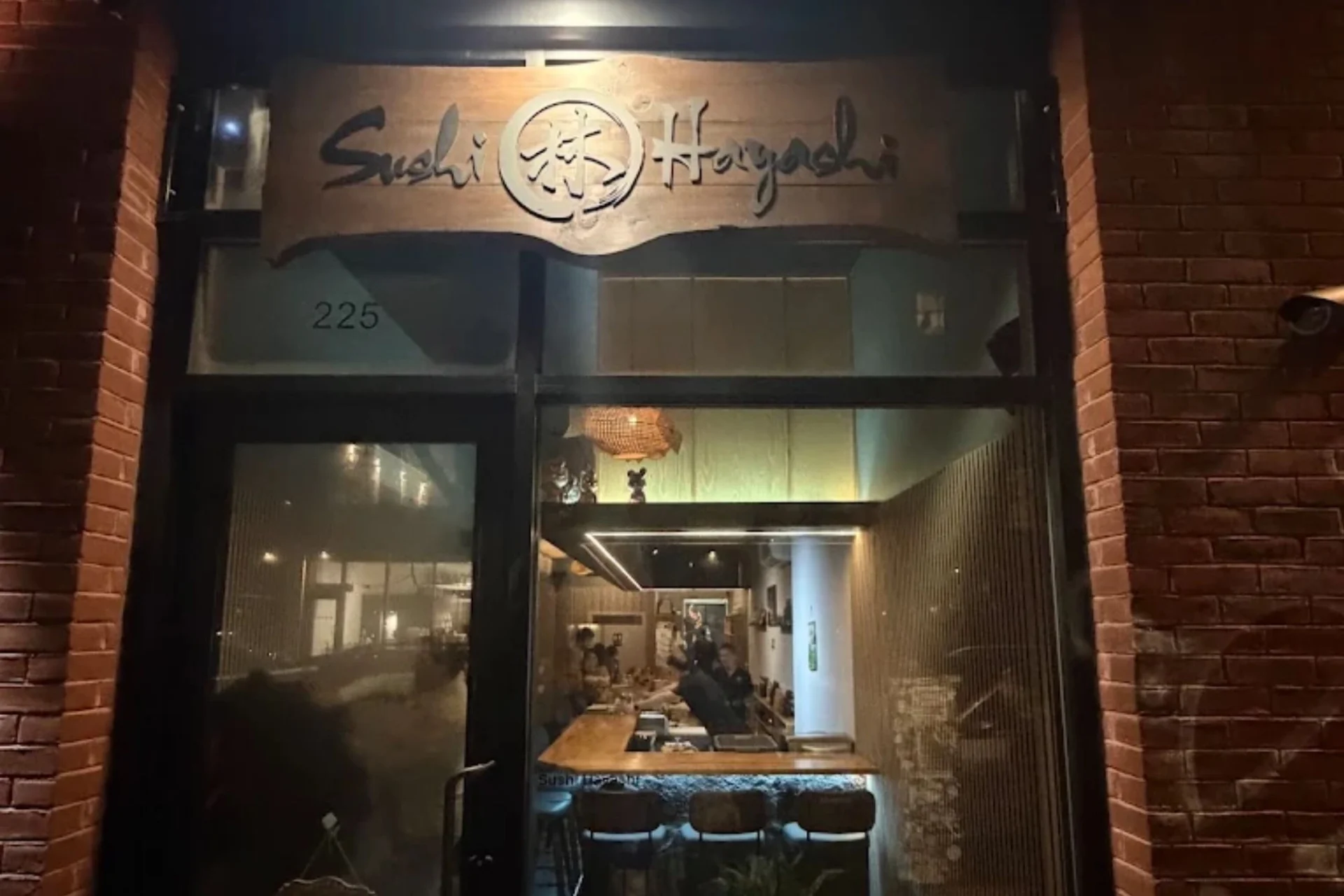
Tokyo is the natural home of Edomae sushi. Hikarimono in Tokyo aims to be an everyday place with quality that rivals high-end sushi restaurants, in a relaxed atmosphere free of stiffness. In Kyoto, Sushi Hayashi is an interesting example of how Edomae technique can blend with local Kyoto-style sushi such as mackerel sushi. For a market-style experience, the counters around Toyosu are popular for a fresh morning sushi meal.
Omakase (おまかせ)
What is Omakase?
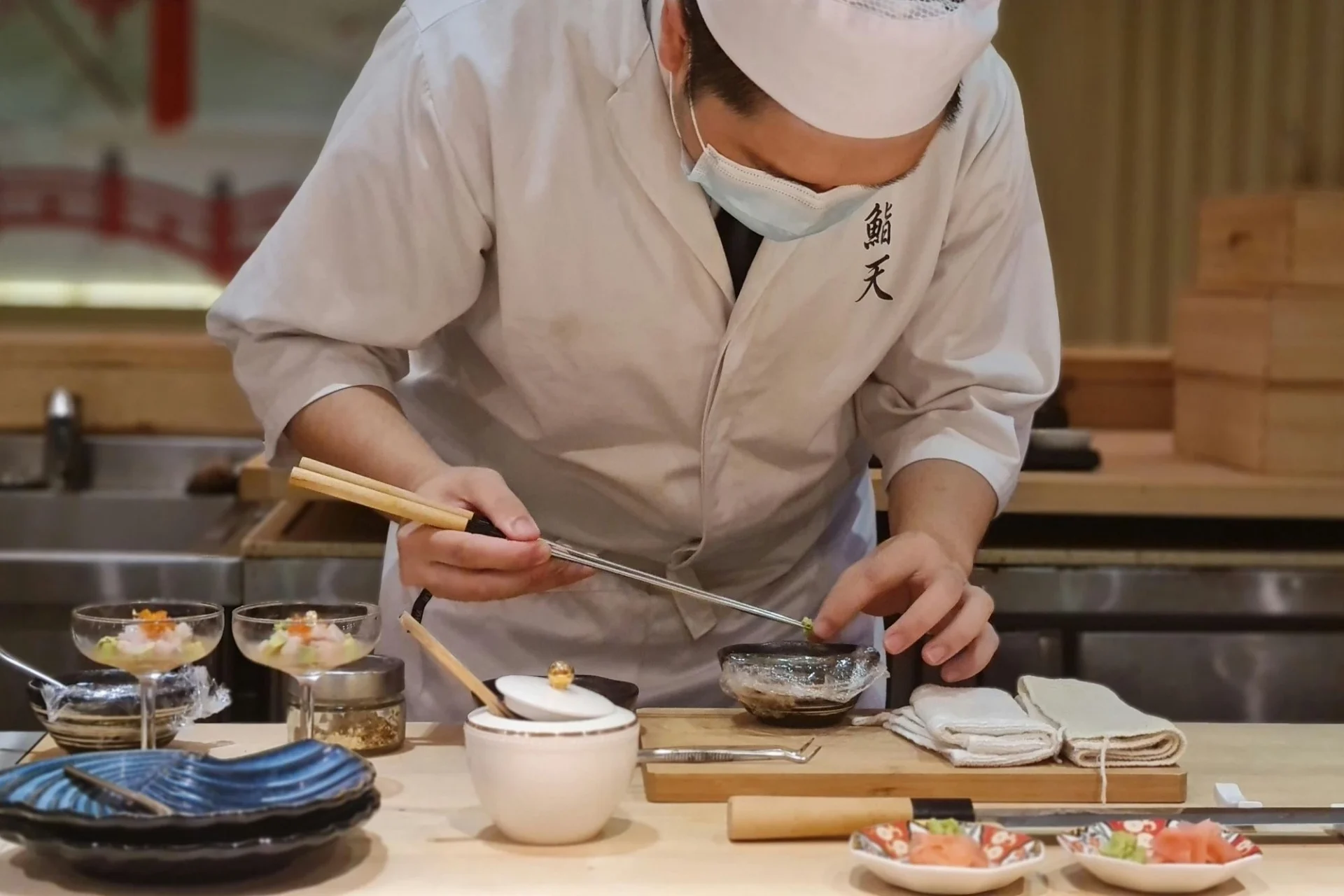
Omakase means “I leave it to you.” It is the premium, chef-directed sushi experience. There is no menu to choose from. Instead, the chef serves a set sequence of pieces based on what is best that day. It is the most immersive way to experience sushi in Japan.
Highlights
- Chef’s choice: The chef decides the selection and order, usually built around seasonal, high-grade fish.
- A slow, multi-course meal: Sessions can last from about an hour to two hours or more, often with ten or more courses.
- Wide price range: Prices vary enormously by restaurant reputation, from an accessible lunch omakase of around ¥6,000 to some of the most expensive meals in Japan, which can exceed ¥30,000 (~ 189,71 USD).
- Lunch is the easiest way in: A lunchtime omakase is usually the gentlest way to try the format for the first time without overspending.
Cultural notes
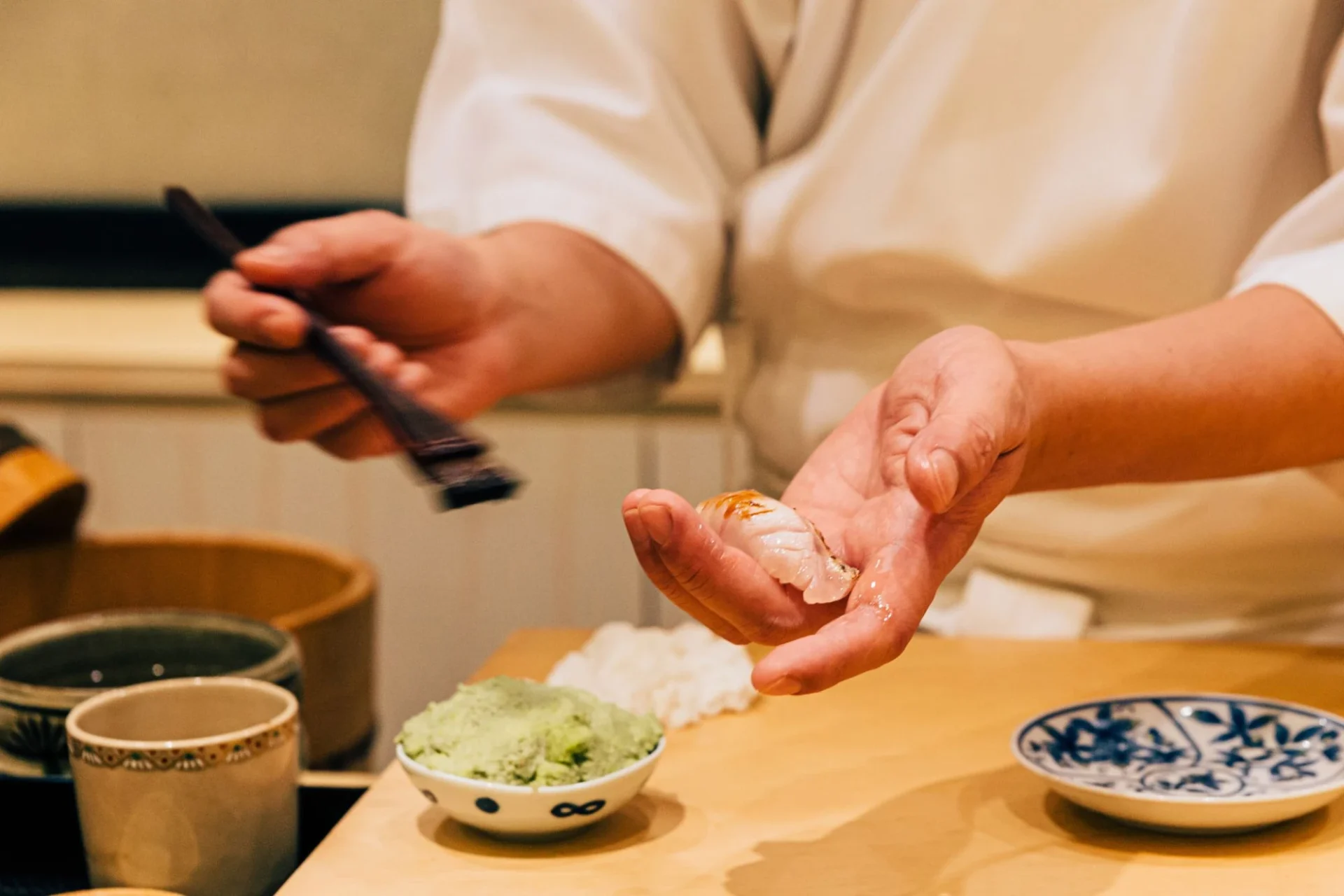
Omakase is built on trust between guest and chef. Questions are welcome. Many chefs enjoy explaining what they are serving and where the ingredients come from, and a polite question is generally appreciated rather than seen as rude. Arrive on time, since the meal is paced by the chef and the whole counter eats together.
Travel tips
- Book early, well-regarded omakase counters often require reservations weeks or even months in advance.
- Mention any allergies or dislikes when you book, not at the counter.
- Check current pricing before you reserve, since the range between restaurants is huge.
- Use an online reservation platform if you do not speak Japanese, or ask your hotel to help.
Where to try?
In Tokyo, Udatsu Sushi has earned a Michelin star and is known for traditional nigiri alongside original creations, served in a gallery-like space. In Osaka, Sushiroku, a cozy family-run counter, is dedicated to perfecting its sushi rice and uses two types of vinegared rice to suit different toppings. Ginza is also well known for top-tier counters, and there are a few approachable options for first-timers. Always confirm current prices and reservation rules, since they change over time.
Frequently Asked Questions
Q1: Is conveyor belt sushi lower quality than sit-down sushi?
Not necessarily. Quality depends on the restaurant, not the format, and some Kaiten-Zushi chains serve fresh, well-prepared sushi.
Q2: What is the difference between Edomae sushi and omakase?
Edomae is a traditional style; omakase is a way of ordering where the chef decides. The two often overlap.
Q3: How much should I expect to pay for omakase?
From around ¥6,000 for lunch to ¥30,000 or more for dinner at a famous counter. Check current prices before booking.
Q4: Do I need to speak Japanese to eat at a Kaiten-Zushi restaurant?
No. Most chains use multilingual touchscreen ordering.
Q5: Is it rude to ask questions at an omakase counter?
Not at all. Chefs usually welcome polite questions.
Q6: Should I eat sushi with chopsticks or my hands?
Either is fine. Eating nigiri by hand is normal, especially at traditional counters.
Conclusion
Sushi in Japan is not one single experience but a spectrum, and understanding the three main tiers helps you eat better and spend smarter. Choose Kaiten-Zushi for a fast, affordable and surprisingly good meal. Choose Edomae Sushi when you want a sit-down counter experience and a taste of Tokyo’s sushi tradition. Save Omakase for a special occasion, when you are happy to hand the decisions to a chef and enjoy a slow, seasonal, multi-course meal.
Whichever you pick, remember the basics: dip the fish side in soy sauce, treat ginger as a palate cleanser, book early for popular counters, and do not be afraid to ask questions. Match the room to the moment, and sushi will be a highlight of your trip.
Discover Japan tour packages with Nicetrips and experience the landscapes, food, culture, and seasonal highlights of northern Japan. Follow the Nicetrips Blog for more destination guides, travel tips, and Japan travel inspiration.