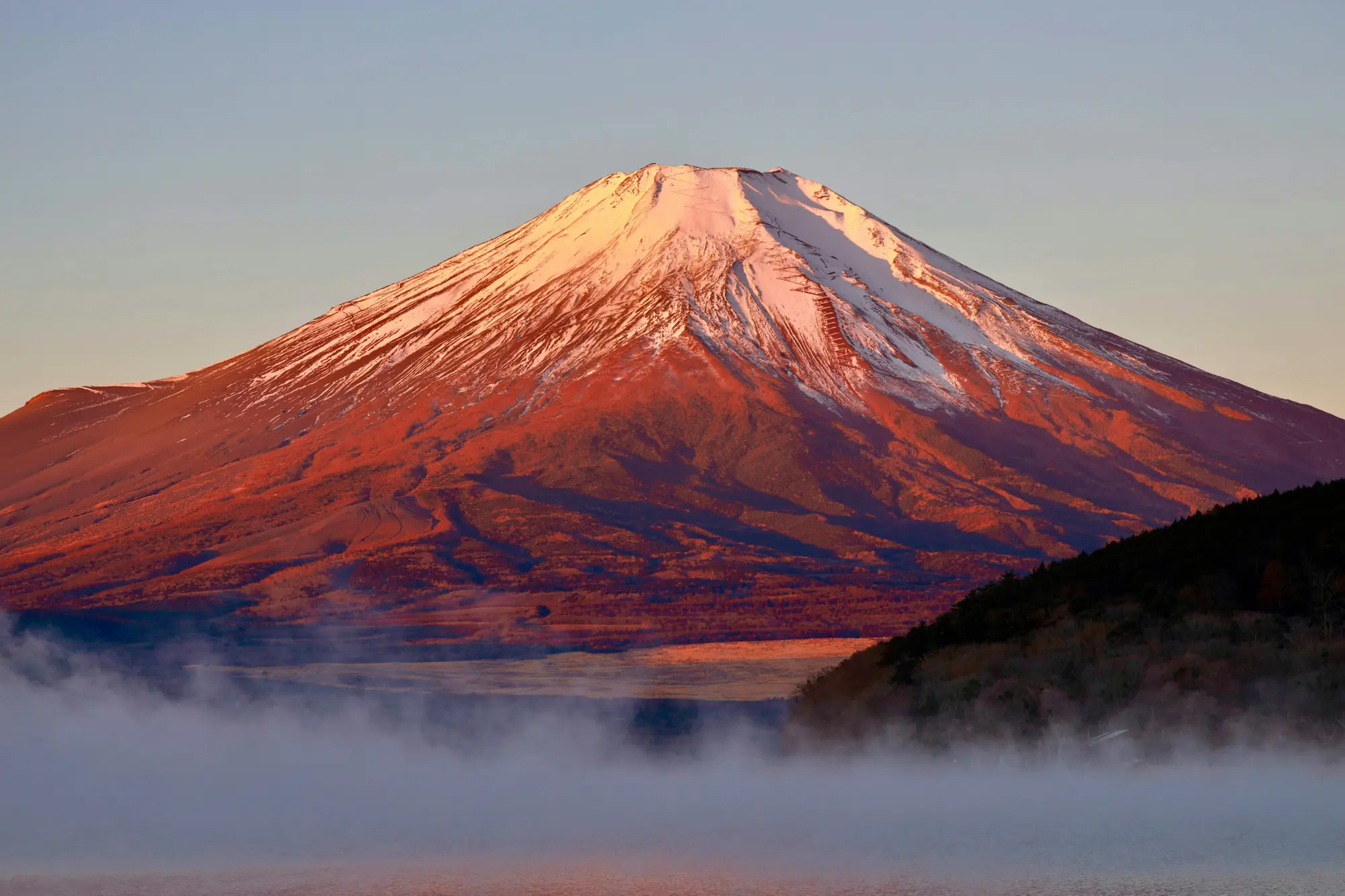
At 12,388 feet (3,776 meters), Mount Fuji is Japan’s highest peak and its most globally recognized icon. For most travelers planning a 2026 Japan itinerary, catching a glimpse of this perfectly symmetrical stratovolcano is a top priority. However, planning a successful visit Mount Fuji experience requires strategy. The mountain is famously weather-dependent, and the surrounding region is vast, requiring careful transportation planning. Whether you want to admire the peak from a hot spring, execute a seamless Mt Fuji day trip, or tackle the grueling ascent to climb Mount Fuji, this comprehensive guide provides the logistical realities, pacing tips, and transit strategies you need for a flawless experience.
Where Is Mount Fuji?
Understanding the physical geography of the region is the first step in building a realistic travel itinerary.
Where Is Mount Fuji in Japan?
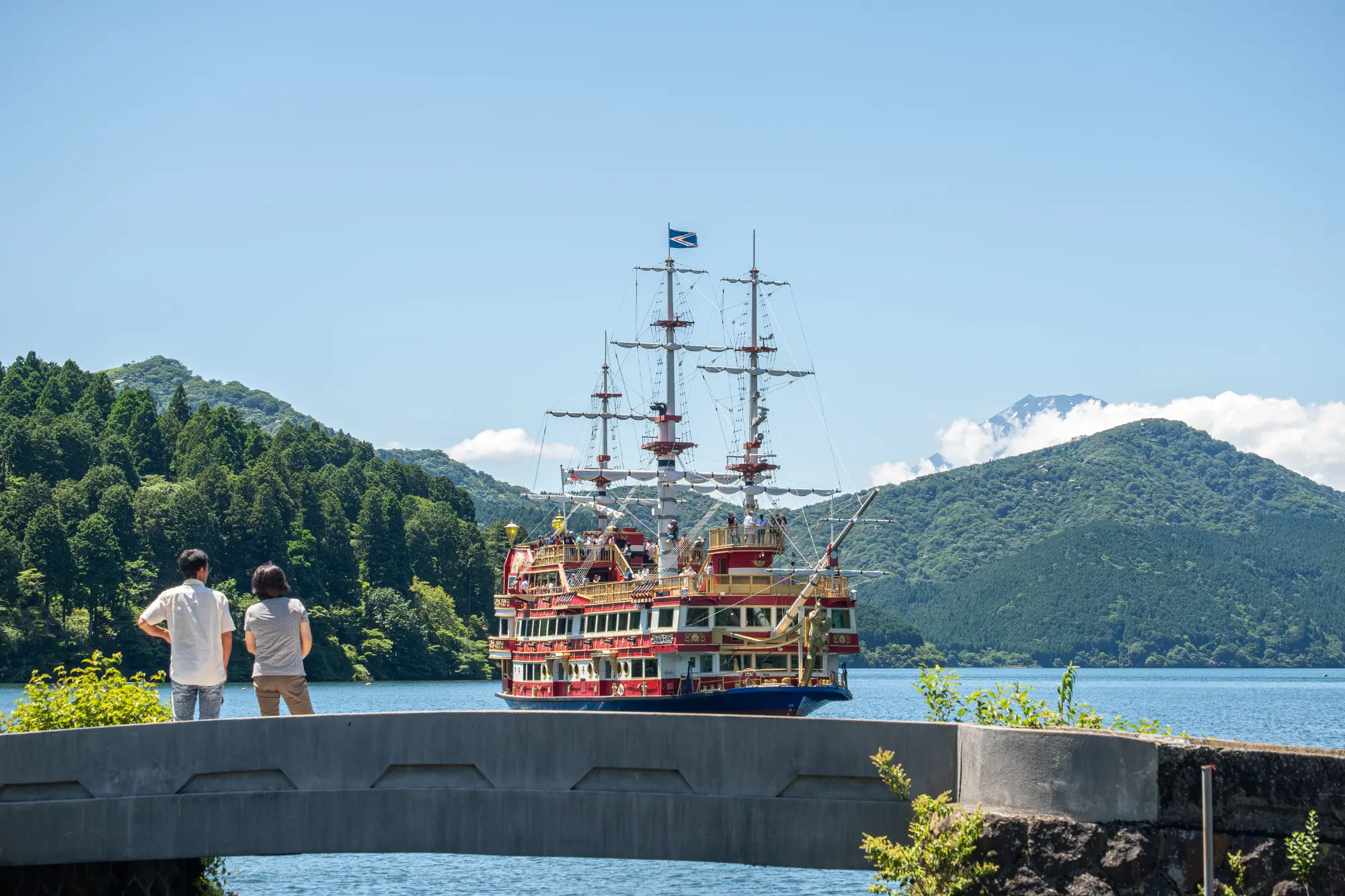
Mount Fuji sits precisely on the border of Yamanashi and Shizuoka prefectures in central Honshu, Japan’s main island. It is surrounded by the Fuji Five Lakes to its north and the geothermal resort town of Hakone to its southeast.
How Far Is Mount Fuji from Tokyo?
The mountain is located roughly 62 miles (100 kilometers) southwest of the capital. Depending on your exact destination (such as Lake Kawaguchi or Hakone) and your chosen transport, travel time typically ranges from 1.5 to 2.5 hours each way.
Can You See Mount Fuji from Tokyo?
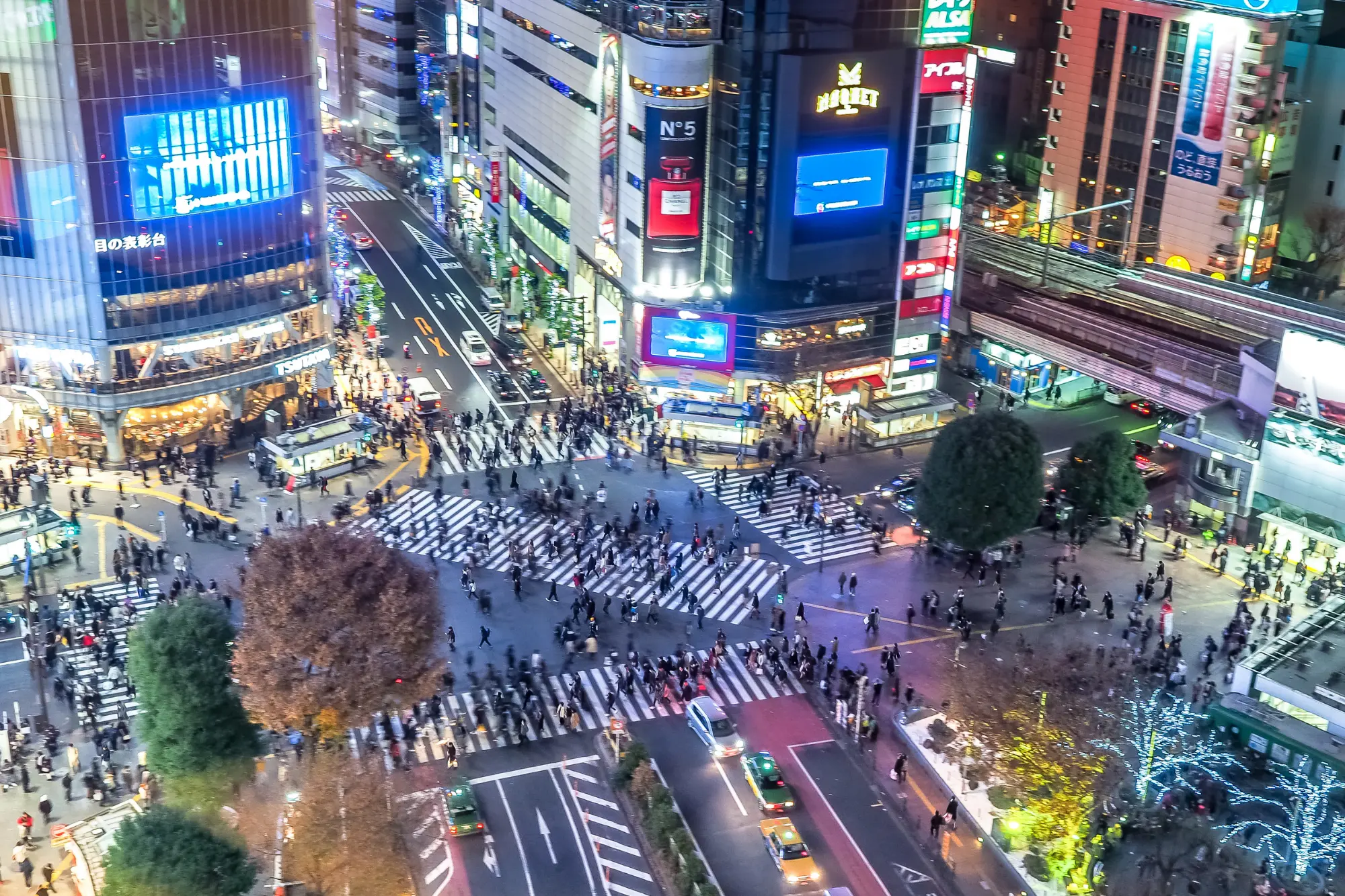
Yes, you can see Mount Fuji from Tokyo, but only on exceptionally clear days with low humidity-most commonly in winter. You can view it from high observation decks like the Tokyo Metropolitan Government Building. You can also see it from the Tokaido Shinkansen (bullet train); when traveling from Tokyo toward Kyoto, reserve a window seat on the right side (Seat E in Standard Class, Seat D in Green Car).
Why Is Mount Fuji So Famous?
Mount Fuji is much more than a geological feature; it is deeply embedded in the identity of Japan.
Mount Fuji in Japanese Culture and Religion
For centuries, Mt Fuji has been worshipped as a sacred site in Shintoism. It is considered the dwelling place of the deity Asama no Okami. Pilgrims have climbed its slopes for hundreds of years as an act of religious devotion, and its aesthetic beauty has inspired countless works of art, most notably Hokusai’s “Thirty-Six Views of Mount Fuji.”
Mount Fuji as a UNESCO World Heritage Site
In 2013, Mount Fuji was designated a UNESCO World Heritage Site. Notably, it was recognized as a “Cultural” site rather than a “Natural” one, reflecting its profound influence on Japanese art, religion, and cultural identity.
Is Mount Fuji Still an Active Volcano?
Yes, Mount Fuji is an active stratovolcano. While it is closely monitored by scientists and perfectly safe for tourism, its last eruption occurred in 1707 (the Hoei Eruption), which rained volcanic ash across Tokyo.
Things to Do Around Mount Fuji
Most travelers who visit Mount Fuji do so to admire it from afar. Here are the top locations to capture the perfect view.
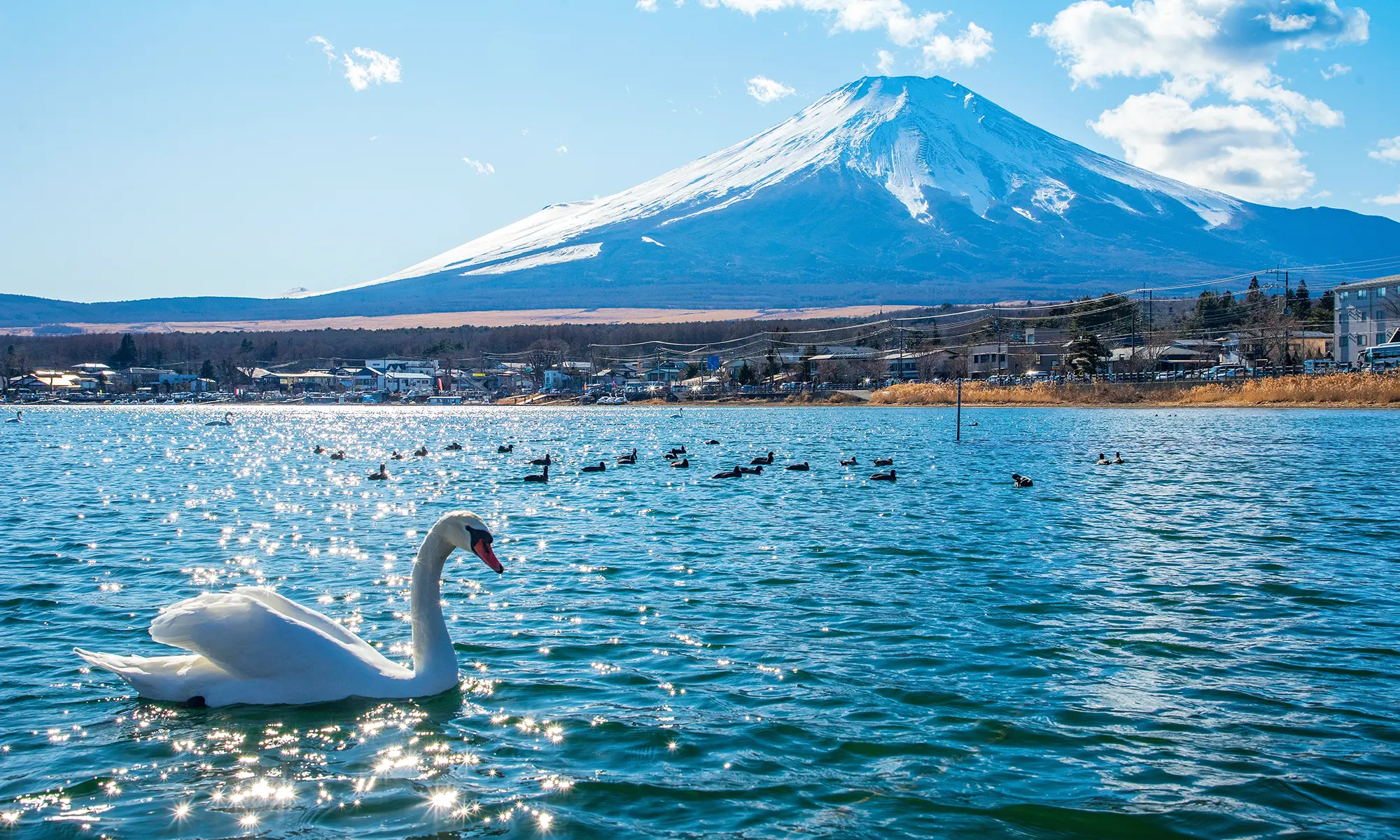
See Mount Fuji from Lake Kawaguchiko
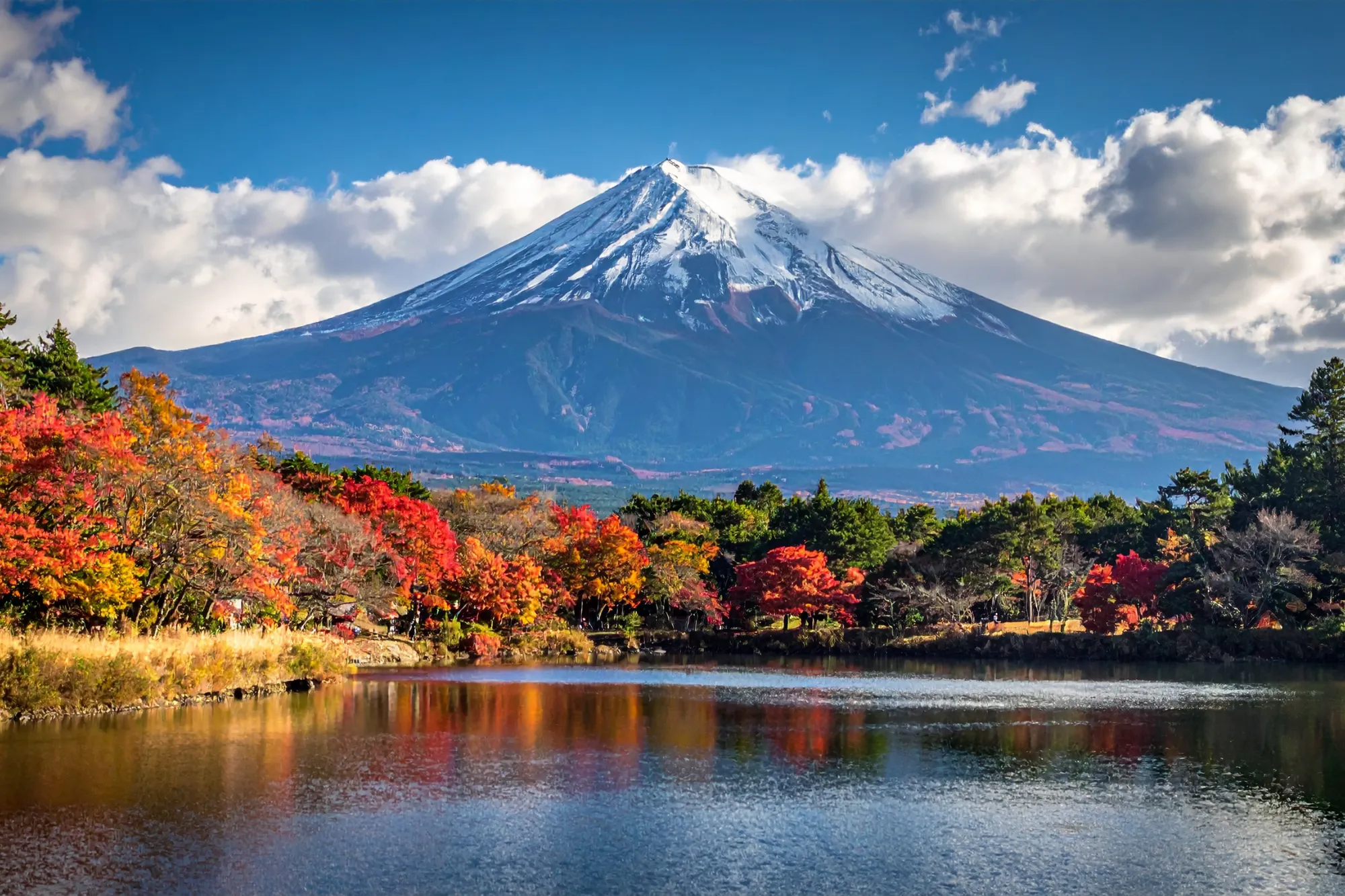
Lake Kawaguchi (Kawaguchiko) is the most developed and accessible of the Fuji Five Lakes. The northern shore offers massive, unobstructed views of Mt Fuji reflecting perfectly on the water.
Visit Chureito Pagoda
Located inside Arakurayama Sengen Park, this five-story red pagoda with Mount Fuji soaring in the background is the most iconic photo spot in Japan.
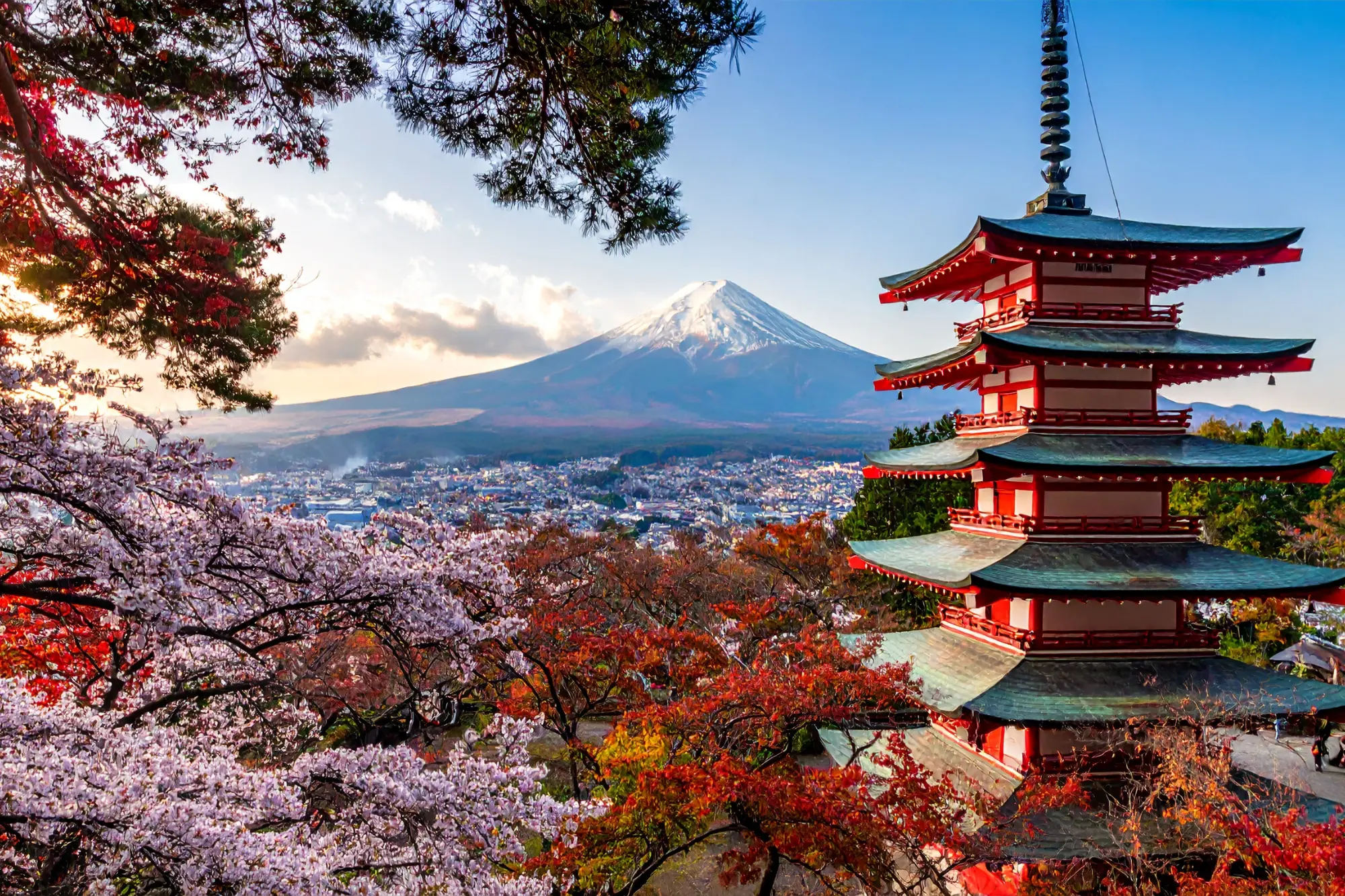
Logistical Note: Reaching the viewing deck requires climbing nearly 400 stone steps. Travelers should pace themselves accordingly.
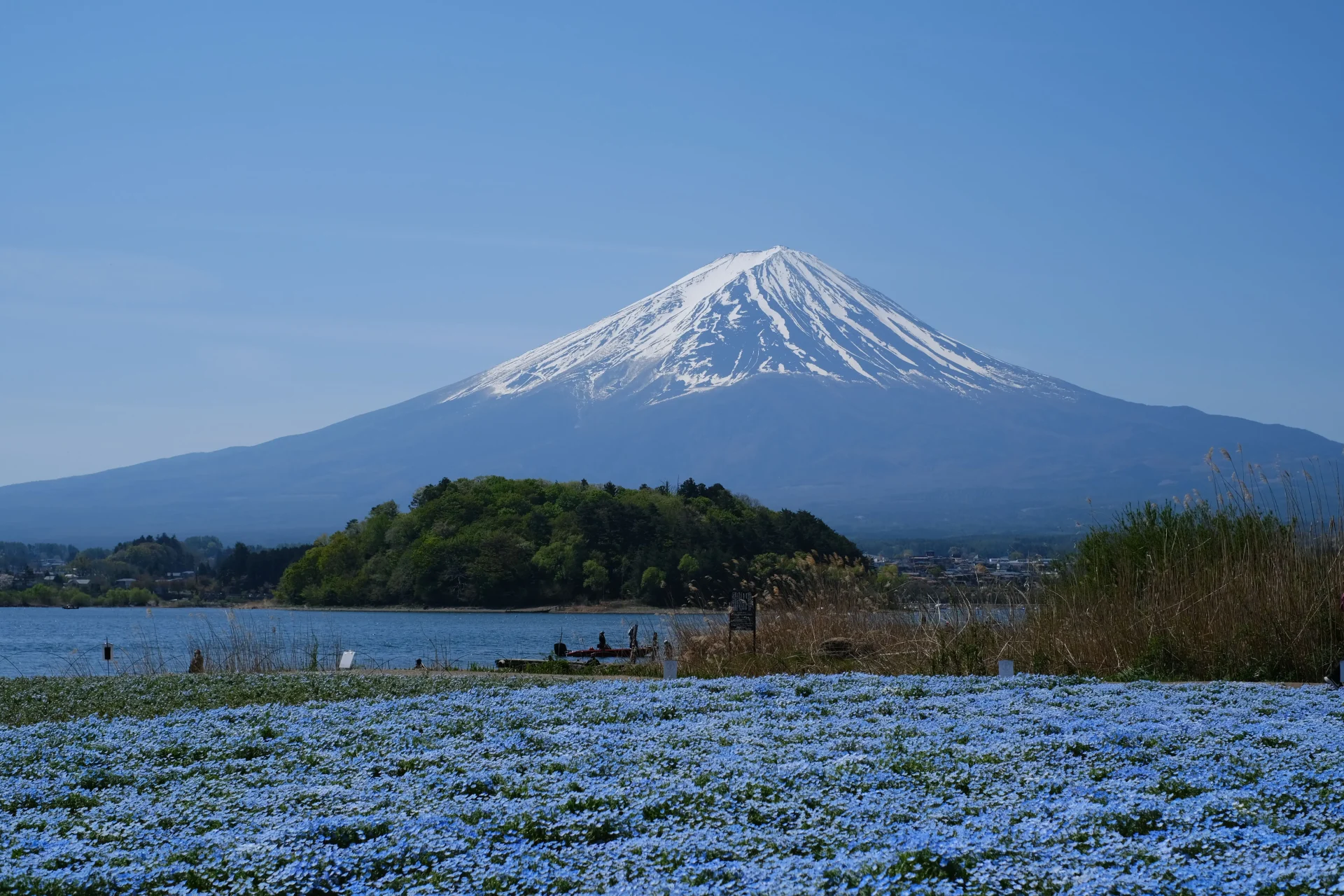
Walk Around Oishi Park
Situated on Lake Kawaguchi’s northern shore, Oishi Park features beautifully landscaped flower fields. Depending on the season, you can photograph the mountain framed by summer lavender or bright red autumn kochia bushes.
Explore Oshino Hakkai
This historic, thatched-roof village features eight crystal-clear ponds fed directly by snowmelt from Mt Fuji. It offers a glimpse into traditional Japanese rural life, though it can become quite crowded by midday.
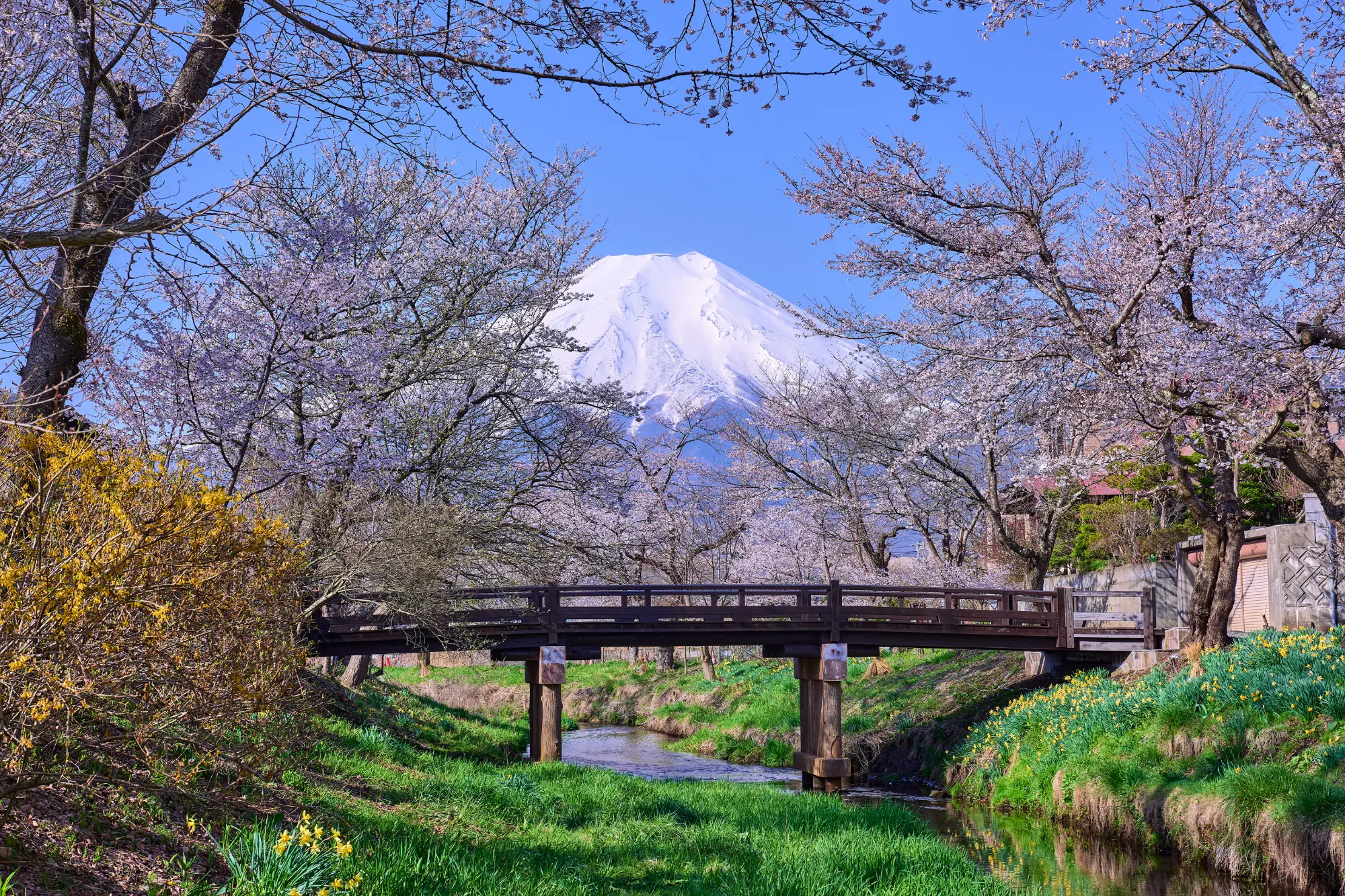
Visit Mount Fuji 5th Station
The Mount Fuji 5th Station (Fuji Subaru Line 5th Station) sits at 7,500 feet, halfway up the volcano. It serves as the primary base camp for climbers.
Explore Lake Yamanaka
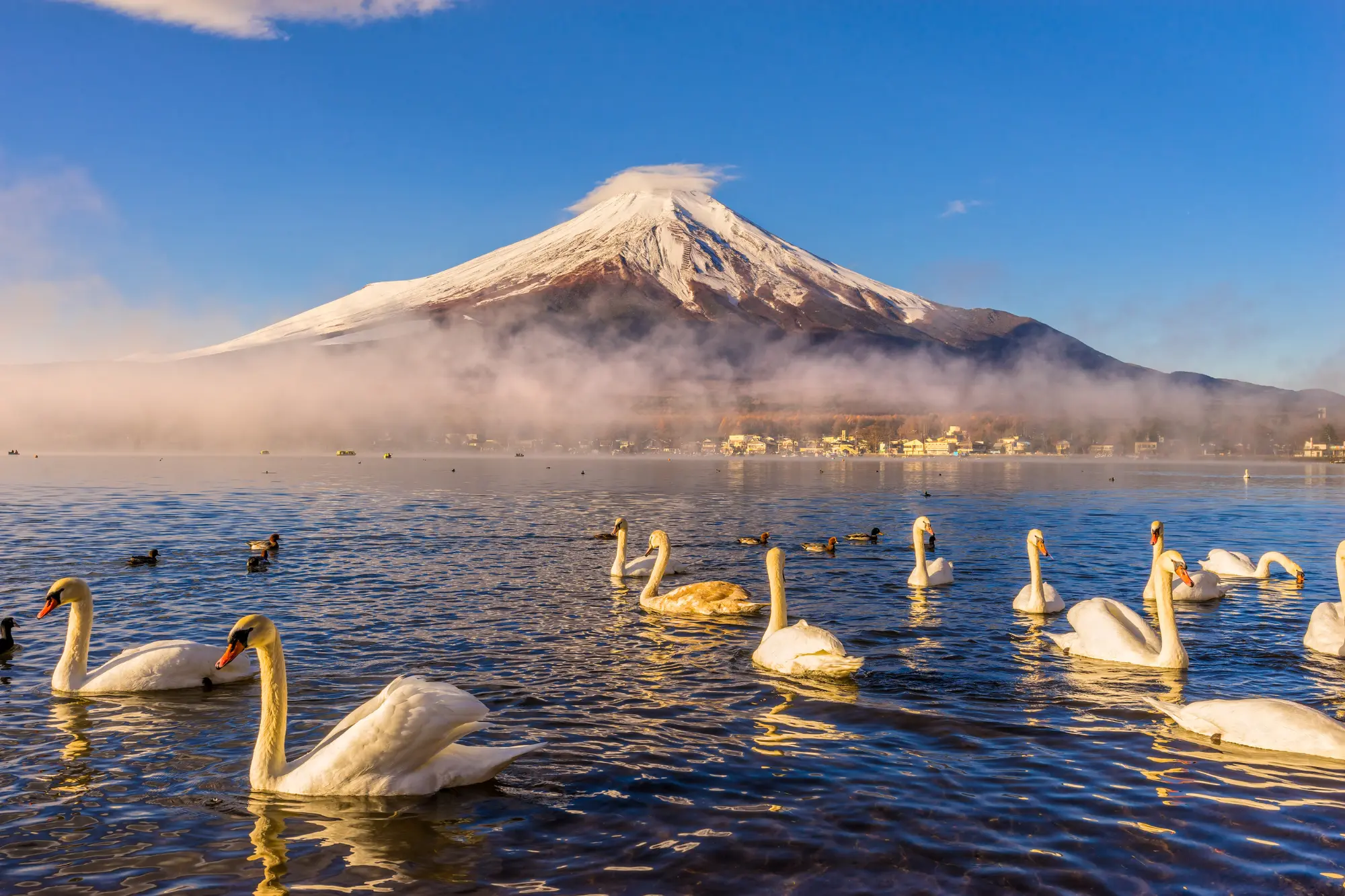
Lake Yamanaka is the largest of the Fuji Five Lakes. It is quieter than Kawaguchiko and is famous for the “Diamond Fuji” phenomenon in winter, where the setting sun aligns perfectly with the volcano’s peak.
Take in the Fuji Five Lakes Scenery
Beyond Kawaguchi and Yamanaka, lakes Saiko, Shojiko, and Motosuko offer pristine, highly rugged nature. Lake Motosuko is the location depicted on the back of the 1,000-yen bill.
Mount Fuji from Tokyo: How to Get There
Getting to Mount Fuji from Tokyo is straightforward, but advance booking is essential for 2026 travel.
Tokyo to Mount Fuji by Train
The most efficient method is the Fuji Excursion Limited Express train. It runs directly from Shinjuku Station to Kawaguchiko Station in 1 hour and 50 minutes. Because it avoids highway traffic, it is the most reliable option, but seats sell out weeks in advance.
Tokyo to Mount Fuji by Bus
Highway buses depart frequently from the Shinjuku Expressway Bus Terminal (Busta Shinjuku) to the Fuji Five Lakes. It takes about 1 hour and 45 minutes under ideal conditions, but heavy weekend traffic can add an hour to the journey.
Tokyo to Mount Fuji by Private Car
Hiring a private vehicle with an English-speaking driver is one of the most comfortable ways to visit Mount Fuji. With Nicetrips, you can travel by private car, avoid the stress of navigating train stations, and enjoy a more flexible itinerary with stops at scenic viewpoints that are difficult to reach by public transportation.
How Long Does It Take to Get from Tokyo to Mount Fuji?
Depending on your exact mode of transport and the traffic on the Chuo Expressway, expect a one-way trip to take roughly 2 hours.
Should You Take a Tour from Tokyo?
If you are planning a Mt Fuji day trip, a guided tour removes operational friction. Group bus tours offer strict schedules and excellent value, while private custom tours allow you to pivot your itinerary dynamically if clouds block the mountain.
Mt Fuji Day Trip: Is One Day Enough?
If you are pressed for time, a day trip is entirely feasible.
Can You Do a Day Trip to Mount Fuji from Tokyo?
Yes, a Mt Fuji day trip is the most common way international tourists see the mountain. You can easily travel from Tokyo, see the highlights around Kawaguchiko, and return by dinner.
What Can You See on a Mount Fuji Day Trip?
With an early start, you can comfortably visit the Chureito Pagoda, ride the Mt. Fuji Panoramic Ropeway, eat a local lunch, and walk the shores of Lake Kawaguchi at Oishi Park.
When Should You Leave Tokyo?
To maximize your chances of a clear view and beat the heavy crowds, board a train or depart via private car no later than 7:30 AM.
How Much Time Do You Need Around Mount Fuji?
For a day trip, plan for roughly 4 hours of round-trip transit and 6 to 8 hours of active sightseeing on the ground.
Mt Fuji One-day Itinerary Sample
If you are executing a Mt Fuji day trip focused on Lake Kawaguchi, follow this efficient routing.
Morning: Tokyo to Kawaguchiko
Take the 7:30 AM Fuji Excursion train or a private car from Tokyo, arriving at Kawaguchiko Station by 9:20 AM.
Late Morning: Chureito Pagoda or Lake Kawaguchi
Head immediately to Arakurayama Sengen Park to climb the steps to the Chureito Pagoda before the midday crowds arrive.
Afternoon: Oishi Park and Oshino Hakkai
Enjoy lunch near the lake, then take a taxi or local bus to Oishi Park for floral views. If time permits, visit the clear ponds of Oshino Hakkai.
Evening: Return to Tokyo
Depart Kawaguchiko by 5:00 PM to return to Tokyo in time for dinner, keeping in mind that highway buses may face evening rush hour traffic.
Alternative Mount Fuji Itinerary with Hakone
Attempting to see both the Fuji Five Lakes and Hakone in a single day using public transit is a mistake; you will spend the entire day on buses. If you must combine them on a Mt Fuji day trip, a private chartered car is the only way to do it efficiently.
What to Eat Around Mount Fuji
The Yamanashi region surrounding Mt Fuji is famous for specific, hearty comfort foods.
Hoto Noodles
This is the signature dish of the Fuji Five Lakes. Hoto consists of thick, flat, rustic wheat noodles served in a rich, savory miso broth with seasonal root vegetables and pumpkin.

Hoto Fudo
Hoto Fudo is the most famous restaurant chain serving this dish. Their location near Kawaguchiko Station is instantly recognizable due to its unique, cloud-like white architectural design.
Yoshida Udon
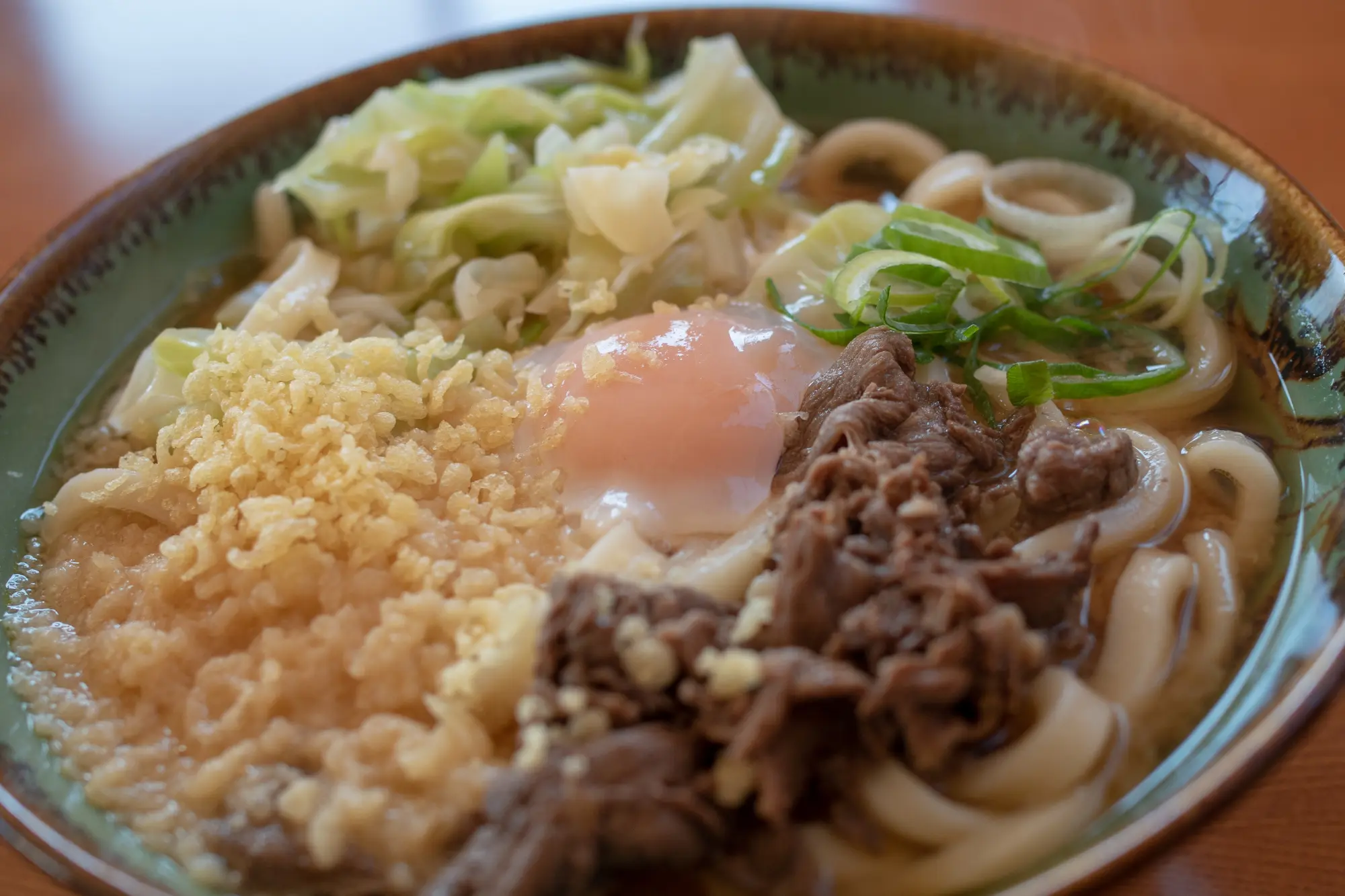
Originating in nearby Fujiyoshida, this udon is known for its incredibly dense, chewy texture. It is typically served with a soy-and-miso broth, topped with cabbage and spicy condiments.
Fujiyoshida Local Food
Beyond noodles, the area around the mountain is known for excellent fresh fruit, particularly peaches and grapes, owing to Yamanashi’s sunny climate.
Food Around Lake Kawaguchi
You will find everything from high-end kaiseki dining inside luxury ryokans to casual cafes offering matcha-flavored treats shaped like Mount Fuji.
Tips Mount Fuji Day Trip: What to Know Before You Go
Success relies on flexibility and preparation.
Check the Weather and Fuji Visibility
Before boarding your train from Tokyo, check the live webcams at Lake Kawaguchi. If the mountain is totally obscured by rain, consider rescheduling your Mt Fuji day trip.
Start Early
Clouds typically form around the peak as the air warms up. The clearest visibility is almost always between sunrise and 9:00 AM.
Keep Your Itinerary Flexible
Do not lock yourself into strict, non-refundable midday activities. If the mountain is clear in the morning, drop everything and take your photos immediately.
Bring Layers
The Fuji Five Lakes sit at a higher elevation than Tokyo. It is noticeably cooler, and if you visit the Mount Fuji 5th Station, temperatures drop significantly.
Wear Comfortable Shoes
Between the 400 steps of Chureito Pagoda and the walking paths of Oishi Park, comfortable, supportive walking shoes are mandatory.
Allow Extra Time for Traffic
If you travel by bus on a weekend, returning to Tokyo can take much longer due to heavy traffic on the Chuo Expressway.
Do Not Rely on One Viewpoint
If Chureito Pagoda is packed, pivot to the northern shores of Lake Kawaguchi. The mountain is massive, and excellent views are everywhere.
Check Seasonal Conditions
Do not pack summer clothing for a November visit, and do not expect to see snow on the mountain in August.
What Is the Best Time to Visit Mount Fuji?
Timing dictates exactly what you will see.
Mount Fuji in Spring
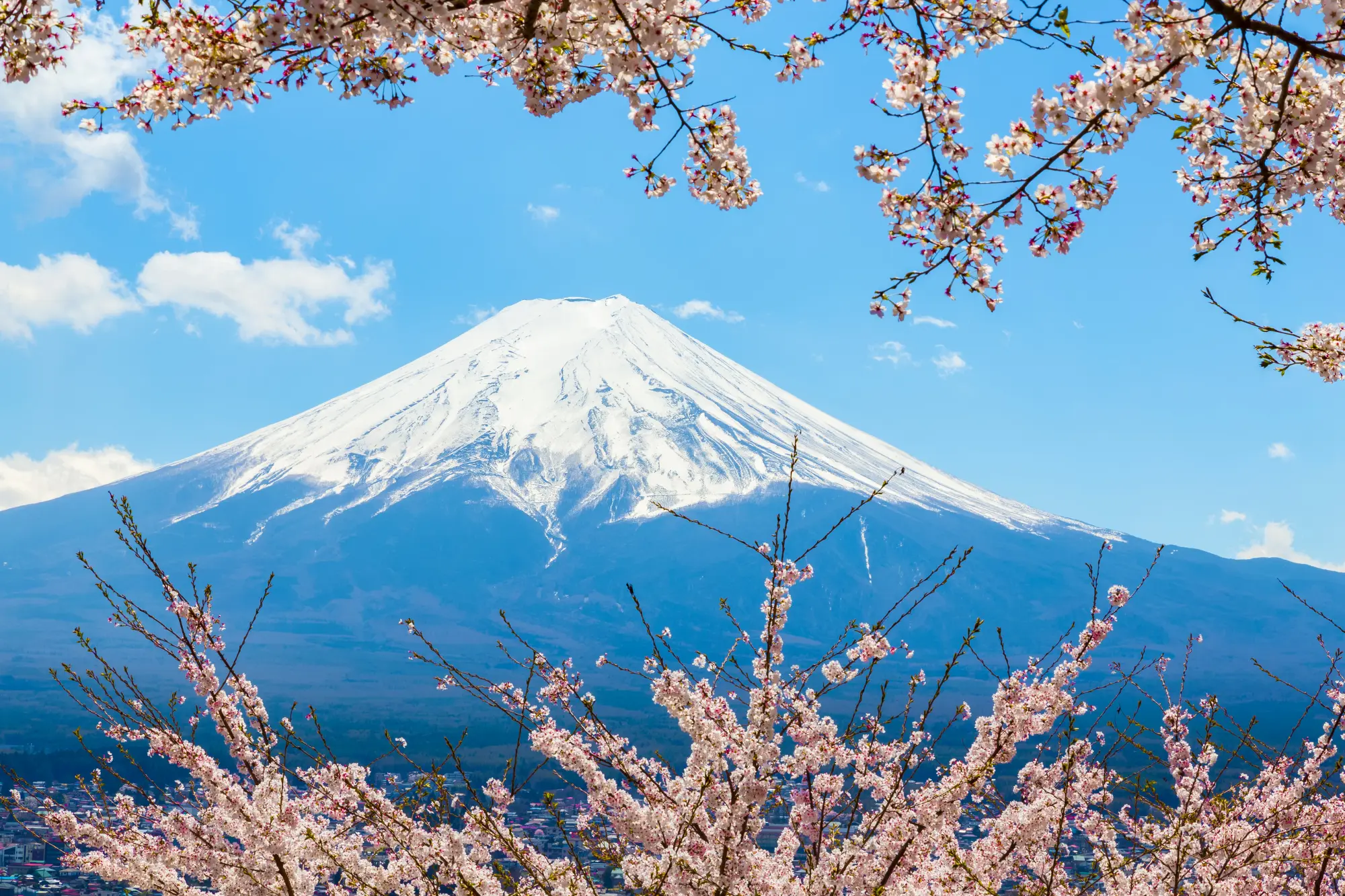
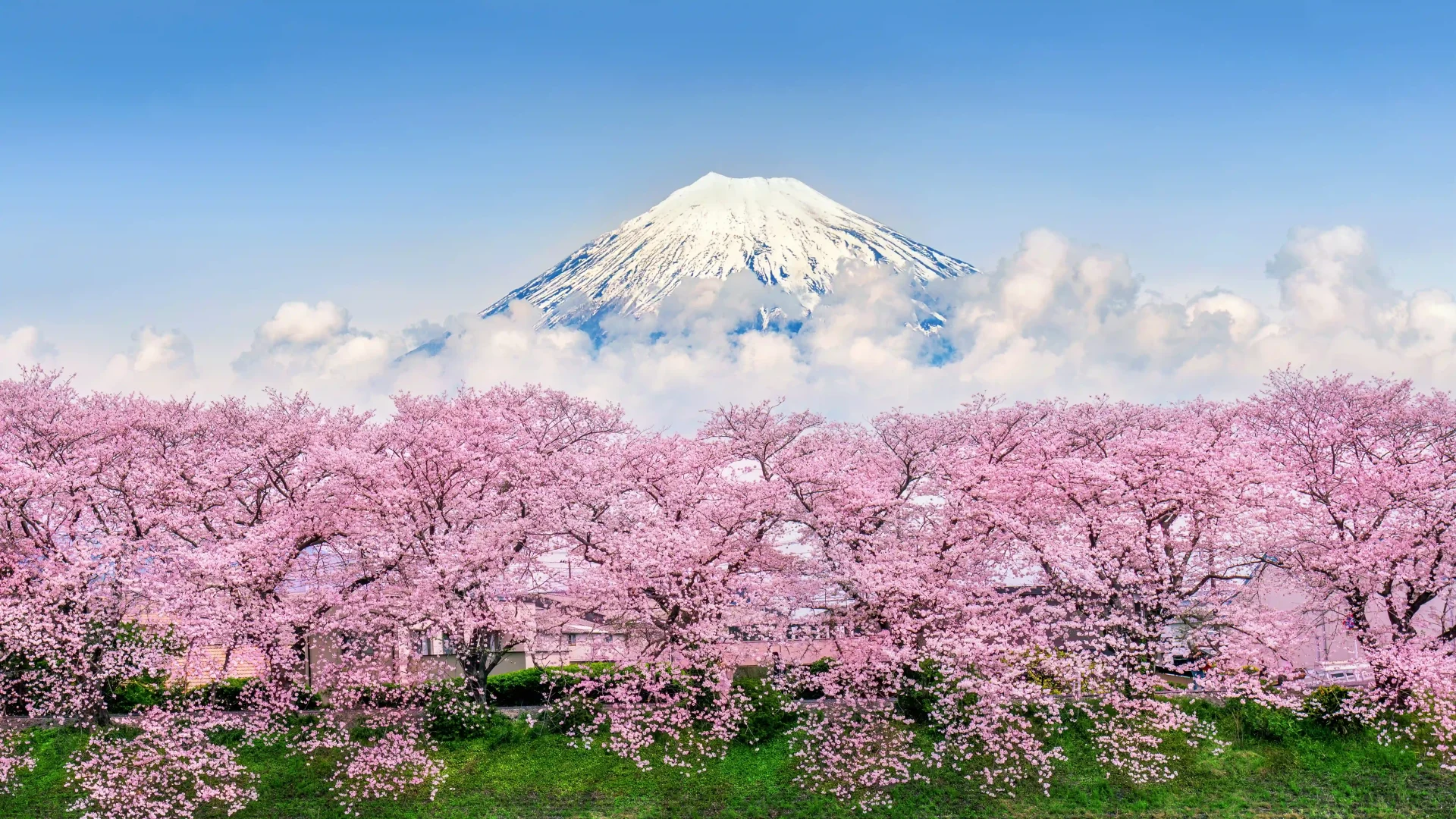
Spring (March to May) offers beautiful framing with cherry blossoms. However, spring air often carries a hazy moisture, meaning the mountain is sometimes partially obscured.
Mount Fuji in Summer
Summer (June to August) is the worst time for viewing. High humidity and the rainy season mean the mountain is often invisible for weeks. It is, however, the only time you can climb Mount Fuji. The snowcap completely melts by late July.
Mount Fuji in Autumn
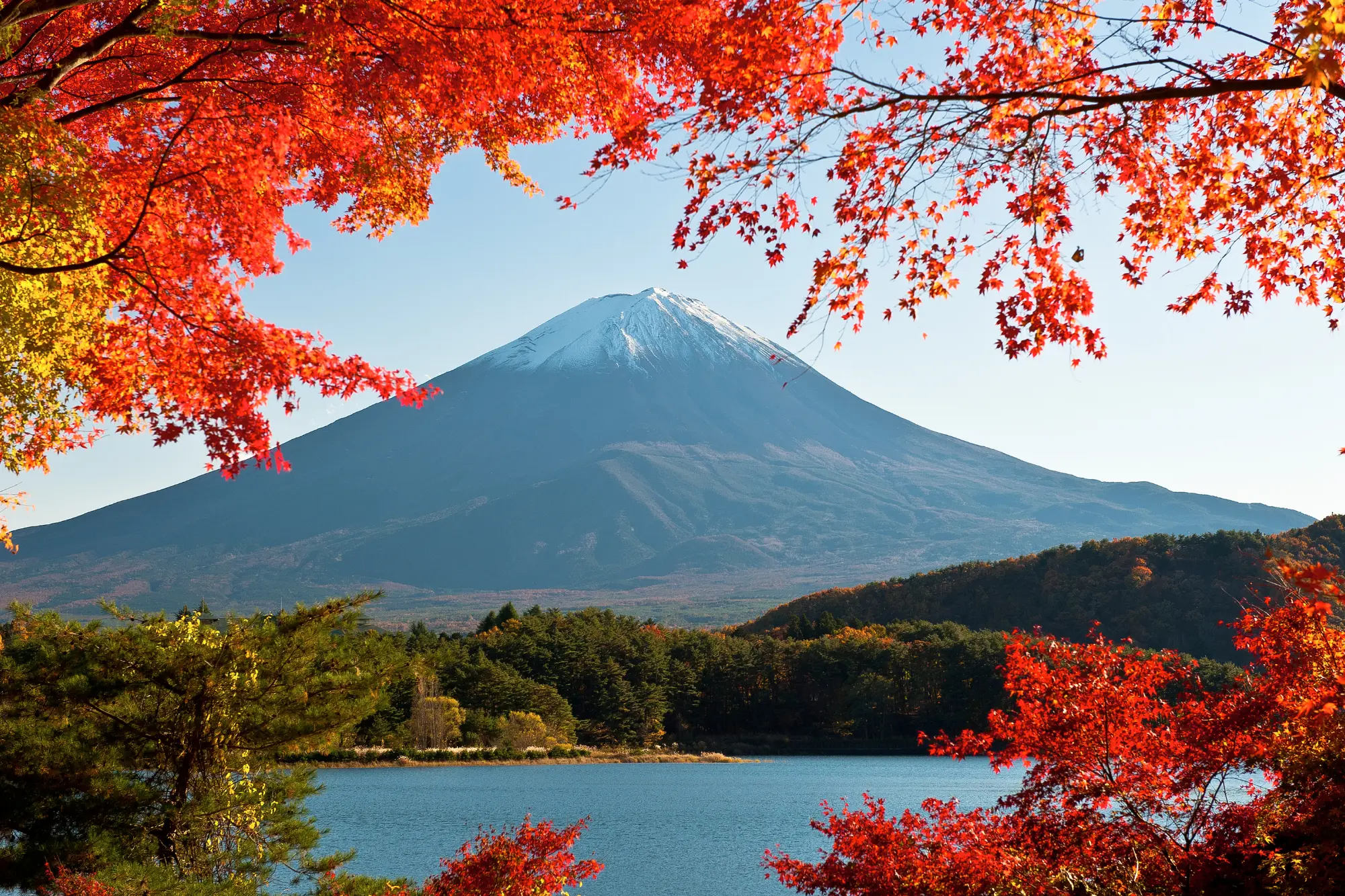
Autumn (October to November) offers excellent visibility and stunning red maple leaves, particularly during the Kawaguchiko Autumn Leaves Festival.
Mount Fuji in Winter
Winter (December to February) is the absolute best time for sightseeing. The cold, dry air guarantees the highest number of clear days, and the mountain sports its iconic heavy snowcap.
Best Time for Clear Mount Fuji Views
If your sole goal is photography, plan your visit Mount Fuji trip for December or January, and be at your viewpoint by 8:00 AM.
Logistics for US Travelers: Luggage, Pacing, and Comfort
For travelers aged 45 and older, reducing operational friction makes the trip vastly more enjoyable.
Traveling with Heavy Luggage
Do not carry large checked suitcases on the Fuji Excursion train or local Kawaguchiko buses. Use Japan’s Yamato Transport (Takkyubin) to forward your heavy luggage directly from Tokyo to your next major city (like Kyoto), and bring only a small overnight bag to the mountain.

Getting Around the Fuji Area
Local buses operate around the lakes, but they can require long waits and standing room only during peak seasons. Taxis are available but can be scarce during peak hours.
How Much Walking Should You Expect?
You can scale the walking to your comfort level. The Chureito Pagoda requires a strenuous stair climb, but viewing spots like Oishi Park are flat, paved, and highly accessible.
Using Public Transportation vs. Private Transport
Public transit is cost-effective for a standard Mt Fuji day trip, but private transport is highly recommended for groups of three or more, offering door-to-door comfort and zero wait times.
Planning Around Your Onward Journey
If you are heading to Kyoto after visiting the mountain, you do not need to return to Tokyo. You can take a bus from Kawaguchiko to Mishima Station and catch the Shinkansen westward.
Where to Go: Hakone or Kawaguchiko?
If you are planning an overnight stay outside of Tokyo to see the mountain, you will likely choose between the two most popular surrounding regions. Deciding between Hakone or Kawaguchiko depends entirely on what kind of experience you want.
Here is a breakdown of how the two destinations compare:
| Feature | Hakone (Kanagawa Prefecture) | Fuji Five Lakes (Lake Kawaguchiko) |
| Primary Draw | Traditional ryokans, natural hot springs (onsen), and art museums. | Massive, unobstructed, close-up views of Mount Fuji. |
| View Quality | Distant views. Often partially obscured by surrounding hills. | Direct, dramatic views right at the base of the mountain. |
| Transit from Tokyo | Extremely easy. 85 minutes via the Odakyu Romancecar from Shinjuku. | Direct limited express trains (Fuji Excursion) take about 2 hours. |
| Pacing & Terrain | Mountainous. Requires using a network of cable cars, ropeways, and boats. | Flatter lakeside environment. Easier to navigate by taxi or private car. |
| Best For… | Travelers who want a luxury cultural experience where seeing the mountain is a bonus. | Travelers whose absolute top priority is photographing and seeing the mountain. |
Related article: Hakone Travel Guide 2026: The Best Guide to All Things in Hakone
Which Is Better for Seeing Mount Fuji?
Kawaguchiko is vastly superior for direct, massive, and unobstructed photography of the mountain.
Which Is Better for an Overnight Stay?
Hakone is generally preferred for luxury overnight stays due to its world-class ryokans, superior hot springs, and high-end kaiseki dining.
Can You Visit Hakone and Mount Fuji Together?
Yes, over two or three days. A popular route involves spending a day at Kawaguchiko, taking a bus to Gotemba, and transferring into Hakone for the night.
Do You Need a Guide or Private Transport for Mount Fuji?
Navigating rural Japan requires patience.
When Public Transportation Makes Sense
If you are traveling solo or as a couple on a budget, and you plan to visit only one or two sites around Lake Kawaguchi, the local bus network is perfectly fine.
When Private Transport Is Worth It
If you want to combine multiple distant sites in a single Mt Fuji day trip without waiting 45 minutes for a bus, or if you require a comfortable, climate-controlled environment between stops, a private car is worth the investment.
What Private Transport Makes Easier
Private transport removes the need to decipher complex rural bus timetables, handles luggage seamlessly, and guarantees a comfortable seat.
If you prefer to leave the transportation and day-to-day logistics to someone else, Nicetrips offers Japan package tours including Mount Fuji with comfortable transportation and an English-speaking local guide. This can be a practical option for travelers who want to combine several viewpoints and attractions in one day without having to manage rural bus schedules, transfers, or luggage along the way.
Can You Climb Mount Fuji?
For those seeking physical adventure, summiting the volcano is an unforgettable challenge.
When Is Mount Fuji Climbing Season?
The official trails to climb Mount Fuji are open strictly from early July to the first week of September.
How Difficult Is It to Climb Mount Fuji?
It is highly strenuous. The trail consists of steep, loose volcanic ash and rock. The high elevation (12,388 feet) means thinner oxygen, leading to altitude sickness for many hikers.
How Long Does It Take to Climb Mount Fuji?
Ascending the popular Yoshida Trail takes 5 to 7 hours, and descending takes 3 to 5 hours. Most climbers split this over two days, resting at a mountain hut.
How Much Does It Cost to Climb Mount Fuji?
As of recent updates, climbers using the Yoshida Trail must pay a mandatory ¥4,000 toll, plus a voluntary 1,000 JPY conservation fee. Mountain hut accommodations cost extra and must be booked far in advance.
Do You Need a Guide to Climb Mount Fuji?
While independent climbing is permitted, hiring a professional guide is highly recommended for safety, pacing, and assistance with securing mountain hut reservations.
What Should You Bring?
Sturdy hiking boots, extreme cold-weather layers, rain gear, a headlamp, and 100-yen coins for the mountain toilets are mandatory.
Is It Cold at the Top of Mount Fuji?
Yes. Even in August, temperatures at the summit drop below freezing at night and during the sunrise hours.
Common Mistakes When Visiting Mount Fuji
Avoid these logistical pitfalls to ensure a smooth journey.
Assuming You Will See Fuji Clearly
The biggest mistake is assuming the mountain is always visible. Temper your expectations and enjoy the lakes and culture if the weather does not cooperate.
Trying to Visit Too Many Viewpoints
Attempting to squeeze Hakone, Kawaguchiko, and the 5th Station into a single Mt Fuji day trip guarantees exhaustion. Pick two regions and explore them well.
Leaving Tokyo Too Late
Arriving at noon means the clouds have likely already formed, and the crowds will be at their peak.
Confusing the 5th Station with the Summit
The Mount Fuji 5th Station is the halfway point. It does not provide the postcard view of the mountain’s cone, because you are standing on its slope.
Treating a Day Trip Like a Climbing Trip
You cannot casually decide to climb Mount Fuji during a sightseeing trip. It requires specific preparation, seasonal timing, and gear.
Ignoring Seasonal Conditions
Do not expect to see the snowcap in August, and do not plan a sightseeing trip during the June rainy season expecting clear blue skies.
Is Mount Fuji Worth Visiting from Tokyo?
Absolutely. Despite the unpredictable weather and the required travel time, standing before Japan’s most sacred peak is a profoundly moving experience. When the clouds part and the massive cone reveals itself, it instantly becomes the highlight of any Japanese itinerary.
Frequently Asked Questions About Mount Fuji
How Do I Get to Mount Fuji from Tokyo?
Take the Fuji Excursion Limited Express train from Shinjuku Station to Kawaguchiko Station (1 hour 50 minutes), or a highway bus from Busta Shinjuku.
Can You See Mount Fuji from Tokyo?
Yes, on clear, low-humidity days (typically in winter), the mountain is visible from tall observation decks and the Tokaido Shinkansen.
What’s the Best Way to “Visit” Mt Fuji?
The best way to visit Mount Fuji is to spend a night in the Fuji Five Lakes or Hakone to maximize your chances of a clear morning view.
Can You Do a Day Trip to Mount Fuji from Tokyo?
Yes. A Mt Fuji day trip takes about 10–12 hours, allowing you to see Lake Kawaguchi and the Chureito Pagoda.
How Long Does It Take to Get from Tokyo to Mount Fuji?
It takes roughly 1.5 to 2.5 hours depending on your exact destination and mode of transit.
How Long Do You Need at Mount Fuji?
For a day trip, 6 to 8 hours on the ground is sufficient. For a relaxed pace, an overnight stay is ideal.
What Is the Best Time to Visit Mount Fuji?
Winter (December–February) is the best time for clear views. Summer (July–September) is the only time you can climb.
Which Month Is Best for Seeing Mount Fuji?
January offers the highest statistical probability of clear, cloudless skies and a beautiful snowcap.
Can You Visit Mount Fuji Without Climbing?
Yes. Over 90% of visitors strictly go for sightseeing, photography, and hot springs without ever stepping foot on the climbing trails.
Is Mount Fuji Still an Active Volcano?
Yes, it is an active stratovolcano, though its last eruption was in 1707. It is closely monitored and safe to visit.
Why Is Mount Fuji So Famous?
It is famous for its perfect symmetry, its status as a sacred Shinto site, and its deep influence on Japanese art and culture.
How Much Does It Cost to Climb Mount Fuji?
Climbers on the Yoshida Trail must pay a 2,000 JPY mandatory fee, plus an optional 1,000 JPY donation, alongside mountain hut costs.
Is It Cold at the Top of Mount Fuji?
Yes, even in the peak of summer, summit temperatures drop below freezing, especially before sunrise.
Which Is Better: Hakone or Kawaguchiko?
Hakone is better for luxury onsen and culture; Kawaguchiko is better for massive, direct views of the mountain.
Is Mount Fuji 5th Station Worth Visiting?
The Mount Fuji 5th Station is worth visiting to experience the alpine atmosphere, but it is not ideal for photographing the mountain’s famous shape.
Can You Do Mount Fuji and Hakone in One Day?
Using public transit, no. Doing both in one day is only feasible (though rushed) via a private chartered car.
Do You Need a Guide to Visit Mount Fuji?
You do not need a guide for basic sightseeing, but hiring one to visit Mount Fuji ensures comfortable, stress-free logistics, especially when arranging private transit.
Final Thoughts: Planning Your Mount Fuji Trip
Successfully experiencing Mount Fuji is a masterclass in travel logistics. By setting realistic weather expectations, utilizing luggage forwarding services, prioritizing early mornings, and choosing the right location (such as Kawaguchiko for photos or Hakone for hot springs), you can guarantee a comfortable and awe-inspiring trip.
For travelers who prefer to eliminate the operational friction of train transfers and rural bus schedules, partnering with a specialized operator like Nicetrips ensures seamless execution. With custom private transport, expertly timed itineraries, and dynamic on-the-ground support, you are free to focus entirely on the majesty of Japan’s most legendary peak.