A 7-day trip to Vietnam cost around $350 – $550 per person for budget travel, $650 – $1,000 for a comfortable mid-range trip, or $1,400+ for a premium experience, excluding international airfare. Your actual Vietnam trip cost depends mainly on your accommodation, food, transportation, activities, and the number of destinations you visit. A traveler staying in 2 – 3-star hotels, eating a mix of local and casual restaurant food, and using trains, buses, and occasional domestic flights can enjoy a comfortable week without spending excessively. This guide breaks down how much a 7-day trip to Vietnam costs in 2026, including accommodation, food, transportation, activities, sample budgets, and practical ways to keep your spending under control.

Quick Answer: How Much Does a 7-Day Trip to Vietnam Cost?
For one person, excluding international flights, a realistic 2026 budget is:
| Travel Style | Approx. 7-Day Budget | What You Can Expect |
| Budget | $350 – $550 | Hostels or simple hotels, local food, public transport |
| Mid-range | $650 – $1,000 | 2 – 3-star hotels, restaurants, Grab, selected tours |
| Premium | $1,400+ | Upscale hotels, private transfers, premium experiences |
Vietnam Tourism’s 2026 cost guide estimates budget travel at around $25 – $40 per day, while mid-range travel is generally around $50 – $100 per day. Vietnam Airlines similarly places mid-range travel at approximately $50 – $90 per day.
For most international visitors looking for a balance between comfort, convenience, and local experiences, a budget of approximately $650 – $1,000 per person for seven days is a practical starting point.
Important: These estimates cover expenses inside Vietnam. International airfare is not included.
What Does a 7-Day Vietnam Trip Budget Include?
For this guide, the estimated budget covers the main expenses you are likely to have after arriving in Vietnam:
- Accommodation
- Food and drinks
- Local transportation
- Intercity transportation
- Entrance fees
- Selected tours and activities
- Small miscellaneous expenses
International airfare should be calculated separately because the price varies significantly depending on your departure country, travel dates, airline, and booking time.
You should also consider visa fees and travel insurance separately where applicable. Vietnam’s official e-visa system currently lists a $25 fee for a single-entry e-visa and $50 for a multiple-entry e-visa.
How Much Does Accommodation Cost in Vietnam?
Accommodation will usually be one of the largest parts of your 7-day Vietnam travel budget.
For a typical 7-day trip, travelers generally book 6 nights of accommodation. If your itinerary includes seven nights, simply add one more night’s hotel cost to the figures below.

Budget Accommodation: $10 – $30 per Night
Budget travelers can find:
- Hostel dorms
- Guesthouses
- Homestays
- Simple private rooms
- Basic hotels
Private rooms in guesthouses and budget hotels commonly fall around $15 – $30 per night, while dorm beds can be considerably cheaper.
For six nights, you could therefore spend approximately: $60 – $180
This is a good option if keeping your overall budget as low as possible is the priority.
2 – 3-Star Hotels: $30 – $70 per Night
For travelers who want more comfort and privacy, a 2 – 3-star hotel can be an optimal choice for a mid-range Vietnam budget.
At this level, you can generally expect:
- Private rooms
- Air conditioning
- Wi-Fi
- Private bathrooms
- Convenient locations
- Hotel breakfast at some properties
Current 2026 estimates put many 3-star hotels around $35 – $70 per night, although prices vary by city and season.
For six nights: $180 – $420
This is often the sweet spot for travelers who want comfort without spending a large portion of their budget on accommodation.
Boutique and Luxury Hotels: $60 – $150+ per Night
Boutique hotels and upscale properties can easily cost $60 – $150 or more per night, while luxury resorts in destinations such as Ha Long Bay, Phu Quoc, or Da Nang can be considerably more expensive.
For a one-week trip, upgrading your hotel every night can therefore have a much larger impact on your total budget than spending a few extra dollars on food.
How Much Does Food Cost in Vietnam?
Food is one of the easiest parts of a Vietnam trip to keep affordable.
A practical daily food budget is:
- Budget: $8 – $12 per day
- Mid-range: $15 – $25 per day
- Premium: $30 – $60+ per day
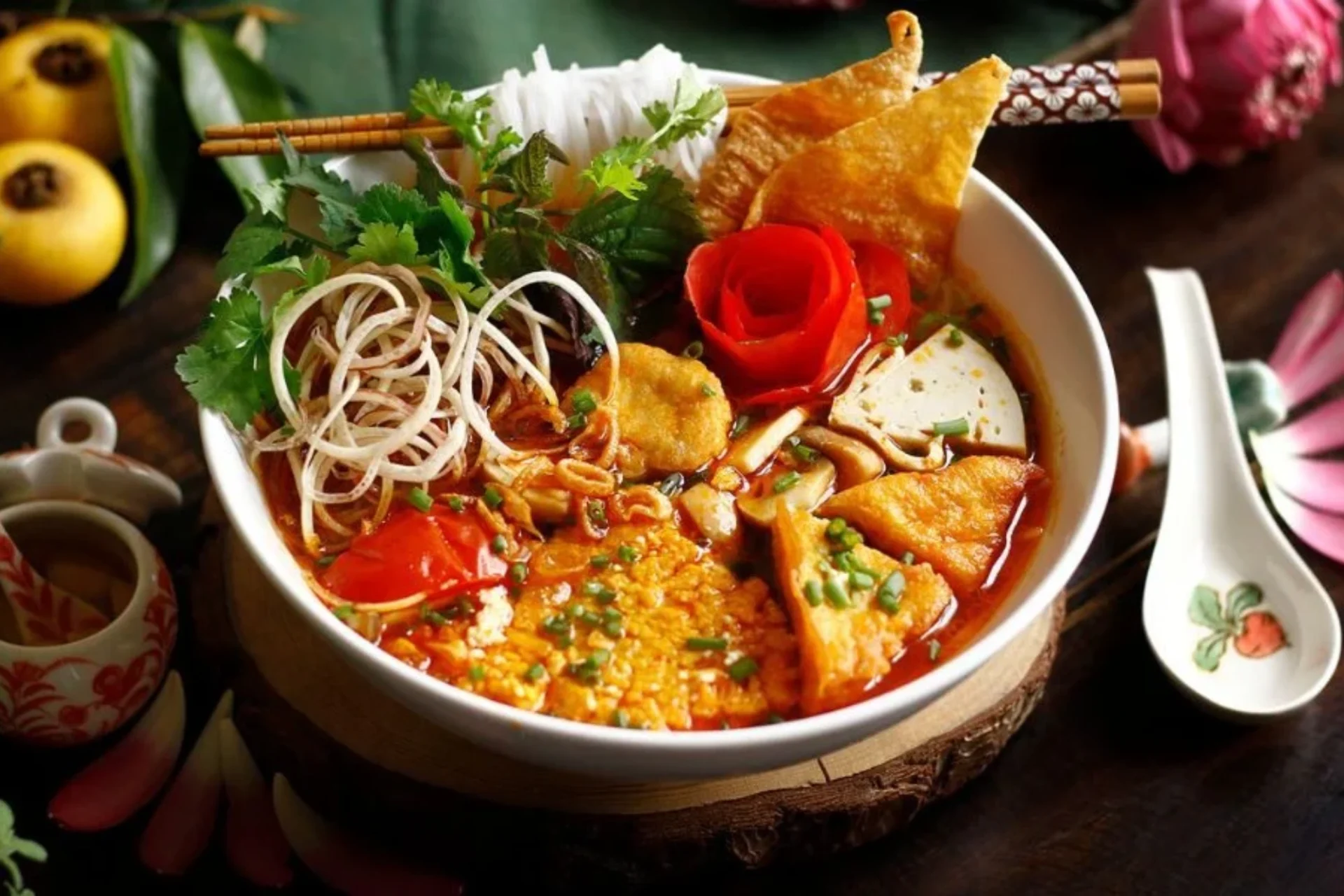
Local dishes such as pho, banh mi, rice dishes, and noodles can often cost only a few dollars or less. Current 2026 estimates put local restaurant meals at around $3 – $8 per person, while tourist-oriented restaurants can cost around $8 – $20.

A typical mid-range day might include:
- Breakfast: $3 – $5
- Vietnamese coffee: $1 – $2
- Lunch: $4 – $7
- Dinner: $6 – $10
- Snacks or drinks: $2 – $5
That puts a comfortable daily food budget at approximately $15 – $25.
Can You Eat Well on a Budget?
Absolutely.
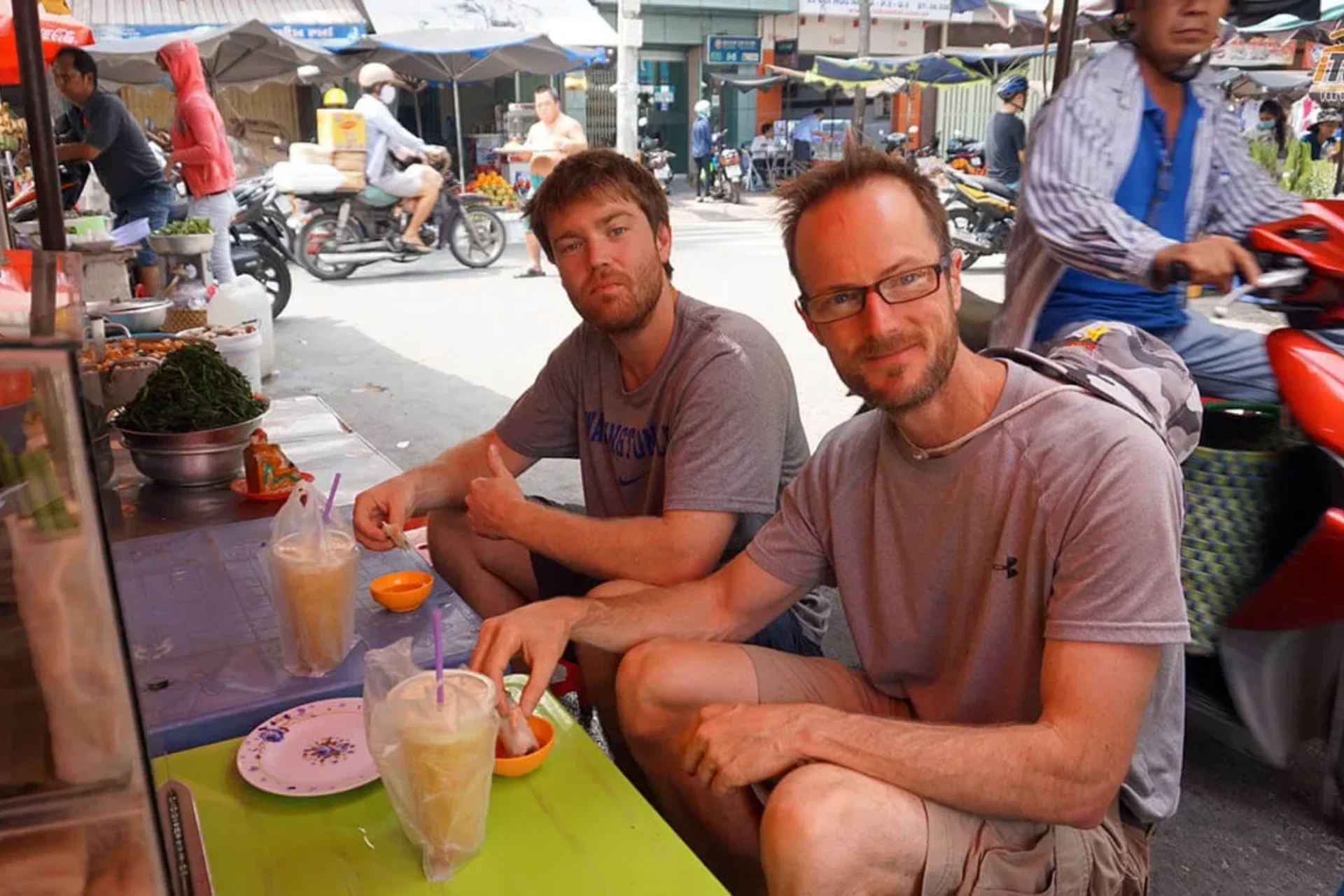
You do not need to eat street food for every meal to keep costs low. One of the best approaches is to mix: Local food + casual restaurants + occasional special meals
This lets you experience Vietnamese cuisine without turning every meal into a major expense.
Related Article: The Ultimate Hanoi Street Food Tour and Travel Guide: 7 Must-try Local Food
How Much Does Transportation Cost in Vietnam?
Transportation is where your itinerary starts to matter.
Vietnam is a long country, so a seven-day trip that covers Hanoi, Ha Long Bay, Hoi An, and Ho Chi Minh City will cost more to transport than a trip focused on one region.
For local transportation, short Grab rides can cost only a few dollars, while trains, sleeper buses, and domestic flights account for most longer-distance spending. Current 2026 estimates put domestic flights at roughly $20 – $80 one way, sleeper train berths around $20 – $45, and many intercity bus segments around $15 – $35.
A Practical Transportation Budget
For seven days:
Budget travel: $40 – $80
Mid-range travel: $80 – $180
Premium travel: $200+
The exact amount depends heavily on your route.
Do You Need Domestic Flights?
Not necessarily. If you are staying within one region, trains and buses may be enough.
If you want to combine northern and central or southern Vietnam in only seven days, however, a domestic flight can save a significant amount of travel time.
Vietnam Airlines notes that domestic fares can range from approximately 500,000 VND to 3.5 million VND one way, depending on route and booking conditions.
For a 7-day trip, your itinerary can affect your budget more than your daily spending habits.
Trying to visit too many destinations means paying for more flights, transfers, hotel changes, and travel time.
How Much Should You Budget for Activities?
Vietnam has plenty of inexpensive or free things to do, but major tours and experiences can add significantly to your weekly budget.
A reasonable activity budget is:
$50 – $150 per person for seven days
This could cover a combination of:
- Ninh Binh boat trip
- Ha Long Bay or Lan Ha Bay cruise
- Cu Chi Tunnels tour
- Mekong Delta tour
- Hoi An cooking class
- Museums and cultural attractions
- Guided walking tours
A one-night Ha Long Bay cruise alone can represent a substantial part of your activity budget. Current 2026 estimates put budget cruises at roughly $80 – $120 per person, with higher-end options costing considerably more.

The key is to choose your priority experiences rather than booking an organized tour every day.
Related Article: The Perfect Day Trip from Hanoi to Ninh Binh
What Does $500 Get You in Vietnam for 7 Days?
A budget of around $500 can work for a solo traveler who is comfortable with budget accommodation and local travel.
A possible breakdown:
| Expense | Approx. Budget |
| Accommodation | $120 |
| Food | $80 |
| Transportation | $100 |
| Activities | $60 |
| Miscellaneous | $40 |
| Emergency buffer | $100 |
| Total | $500 |
At this level, you should expect:
- Hostels or simple private rooms
- Mostly local food
- Buses and trains
- Limited paid tours
- More free sightseeing
- Fewer long-distance transfers
It is a budget travel experience, but it can still be enjoyable and comfortable if your itinerary is designed carefully.
What Does $1,000 Get You for 7 Days in Vietnam?
With $1,000 for seven days, you have considerably more flexibility.
You could afford:
- Better 2 – 3-star or boutique hotels
- More restaurant meals
- More Grab rides
- One or two domestic flights
- Several paid activities
- A higher-quality cruise
- A larger emergency buffer
However, spending $1,000 simply because you have it is not necessary.
A well-planned traveler can have an excellent Vietnam experience for significantly less.
The extra budget is most useful when it buys something that genuinely improves your trip — such as a better hotel location, a convenient domestic flight, or an experience you would otherwise miss.
Budget vs. Mid-Range vs. Luxury: How Much Do You Need?
The easiest way to understand Vietnam travel costs is to compare travel styles.
Budget: $350 – $550 for 7 Days
Best for travelers who:
- Stay in hostels or simple hotels
- Eat mostly local food
- Use buses and trains
- Focus on free or low-cost attractions
- Limit organized tours
Mid-Range: $650 – $1,000 for 7 Days
Best for travelers who want:
- Comfortable 2 – 3-star hotels
- Private rooms
- Local and casual restaurants
- Convenient local transportation
- Selected tours and activities
- Occasional domestic flights
This is the range we would recommend for travelers who want a comfortable but not excessive Vietnam experience.
Premium: $1,400+ for 7 Days
This can include:
- 4 – 5-star hotels
- Boutique resorts
- Private transfers
- Premium cruises
- Fine dining
- Private guides
- Multiple domestic flights
Luxury travel can go significantly higher depending on your accommodation and experiences.
Does a 7-Day Vietnam Trip Include International Flights?
Not in the budgets above.
International airfare should be calculated separately because there is no single price that applies to every traveler.
For example, someone flying from the United States, Europe, Australia, or another part of Asia will face very different airfare costs.
When calculating your total trip budget, separate your costs into:
- International airfare
- Visa fees, if applicable
- Travel insurance
- Accommodation
- Food and drinks
- Transportation inside Vietnam
- Activities and tours
- Emergency and miscellaneous expenses
This gives you a much more accurate picture of how much your entire Vietnam holiday will cost.
Is 7 Days Enough for Vietnam?
Yes, but you should not try to see everything.
Vietnam is geographically large, and seven days is better suited to exploring one region or a focused route than rushing from north to south.
For example, you could focus on three groups as follows:
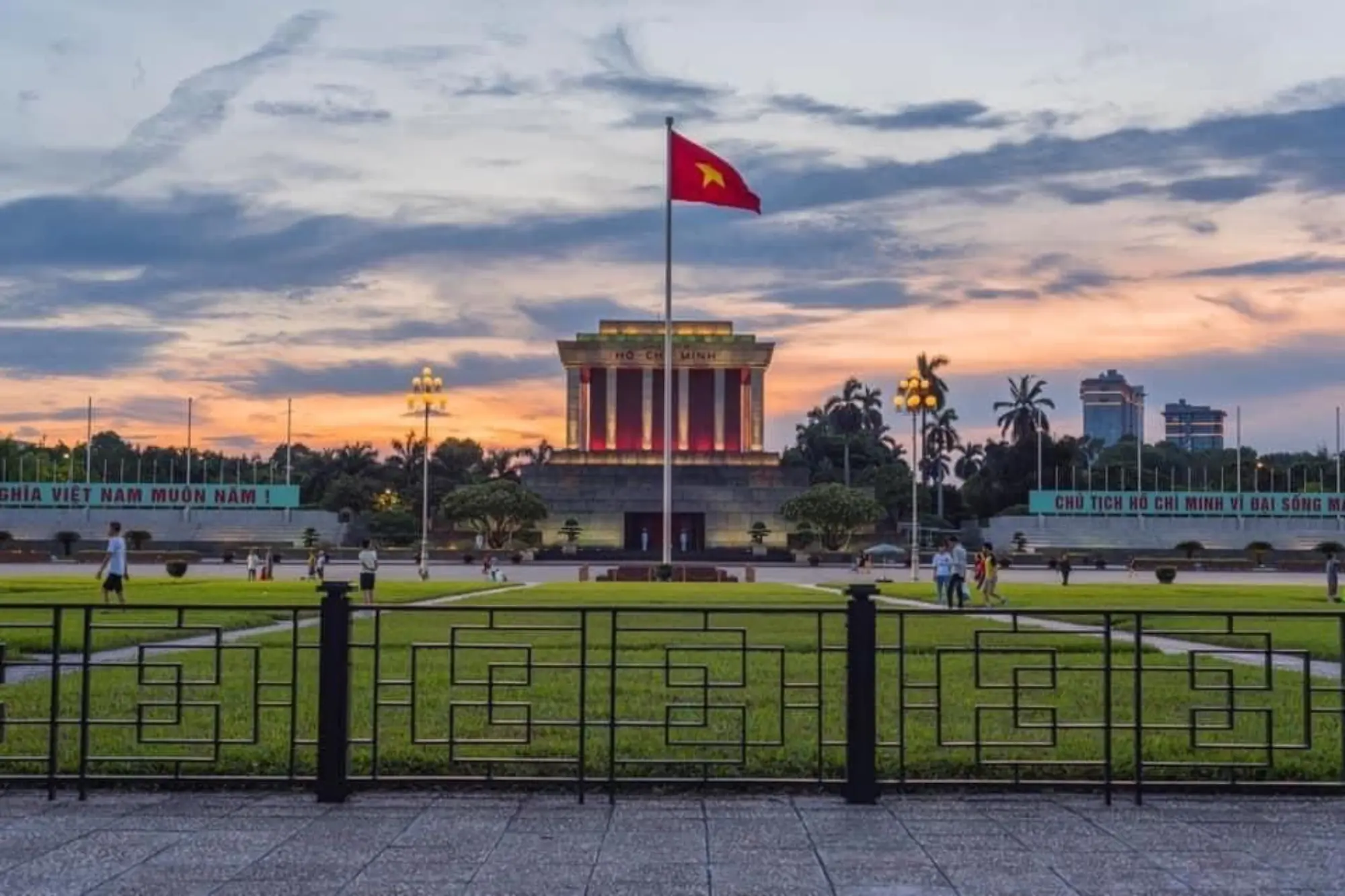
Northern Vietnam
Hanoi → Ninh Binh → Ha Long Bay
This works well for travelers interested in Vietnamese culture, history, food, and landscapes.
Central Vietnam
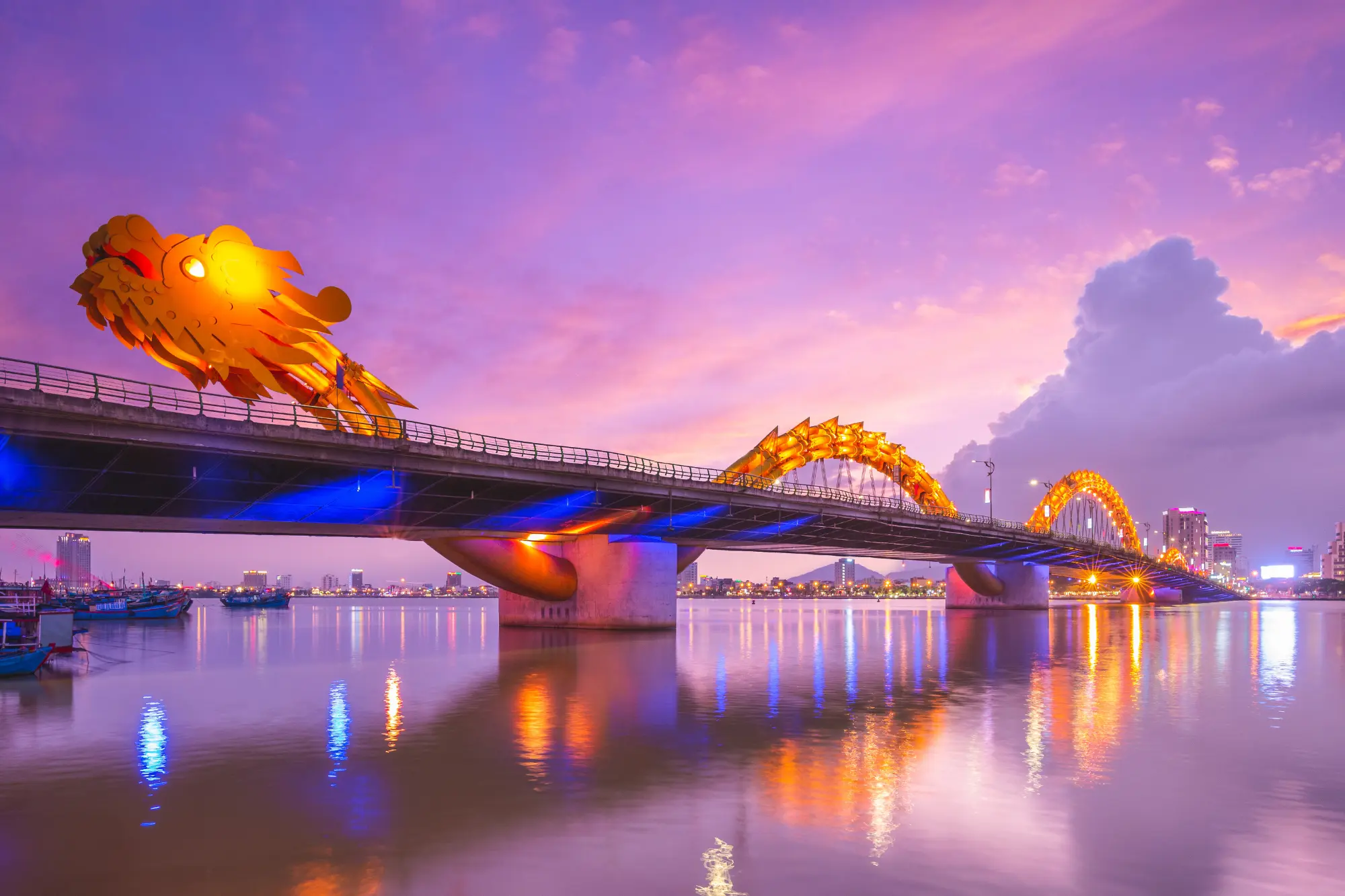
Da Nang → Hoi An → Hue
This is a strong option for travelers who want beaches, heritage sites, food, and a slower pace.
Southern Vietnam
Ho Chi Minh City → Mekong Delta
This works well for travelers interested in urban culture, history, markets, and the Mekong region.
You can also combine regions with domestic flights, but doing so will increase both transportation costs and the amount of time spent moving between destinations.

For a seven-day trip, seeing fewer places well is usually better than trying to see the whole country.
Sample: 7-Day Vietnam Itinerary
If this is your first trip to Vietnam and you want to experience several iconic destinations, one possible route is:
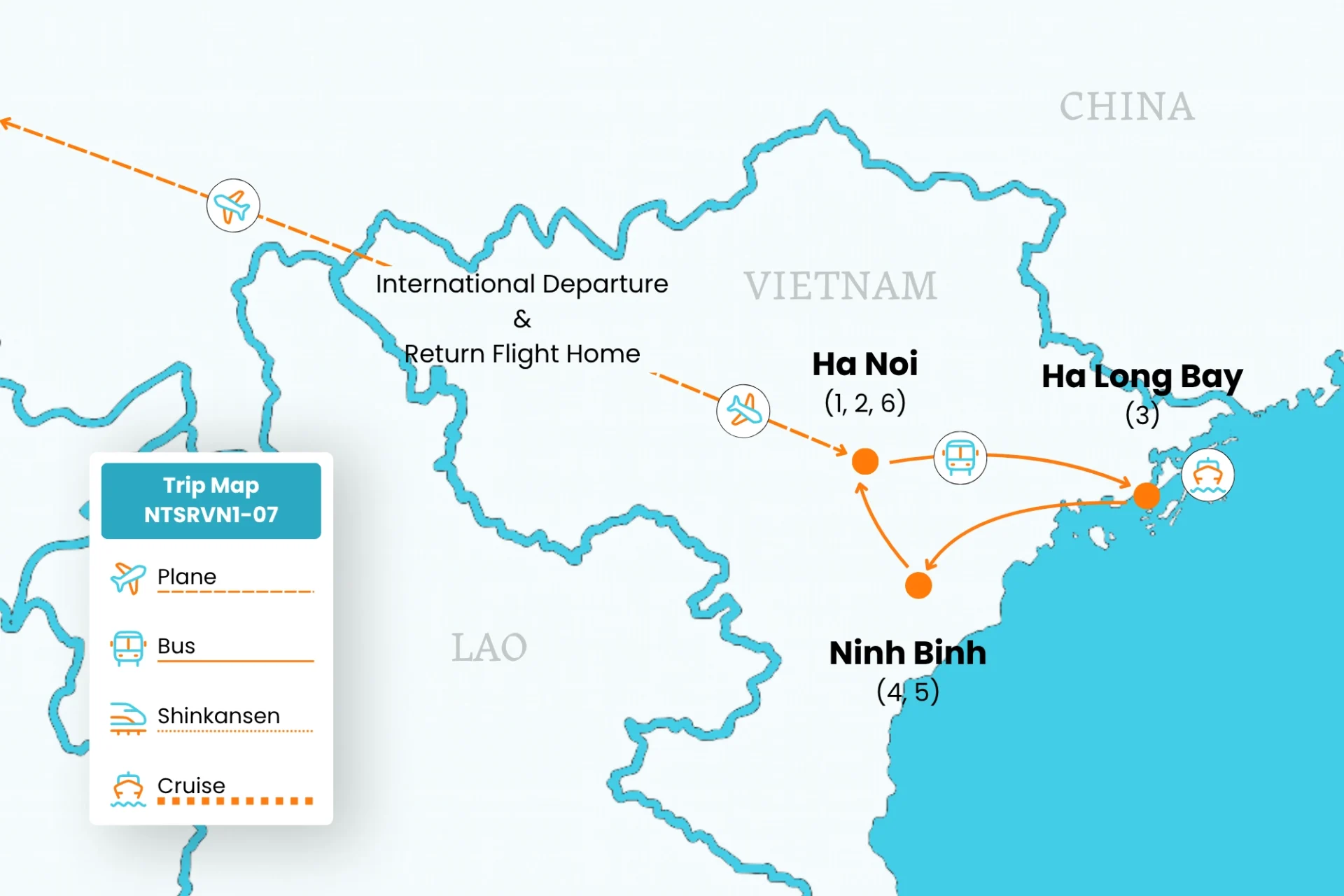
Trip Highlights
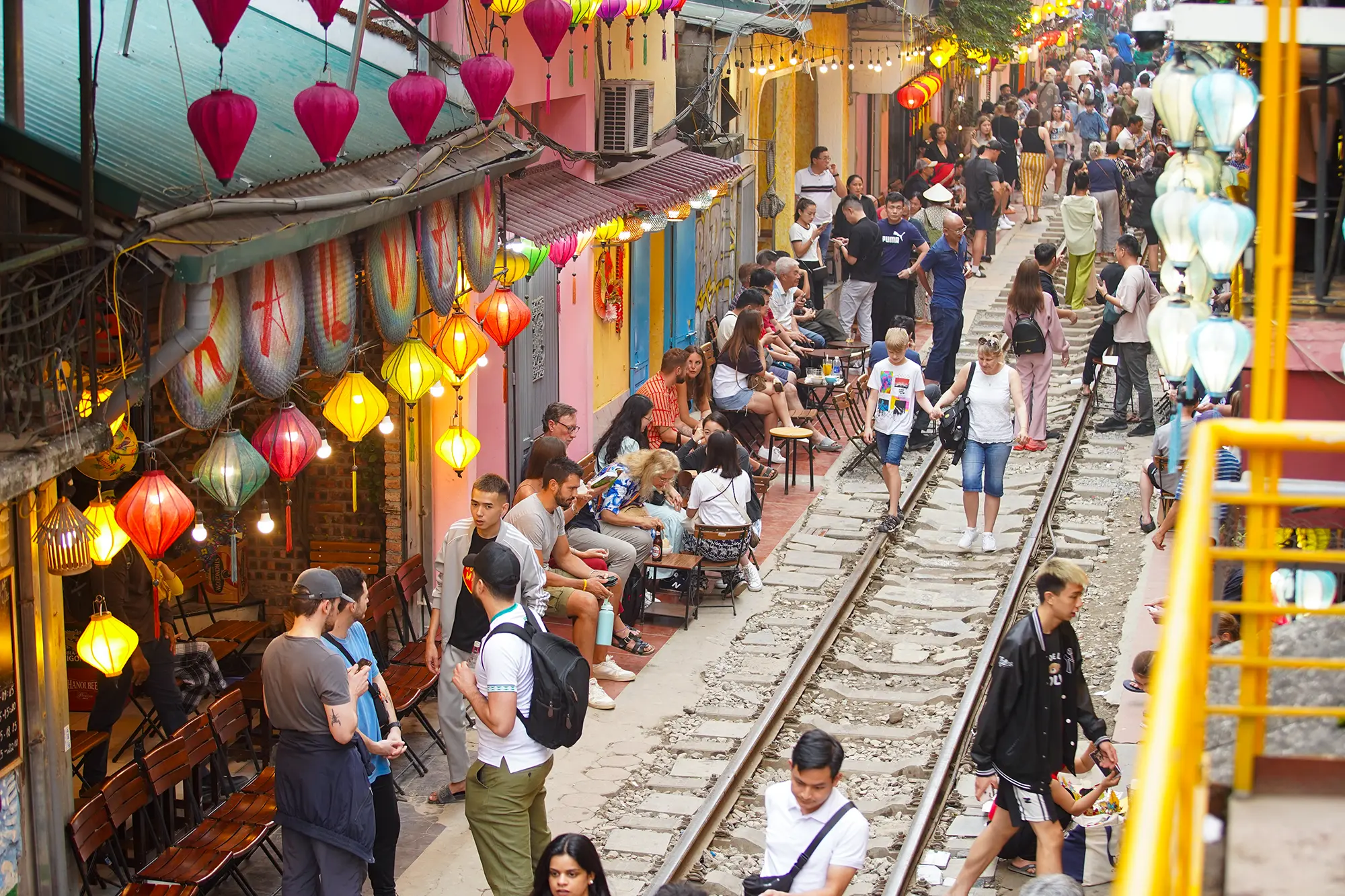
- Hanoi: Discover the historic Old Quarter, ancient temples, and vibrant local culture.
- Ha Long Bay: Cruise through emerald waters surrounded by towering limestone karsts and hidden caves.
- Bai Dinh Pagoda: Visit one of Vietnam’s largest Buddhist complexes, set among dramatic limestone mountains.
- Trang An: Take a traditional sampan boat through limestone peaks, caves, and peaceful countryside.
This itinerary is relatively fast-paced and requires careful transportation planning. If you prefer a slower trip, consider removing one destination and spending more time in the others.
A shorter route can actually make your trip more enjoyable and more affordable because you spend less time checking in, checking out, and traveling between destinations.
Sample 7-Day Vietnam Budget
Here is a realistic example for a solo traveler choosing a comfortable but budget-conscious travel style:
| Expense | 7-Day Budget |
| Accommodation – 6 nights | $210 |
| Food & drinks | $140 |
| Local & intercity transportation | $120 |
| Activities & entrance fees | $80 |
| Miscellaneous | $50 |
| Emergency buffer | $50 |
| Total | $650 |
This gives you a $650 on-the-ground budget for seven days.
You could spend less by choosing cheaper accommodation and transportation, or more by upgrading your hotel, adding a cruise, or taking additional domestic flights.
The important point is that you do not need to spend the same amount every day.
A day spent exploring Hanoi on foot may cost considerably less than a day involving a domestic flight or overnight cruise.
Recommended Vietnam Tour: 07-Day Northern Vietnam Discovery: Ha Noi – Ha Long Bay & Trang An Scenic Landscape Complex
How to Save Money on a 7-Day Vietnam Trip
Stay Longer in Fewer Places
Every additional destination creates another transportation cost and often another hotel change.
A focused itinerary usually gives you better value than constantly moving.
Choose 2 – 3-Star Hotels
A 2 – 3-star hotel can offer a good balance between comfort and affordability.
You can have a private room, air conditioning, Wi-Fi, and a convenient location without spending the majority of your budget on accommodation.
Eat Local
Vietnamese local restaurants offer excellent value.
Mix local dishes with casual restaurants instead of eating exclusively at tourist-oriented restaurants.
Use Trains and Buses Strategically
For shorter and overnight routes, trains and sleeper buses can be more economical than domestic flights.
However, do not choose the cheapest transportation option automatically. On a seven-day trip, time has value too.
Book Major Transportation Early
Domestic flight prices can vary significantly depending on the route, travel date, and booking time. Planning your major transfers before your trip can help you avoid unnecessary last-minute costs.
Keep an Emergency Buffer
Even on a seven-day trip, unexpected costs can happen.
Keeping $50 – $100 aside means you do not have to disrupt your itinerary if a transportation change, additional meal, or unexpected expense occurs.
Should You Plan Your 7-Day Vietnam Trip Yourself or Book a Tour?
Planning independently can be a good choice if you enjoy researching hotels, comparing transportation, and building your own itinerary.
However, a seven-day trip leaves relatively little room for inefficient routing. Spending hours moving between destinations or arranging multiple transfers can take away from the experience itself.
A customized trip can be particularly useful if you want to combine several destinations while keeping the journey comfortable and well organized.
If you prefer to spend your time experiencing Vietnam rather than coordinating every hotel, transfer, and activity, Nicetrips can create a customized Vietnam journey around your preferred destinations, pace, interests, and travel style. Explore Vietnam your way, with the details taken care of.
Final Thoughts: How Much Does a 7-Day Trip to Vietnam Cost?
So, how much does a 7-day trip to Vietnam cost?
For one person, excluding international airfare:
- Budget: around $350 – $550
- Mid-range: around $650 – $1,000
- Premium: $1,400+
The right budget ultimately depends on the type of experience you want.
You can travel Vietnam for less than $500 if you prioritize local food, simple accommodation, and affordable transportation. On the other hand, you can easily spend more than $1,000 in a week if you choose upscale hotels, private transfers, cruises, and multiple organized experiences.
The most important thing is not simply finding the cheapest way to travel. It is spending your money on the experiences that matter most to you.
For a first-time visitor, a carefully planned seven-day itinerary can offer an excellent introduction to Vietnam without trying to fit the entire country into one week.

Frequently Asked Questions
How much money do I need for 7 days in Vietnam?
For one person, a realistic budget is around $350 – $550 for budget travel and $650 – $1,000 for a comfortable mid-range trip, excluding international airfare.
Is $500 enough for 7 days in Vietnam?
Yes. $500 can be enough for a solo traveler if you choose budget accommodation, eat mostly local food, use affordable transportation, and limit expensive tours and activities.
Is $1,000 enough for a week in Vietnam?
Yes. $1,000 is generally more than enough for a comfortable independent trip inside Vietnam, excluding international airfare. It gives you room for better accommodation, restaurants, domestic transportation, and selected experiences.
How much does a 3-star hotel cost in Vietnam?
A 3-star hotel can typically cost around $35 – $70 per night, although prices vary by destination, season, and property.
Is 7 days enough to visit Vietnam?
Yes, but it is better to focus on one region or a carefully planned route rather than trying to visit every major destination in the country.
How much should I budget for food in Vietnam?
A budget traveler can spend around $8 – $12 per day, while a more comfortable food budget is approximately $15 – $25 per day. Local restaurants and street food are generally much cheaper than tourist-oriented or international restaurants.
Are domestic flights expensive in Vietnam?
Domestic flights can be relatively affordable, but prices vary considerably by route, travel date, and booking time. Current 2026 estimates commonly place one-way domestic fares around $20 – $80, while some routes and last-minute bookings can cost more.
Does this 7-day Vietnam budget include international flights?
No. The budgets in this guide cover expenses inside Vietnam after arrival. International airfare should be calculated separately.